

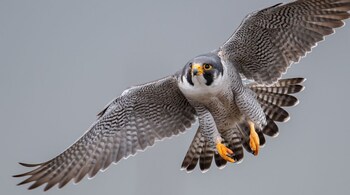

- Three Amur falcons tagged in India flew about 5,000 kilometres to Africa in just five days, satellite data show. Using strong seasonal winds, the small raptors crossed land and ocean without stopping. Scientists say careful timing and wind assistance reduced energy use, enabling the marathon journey. The findings highlight the falcon’s remarkable migration and raise new questions about how the birds rest and endure during multi-day flights.

Scientists tracking migratory birds have documented an extraordinary journey by Amur falcons tagged in India during December. Satellite data show three falcons flew roughly 5,000 kilometres within five days. The birds crossed India and the Arabian Sea en route to Africa. Conservationists monitored the journey using satellite transmitters. The flight has drawn attention from scientists and bird enthusiasts worldwide.
How Amur falcons crossed oceans and continents
The three Amur falcons weighed only 150 to 200 grams each. Despite their small size, they travelled vast distances rapidly. Satellite tracking shows they left India in late December. They crossed the Indian landmass before heading over open ocean. The birds then flew non stop across the Arabian Sea. Data indicate similar falcons can reach East Africa within a week. These journeys often cover 5,000 to 6,000 kilometres. The birds winter in Africa after completing this passage.
Amur falcons later begin their return journey northwards. They move during late winter and early spring. Their route eventually reaches northeast Asia by May or June. Breeding areas include parts of China and Russia. This annual cycle links ecosystems across continents. Scientists describe the journey as marathon migration rather than sprint flight.
Why wind physics powers the falcons’ flight
Researchers say wind plays a crucial role in these journeys. Seasonal monsoon tailwinds assist the birds significantly. Strong wind systems over the Arabian Sea provide sustained forward push. This reduces the birds’ need for constant flapping. The falcons effectively glide using atmospheric energy. Timing departures with favourable winds is essential. Amur falcons cannot land on water surfaces. They must remain airborne throughout ocean crossings.
Supriya Sahu, Additional Chief Secretary for Environment Climate Change and Forests, shared details on X. She highlighted how satellite tracking revealed wind assisted migration. Scientists say the birds use wind corridors like aerial highways. This strategy allows greater distances with lower energy costs.
What science still wants to understand next
Long flights raise questions about rest and endurance. Studies of other birds show some sleep during flight. Frigatebirds can rest using one brain hemisphere at a time. Scientists suspect Amur falcons may use similar methods. However, this behaviour has not been conclusively proven. Researchers consider this an open scientific question.
The latest tracked journey strengthens understanding of Amur falcon migration. It confirms the species as a remarkable long distance traveller. Scientists say the falcons are finely adapted to wind physics. Continued tracking may reveal further secrets of their endurance.
Discover the latest Business News, Sensex, and Nifty updates. Obtain Personal Finance insights, tax queries, and expert opinions on Moneycontrol or download the Moneycontrol App to stay updated!





