

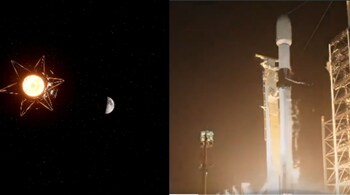
Imagine sending a message from the Moon, just like Earth. That vision is now a reality with NASA's latest mission. On 26 February, the agency launched the Athena lander, introducing mobile connectivity to the lunar surface.
This mission is part of Intuitive Machines' IM-2 project. It became possible through a collaboration with Nokia, aiming to enhance lunar communications.
How the Lunar Network Works
Nokia’s Lunar Surface Communication System (LSCS) will enable connectivity. It uses Earth’s cellular technology to establish a stable Moon network. This will support high-definition video, command communications, and data transfer.
The network is designed to survive space’s harsh environment. It must endure extreme temperatures, radiation, and lunar dust. Two mobility vehicles will use this system for navigation and communication.
Future Lunar Exploration Plans
The mission includes two robotic explorers—the Micro-Nova Hopper and MAPP rover. These vehicles will rely on Nokia’s modules to stay connected.
NASA will also conduct the PRIME-1 experiment alongside network deployment. This study will drill lunar soil and analyse its composition.
This technology supports future missions, including NASA’s Artemis programme. By 2028, humans are expected to return to the Moon. Nokia hopes to expand the network for long-term lunar habitation.
As space exploration advances, such innovations will shape the future. A reliable communication system is crucial for upcoming lunar missions.
Discover the latest Business News, Sensex, and Nifty updates. Obtain Personal Finance insights, tax queries, and expert opinions on Moneycontrol or download the Moneycontrol App to stay updated!





