

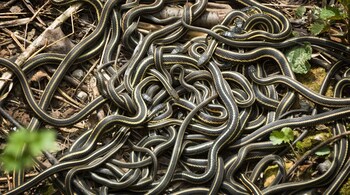


Scientists have found that cannibalism among snakes is far more common than previously believed, according to a review published on 02 Nov 2025 in the journal Biological Reviews. The analysis examined hundreds of documented cases worldwide and suggests the behaviour evolved independently many times across snake history.
Cannibalism recorded across snake evolutionary history
Researchers reviewed 503 documented cases worldwide. These cases involved 207 different snake species. Reports came from wild and captive settings. Snakes inhabit every continent except Antarctica. The review found cannibalism evolved at least 11 times. Scientists believe environmental stress often triggers behaviour. Limited food resources appear a major factor.
Lead author Bruna Falcão spoke to Live Science about the findings. She is a graduate biology student. She studies at the University of São Paulo. She said cannibalism benefits ecological fitness. She described the behaviour as strategic.
Snake families show different cannibalism patterns
The behaviour appeared common in several families. These included Colubridae, Viperidae and Elapidae. Colubridae accounted for 29% of reports. This is the largest snake family globally. Researchers linked cases to food scarcity. Viperidae represented 21% of reports recorded. Many of these occurred in captivity. Scientists suspect confinement increased stress levels.
Elapidae made up about 19% of reports. This family includes cobras known to eat snakes. Almost half the cannibal species had generalist diets. Researchers linked dietary flexibility to opportunism. However, biologist Xavier Glaudas expressed caution. He was not involved in research. He questioned strength of the generalist link.
What jaw structure and adaptation reveal
Jaw flexibility also influenced cannibal behaviour. Species lacking wide jaws showed no cases. Researchers examined evolutionary trees for patterns. They confirmed repeated independent evolution events. Glaudas called the review a welcome study. He said it clarifies behavioural correlations.
Examples include male Montpellier snake in France. These males consumed females outside mating season. Scientists linked this to food shortages.
Researchers believe many reports remain undiscovered. Older archives may hold further examples. Falcão said more evidence likely exists. She suggested snakes adapt opportunistically worldwide. Cannibalism may reflect ecological resilience.
Discover the latest Business News, Sensex, and Nifty updates. Obtain Personal Finance insights, tax queries, and expert opinions on Moneycontrol or download the Moneycontrol App to stay updated!





