

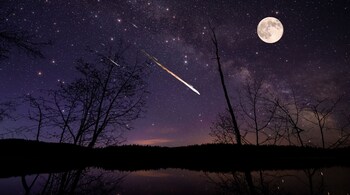
Astronomers say 2026 will feature a remarkable lineup of sky events. Total and partial eclipses, major meteor showers, supermoons, and planetary conjunctions promise breathtaking views. Experts also anticipate asteroid flybys and interstellar comet sightings.
Eclipses offer rare viewing opportunities
February 17 brings an annular solar eclipse visible from Antarctica. The Moon will not fully cover the Sun’s disc. This will create a striking "ring of fire" in southern skies. A total lunar eclipse follows on March 3, turning the Moon red. North and South America, Asia, and Australia will witness it. August 12 features the year’s most anticipated solar eclipse. Greenland, Iceland, and northern Spain lie in the path of totality. Daylight will briefly turn into night for those observers. A partial lunar eclipse on August 28 will be widely visible. Most of the Americas, Europe, and Africa can witness the partial event.
| Date | Event Name |
|---|---|
| 02/17/2026 | Annular Solar Eclipse |
| 03/03/2026 | Total Lunar Eclipse (Blood Moon) |
| 08/12/2026 | Total Solar Eclipse |
| 08/28/2026 | Partial Lunar Eclipse |
Jupiter reaches opposition on January 10, appearing brightest all night. Binoculars will reveal its four largest moons to keen observers. Venus and Jupiter form a close conjunction on June 9. The evening sky will display the pair clearly after sunset. Saturn reaches opposition on October 4, showing its rings at peak brightness. Jupiter and Mars appear close together on November 15 in pre-dawn skies. Astronomers highlight these alignments as ideal opportunities for stargazers.
| Date | Event Name |
|---|---|
| 10 January 2026 | Jupiter at Opposition |
| 6 June 2026 | Venus–Jupiter Conjunction |
| 4 October 2026 | Saturn at Opposition |
| 15 November 2026 | Jupiter–Mars Conjunction |
Several annual meteor showers promise dazzling night displays across 2026. The Quadrantids peak January 3–4, producing up to 40 meteors per hour. Perseids coincide with a new moon on August 12–13, offering excellent viewing. Geminids, peaking December 13–14, may produce up to 120 meteors per hour. Asteroid flybys will occur safely throughout the year, monitored by agencies.
| Date | Event Name |
|---|---|
| 01/03–01/04/2026 | Quadrantid Meteor Shower Peak |
| 08/12–08/13/2026 | Perseid Meteor Shower Peak |
| 12/13–12/14/2026 | Geminid Meteor Shower Peak |
Asteroid 2013 GM3 is set for a notable April 14 approach. Comet 3I/ATLAS, an interstellar visitor, will pass Jupiter in March. Telescopes will continue tracking the comet as it leaves the solar system. Four supermoons will appear slightly larger and brighter than usual. Lunar occultations will also be visible, including Regulus, Antares, and Jupiter on various dates.
Skywatchers are encouraged to plan early and check local conditions. Experts say 2026 provides rare opportunities to witness multiple celestial phenomena.
Discover the latest Business News, Sensex, and Nifty updates. Obtain Personal Finance insights, tax queries, and expert opinions on Moneycontrol or download the Moneycontrol App to stay updated!





