

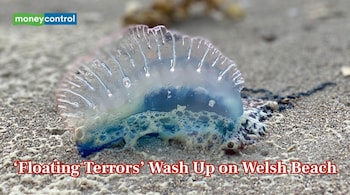
Visitors to the Welsh coast are being warned to stay alert after several Portuguese Man O’ War, also called “Floating Terrors,” were discovered washed up on Aberavon Beach. The Port Talbot Coastguard has urged beachgoers to avoid touching the creatures, which remain dangerous even after death.
Why has the warning been issued?
Sightings of the venomous creatures have been reported on Aberavon Beach, with earlier appearances along the Pembrokeshire, Gwynedd, and Anglesey coasts, Express.co.uk reported. The Coastguard confirmed that teams are working to safely remove them from the area. They have advised the public to stay cautious, as the Man O’ War’s long blue tentacles can deliver painful stings that cause severe discomfort or, in rare cases, trigger life-threatening allergic reactions.
How dangerous is the Portuguese Man O’ War?
Although they resemble jellyfish, the Portuguese Man O’ War is not one. It is a siphonophore, a colony of specialised organisms that function together as one. The Wildlife Trusts describe it as having a large, translucent purple float topped with a pink crest and long trailing tentacles. These tentacles can stretch several metres and remain venomous even when detached. Victims can suffer painful welts, blisters, or even fever and breathing difficulties after contact.
How do these creatures reach the shore?
The Man O' War drifts on the ocean surface, not being capable of swimming or able to control its direction. Strong winds and storms generally have them blown ashore, more so after stormy weather. Once stranded, they can appear entangled in seaweed and look harmless but their sting is active long after death.
Authorities have reminded the public that, if stung, one should rinse the affected area with seawater, carefully remove any remaining tentacles, and seek immediate medical help. The Coastguard continues to monitor the beaches to ensure public safety.
But with the shifting weather and intensification of storms, experts warn that such a sighting could become more frequent along the UK coastline.
Discover the latest Business News, Sensex, and Nifty updates. Obtain Personal Finance insights, tax queries, and expert opinions on Moneycontrol or download the Moneycontrol App to stay updated!





