

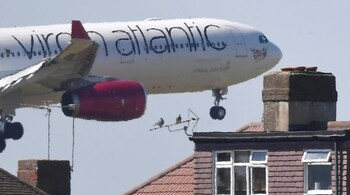
Australia's second biggest airline, Virgin Australia, collapsed on Tuesday, putting 16,000 jobs under threat as the cash-strapped carrier announced that it entered voluntary administration to recapitalise the business after being battered by the coronavirus pandemic, which has crippled the global airline industry.
The move came after the airline, which suspended almost all flights last month following wide-spread travel bans, failed to secure A$1.4 billion (USD 887.60 million) loan from the federal government.
In a statement, Virgin Australia said the group has entered into voluntary administration to “recapitalise the business and help ensure it emerges in a strong financial position on the other side of the COVID-19 crisis”.
The group's board of directors has appointed accounting firm Deloitte as voluntary administrators.
Virgin Australia chief executive Paul Scurrah said COVID-19 had triggered the worst aviation crisis in history.
“The events of the past 24 hours have been incredibly challenging for the wonderful people of the Virgin Australia Group,” he said.
“It has been a necessary decision made by our board, brought on by an unprecedented global pandemic, COVID-19. This is not just something that is hurting Virgin Australia. We know it's hurting the industry globally and is the worst aviation crisis we've ever seen in our history. We're not immune to that.
“Our board made a very courageous decision last night to put the company into voluntary administration and do so quickly, with the intent of working with our administrator, Deloitte, to come through and be as strong as we possibly can on the other side of this crisis.”
“We'll come back leaner, stronger and fitter, and play our role in making sure that the economy of Australia - which is currently devastated by the impact of COVID-19 - recovers as quickly as it possibly can for all Australians,” he added.
Richard Branson, the billionaire founder of Virgin Group, which owns a 10-per cent stake in the airline, issued a statement warning that if the airline in Australia disappears, “Qantas would effectively have a monopoly of the Australian skies”.
He also tweeted a message in support of the Virgin Australia team. "I am so proud of you and everything we have achieved together," he said. "This is not the end of Virgin Australia, but I believe a new beginning. I promise we will work day and night to turn this into reality."
Virgin Australia employs about 10,000 people directly and supports about 6,000 other jobs indirectly.
Last month, almost 8,000 employees were asked to stand down temporarily until at least the end of May and take leave without pay.
The airline suspended its international flights post COVID-19 and currently flies only one domestic service between Sydney and Melbourne.
Its subsidiary Tigerair Australia has shut all routes currently.
Administrator Vaughan Strawbridge from Deloitte said several parties had expressed interest in the business and they were "progressing well on some immediate steps", the ABC News reported.
He said it would take about three weeks to assesses more than 10 expressions of interest that had come through, and the whole process would be over within "two to three months".
Strawbridge said he did not plan to make any of the airline's 10,000 employees redundant, but how many aircraft it kept, and how many routes it continued to fly on, would not be clear until the new owners took over, the daily said.
The national airlines Qantas has also grounded its international fleets and slashed domestic routes.
Qantas has temporarily stood down 20,000 of its workers.
Discover the latest Business News, Sensex, and Nifty updates. Obtain Personal Finance insights, tax queries, and expert opinions on Moneycontrol or download the Moneycontrol App to stay updated!





