

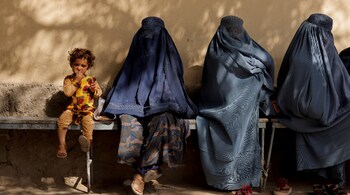
In a striking escalation of restrictions, Afghanistan’s Taliban government has introduced an edict prohibiting women from reciting the Quran aloud, even in the company of other women. The latest mandate, reported by Virginia-based Amu TV, intensifies the already stringent curbs on Afghan women, who have been systematically silenced since the Taliban’s return to power in 2021.
Mohammad Khalid Hanafi, the Taliban’s minister for the propagation of virtue and the prevention of vice, framed the rule as an extension of the prohibition against women calling the takbir (God is Great) or the athan (Islamic call to prayer). According to Hanafi, “If women cannot perform the call to prayer, then singing or playing music is certainly out of the question.” He elaborated that even in prayer, women must not speak loudly enough for others to hear. A woman’s voice, he stated, is regarded as awrah—something private and forbidden to be heard by others, even by other women.
The new rule adds to a spate of measures targeting Afghan women’s visibility in society, including a recent mandate requiring them to cover their entire bodies, including their faces, in public. These edicts, approved by the Taliban’s supreme leader, Hibatullah Akhundzada, are presented as safeguards to prevent “vice and temptation,” transforming women’s voices, clothing, and very presence into potential moral hazards.
Human rights experts and Afghan women fear that this latest diktat could extend far beyond prayer, limiting even private conversations and further erasing women’s social presence, as per a BBC report. As women’s voices are considered potential "instruments of vice" and forbidden from being heard in public, singing or reading aloud is now prohibited—even from within their own homes.
Moreover, the restrictions have grown so severe that Afghan women are now forbidden to make eye contact with men who are not close family, while taxi drivers face penalties if they transport a woman unaccompanied by a male relative. Any woman or girl who fails to comply with these rules risks detention and punishment, as Taliban officials enforce the strict new codes.
A midwife in Herat—one of the few women still permitted to work outside her home—told Amu TV that even at healthcare checkpoints, Taliban officials bar her from speaking with male relatives. “We’re instructed not to discuss medical matters with male family members or officials,” she shared.
Women who breach these codes risk arrest and punishment, with taxis forbidden to transport unescorted women, and even medical staff under surveillance to limit conversations.
The global community, especially women’s rights advocates, is voicing alarm. The United Nations’ special representative for Afghanistan, Roza Otunbayeva, has condemned the growing list of restrictions as “intolerable.”
In the three years since the Taliban’s takeover, it has become evident that even if edicts aren’t strictly enforced, fear drives people to self-regulate. Women remain visible in small numbers on the streets of cities like Kabul, but almost all are now shrouded from head to toe in loose black garments or dark blue burqas, with their faces covered and only their eyes showing—an effect of a decree issued last year.
“Every moment feels like you’re in a prison. Even breathing has become difficult here,” lamented Nausheen, an activist told BBC.
Until last year, Nausheen was part of small groups of women who bravely marched through Kabul and other cities, demanding their rights in the face of increasing restrictions.
Discover the latest Business News, Sensex, and Nifty updates. Obtain Personal Finance insights, tax queries, and expert opinions on Moneycontrol or download the Moneycontrol App to stay updated!





