

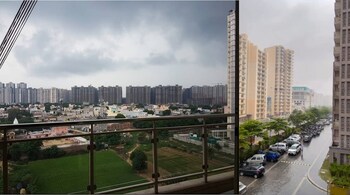
India’s rainfall deficit narrowed further to 16.8% until June 22, compared with 17% just the previous day, data released by the Indian Meteorological Department showed.
Delhi’s situation improved as the national capital’s rain deficit narrowed to 55%, but Chandigarh’s deficit continued to remain high at 92%.
A Moneycontrol analysis shows that rainfall deficits are narrowing in Northern Indian states, except Punjab and Haryana. (see graphic)
In monsoon parlance, a normal is calculated using a long-period average of 30 years for a specific region.
A deficit is computed in percentage terms if the rainfall is below the long-period average.
Except for the eight states and union territories, which have received more rainfall than normal, the rest of the country faced a deficit. Moreover, in 12 states, precipitation was lower than 50% of normal during this period. These include Uttar Pradesh, Bihar, Punjab, Jharkhand and Gujarat.
The reservoir level situation has worsened. For the country, reservoir levels were down 9% from normal as of June 20, compared with 8% last week.
Tamil Nadu, Bihar and Andhra Pradesh have an over 50% deficit in reservoir levels.
Economists contend that the situation can hurt farm income, agricultural output and consumer inflation. Food inflation was sticky above 8% in May and will likely stay elevated in the coming months.
Higher food inflation means that rural inflation has outstripped urban inflation for nearly a year and is likely to do so in the coming months.
High rural inflation further eats into wages, which affects the rural economy.
The agricultural sector recorded 1.4% growth in FY24, compared to 4.7% in the previous year, lower than the 3.7% long-term average.
Discover the latest Business News, Sensex, and Nifty updates. Obtain Personal Finance insights, tax queries, and expert opinions on Moneycontrol or download the Moneycontrol App to stay updated!





