

At first impression, the ‘softwarisation of everything’ seems like a concept straight out of a sci-fi blockbuster. However, it is the reality within which we now exist; a fact that can be illustrated through something as simple as the automobile. Once a mere tool to transport people from one point to another, the car has now evolved into software on wheels, boasting of innovations ranging from high-definition entertainment systems to the ability to drive themselves.
In fact, the car is no longer just a vehicle, but it is “working in a network, picking up signals from the road” and turning into a “service-based industry”, as Dr. Alec Dorling of the ISO/IEC Software Engineering and Systems Engineering committee put it, at the recently concluded event, ‘The Digital Code – Scripting the Future of IT’.
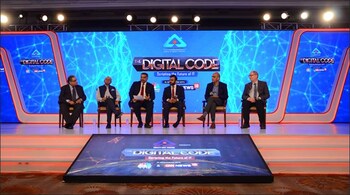
A platform for discussion, deliberation and debate, the event brought together esteemed politicians, academics, entrepreneurs and thought leaders from around the world to discuss the role of standardisation in the growth of India’s IT sector.
A rousing opening address by Surina Rajan, Director General of the Bureau of Indian Standards (BIS), set the tone for the evening, which took on the obstacles that stand in the way of India’s complete digital transformation. At the helm of the body that has laid down over 19,000 national standards for products and services, Rajan stressed the importance of establishing the rules of a game in order to win it. This message was echoed by C. R. Chaudhary, Minister of State for the Ministry for Consumer Affairs, Food and Public Distribution, who pointed out that harmonising Indian standards with global guidelines has played an integral role in allowing Indian businesses to thrive overseas.
While standards exist in every sphere of economic activity, they are especially important in the digital sphere, which can help fulfil Prime Minister Narendra Modi’s vision of an equal and empowered India. In his keynote address, Ravi Shankar Prasad, Minister of Law & Justice and Electronics and Information Technology, reiterated, “Standards should be such that they become the facilitator of digital inclusion and empowerment.”
Speaking about empowerment, the Union Minister also cited the example of Aadhaar, and how it – combined with the growing penetration of low-cost mobile internet – helped further financial inclusion by bringing millions of Indians into the formal economy. In addition to facilitating a rise in the number of bank accounts, the initiative also proved to be invaluable in eliminating unscrupulous middlemen who often kept people from receiving benefits from the government.
His enlightening words were followed by a panel discussion, in which thought leaders discussed the role of standardisation in the rise of technology.
Big data was at the fore of the discussion, as its massive quantity, unstructured nature and lack of interoperability become growing concerns. There appears to be a solution on the horizon, though. As pointed out by Prof. Diwakar Vaish of the A-set Training & Research Institutes, a number of homegrown technologies are capable of demystifying this data for governments and enterprises. Combined with standards that govern the collection, storage, distribution and ownership of data, these innovations are all set to transform India into a data-rich country, where these insights are used to uplift its citizens.
Clear, concise data can also foster innovation by facilitating public-private partnerships, like it has in making India a cashless economy. Saurabh Srivastava, Co-Founder of the Indian Angel Network, pointed out that Aadhaar, the prevalence of connectivity and open APIs for payment systems have led to a rise in the number of cashless transactions – going from 300 million credit & debit card payments in 20 years to over 150 million transactions on the Unified Payments Interface (UPI) in the last fifteen months alone! This astounding number is only set to grow, as new entrants like Google Tez, WhatsApp Payments and Facebook Messenger build within the existing environment.
But for all this to succeed, there needs to be a comprehensive and unified standards ecosystem that sets parameters to ensure users’ data security and privacy, which is a “daily battle”, in the words of Xerox’s Managing Director in India, Raj Kumar Rishi.
And while it’s easy to get carried away by the interconnected nature of technological innovations, Raman Roy, Chairman & MD of Quatrro BPO Solutions, aptly describes it as a double-edged sword. Thankfully, BIS and international standards bodies like the International Organization for Standardization & the International Electrotechnical Commission work tirelessly to ensure that we can reap the rewards of these advances without compromising on our safety. BIS, in particular, has been lauded for its efforts in formulating software standards that are accepted across the globe.
In his concluding remarks, Amitabh Kant, CEO of NITI Aayog, emphasised the role that private organisations have played in driving India’s economic growth. A fine example of public-private collaboration, the standards set by BIS are reflective of India’s technological expertise, and Kant highlighted this, as he invited more entrepreneurs to contribute to the process and script the future of IT and the world at large.
This rewarding process not only gives businesses a competitive edge, but it also offers them a chance to work with some of the keenest minds in the country. Together, their efforts are driving India’s transformation into a connected, secure, inclusive and innovative land, and fueling its rise to the top of the tech world.
Discover the latest Business News, Sensex, and Nifty updates. Obtain Personal Finance insights, tax queries, and expert opinions on Moneycontrol or download the Moneycontrol App to stay updated!





