

According to a recent report, Ferozepur, a key district in Punjab, has had 16 police chiefs in six years with only one of them allowed to complete a year in office. It sums up the continuing morass in the state, with all hope of a turnaround following the election of an AAP government in March 2022 dashed by its inability to deal with the crucial issues of unemployment and rampant drug use leading to economic ruin.
As a consequence, the state’s debt burden is ballooning. Three months ago, Indian Express reported that the state’s chief minister Bhagwant Mann had written to the Governor Banwarilal Purohit seeking his help in getting a moratorium of five years on the repayment of the state’s burgeoning debt. This is something that should be a matter of shame to all Punjabis, a community that has always prided itself on its self-reliance.
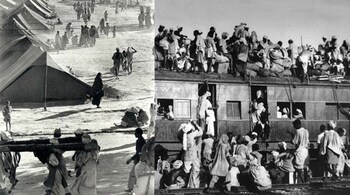
I should know. Seventy-six years ago, a comfortably middle-class Punjabi Hindu family based in Lahore started its long trudge back to India in the midst of the Partition riots. Leaving behind a prosperous business, a house large enough to have stables for the horses and kennels for the dogs, the large group of old and young went through hell before reaching Dehradun. Here they confronted their new reality for the first time when the relatives they had hoped would take them in turned them out, forcing them into the government's hastily created refugee camps. Life in these barracks, earlier used to restrain prisoners of war, was tough especially for the women used to a more genteel living and now having to use public spaces for their daily chores. Snake bites, malaria and hunger were a part of their existence.
Somehow, they persevered, eking out a meager existence by selling chole bathure at the nearby railway station. Each morning the women would rise early and cook, and the boys would go and hawk it at the station. Then the hunt would start for cheap rations. This continued for several months before finally the family moved to Shimla and started another struggle for survival.
Through it, there were two constants - they would not beg, ever. Not even to go back to the relatives who had turned them away. And they would not borrow because they knew they had no means of repaying the loans. The pain this caused was intense. One young son died of diarrhea and another grew up with polio. For the others, the teens were not an age to frolic but a time to put their shoulder to the family wheel. But they endured and passed on their lessons to another, more privileged generation.
I know this story because these were the families of my parents. I learnt two lessons from them - no work is below my dignity and debt is never an answer to any crisis. Often, it worsens it.
It, therefore, pains me immensely to see the state of my birth reduced to such penury. Punjab’s accumulated debt in the past year-and-a-half has crossed Rs 47,000 crore, and its outstanding debt is now nearly 50 percent of its GDP thanks to generous freebies by successive governments with hardly any fresh capital investment coming. This is a state whose GDP per capita rank was number one till about 1981. Today it is outside the top 15.
In a report by Kaushik Das, the chief economist at Deutsche Bank India, based on the FY24 first-budget estimates, Punjab was rated among the bottom three of 17 key states along with Bengal, and Kerala, in terms of fiscal health. The report looked at four major fiscal criteria - fiscal deficit, the state’s own tax revenue, its debt levels, and the interest payment to revenue receipts, all as a percentage of its gross state domestic product.
An earlier generation of Punjabis, devastated by a Partition they were not responsible for, said we won’t beg. They were tough men and women, often crude and unpolished, and mostly reviled for being grasping and unaesthetic. But today I feel proud of them, glad for the legacy of self-respect and hard work they have left me with. On the eve of a new year, I wish some of that would rub off on those who govern what was once India’s golden state.
Discover the latest Business News, Sensex, and Nifty updates. Obtain Personal Finance insights, tax queries, and expert opinions on Moneycontrol or download the Moneycontrol App to stay updated!





