

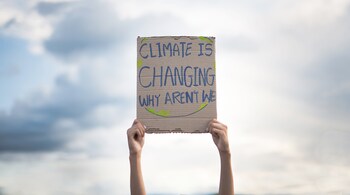
COP28 in Dubai brought clarity to two aspects of the climate debate: that the global south needs immediate access to more finance, and that development cannot take a backseat despite the looming challenges of extreme weather. This places India in a unique position: it can lead the demands of the global south and negotiate on its behalf for equitable climate action, and set examples in growing its economy for the rest of the bloc to emulate.
India's diplomatic heft in the climate community has grown considerably since the success of the G20 in September 2023. The new-found recognition is aptly timed as well since the Centre is aiming to double the size of the economy to $7 trillion by 2031. This will mean an increased focus on expanding essential infrastructure such as roads, national highways and airports, and installing more power plants to ensure 24x7 power. In fact, the country's road network has grown to more than 6.3 million kilometres — behind only the US — and India recently signed a $78 billion deal with Qatar for LNG supplies over the next 20 years.
At the same time, India is ranked eighth on the climate vulnerability index in 2022. Its 7,000-km coastline supports millions through fishing and tourism but as we near 1.5 degrees of warming, the rising sea levels will force people to move inland. Agriculture in the northern half depends on the perennial mountain rivers but the Himalayan glaciers are receding at the rate of up to 15 metres every year. This could mean mass water shortages if monsoons continue to become more erratic.
For instance, the average monsoon rainfall now stands at 868 mm (1971-2020) a year compared to 880 mm for 1961-2010 and Delhi's growing population could face similar water shortages as Bengaluru. According to a new index by Climate Central, the Climate Shift Index for the city on March 12, 2024 was rated at 3, and climate change made Bengaluru's water scarcity this year five times more likely. Chennai's water crisis in 2019 was a reminder that our major cities must prioritise water conservation.
It's not just about every day life, though. We are moving towards extreme weather events becoming the new normal and this will have larger ramifications. The Reserve Bank of India warned in August last year that 4.5 percent of the GDP could be lost by 2030 as outdoor working hours are constrained by sweltering heat and humidity. Higher temperatures over the oceans will translate into more cyclones making landfall and greater damage to the economy. Cyclone Biparjoy affected a massive 1.33 lakh hectares and caused damages worth Rs 1212.5 crore.
However, there are reasons to be optimistic. Carbon emissions are at the root of the climate crisis and the developing world is paying the price for the consumerist lifestyle of the global north that was powered by fossil fuels. Yet, as the fastest growing large economy, India's energy choices could become an example of balancing the practicalities of development, job creation and maintaining revenue streams with decarbonising sections of the economy. Its goal of net-zero emissions by 2070 means that consumer classes with predictable load profiles, such as malls, restaurants, shopping complexes and housing societies could be assisted to adopt more renewable energy.
The speed of renewable adoption could be increased and the Prime Minister's announcement to provide rooftop solar power to 10 million households is a welcome step forward. Resident Welfare Associations (RWAs) across the country should explore setting up their own, captive solar power plants (backed by energy storage).
Public transit is also going electric with the rising share of electric taxis, auto rickshaws, bikes and buses. The PM E-bus Seva will deploy 10,000 electric buses across 169 cities and the Delhi Metro, which draws 35 percent of its power from renewables, must serve as a case study to the metro lines coming up in Ahmedabad, Indore and Kanpur in lowering their carbon footprint. The demand discovery for 7,750 electric trucks under Niti Aayog's e-FAST initiative will provide the initial push for decarbonising one of India's most polluting sectors: road freight. Most importantly, the Bureau of Energy Efficiency (BEE) recently talked about the need for a national EV policy. This would be a much-needed boost to private investors and OEMs alike.
India's mountainous and border stretches are especially vulnerable to climate impacts. Frequent landslides under heavy rainfall, soil erosion due to dwindling tree cover and development that ignores the local understanding of the terrain, soil types and carrying capacity could strain relations with the authorities. These regions, such as Uttarakhand, Himachal Pradesh and Sikkim should instead serve as test beds to mainstream traditional building practices that use more mud, clay, sand and straw. The materials cost much less, the practices employ more locals and the engagement keeps alive the knowledge that is proven to suit Indian conditions. The Centre's nod to the Flood Management and Border Areas Programme (FMBAP) too comes at the right time and should bolster the state governments that are proactively building their defences against extreme weather.
There is growing recognition that limiting global warming to 1.5 degrees above pre-industrial levels may be extremely difficult. The 2-degree limit may be more realistic, but even this necessitates that the developing countries receive financial aid from the global north. Every fraction of a degree matters. India needs a trillion dollars a year from 2025 to enable clean development; the rest of the global south bloc needs a lot more. New and innovative sources of finance which include private investments and even removing harmful subsidies can help to bring in the much-needed cash. We still have time to bend the emissions curve, and yet in the absence of the funding the global south cannot afford to switch to renewables alone. India's policy support for renewables and disaster management should be replicated by the African Union and the BRICS members. The onus, for finance though, lies with the global north. It's important to sustain the pressure for climate funding as the developing countries cannot be asked to forego all of their aspirations to contain a crisis they did not engineer.
Authored by Aarti Khosla, Founder, Climate Trends
This article is part of a series for Sustainability 100+ S3. Learn More: https://www.sustainability100plus.com/
Moneycontrol journalists were not involved in the creation of the article.
Discover the latest Business News, Sensex, and Nifty updates. Obtain Personal Finance insights, tax queries, and expert opinions on Moneycontrol or download the Moneycontrol App to stay updated!





