

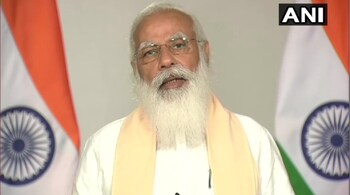
Amid several states flagging scarcity of medical oxygen in the COVID-19 fight, Prime Minister Narendra Modi on Friday said Railways and Air Force are being deployed to reduce the transportation time for oxygen tankers and all state government need to work together to meet requirements of life-saving gas and medicines.
Chairing a high-level meeting on the COVID-19 situation with chief ministers of 11 states and Union Territories which have reported the maximum number of cases recently, Modi called for working together to fight the pandemic with collective power.
Also Read: Zydus gets DCGI nod for emergency use of 'Virafin' in treating moderate COVID-19 cases
He said the biggest basis of India's success during the first wave of the pandemic was our united efforts and united strategy and reiterated that we will have to address this challenge in the same way.
He assured the Centre's full support to all the states and in this fight.
Also Read: COVID-19 Updates | Countries that have restricted travel from India: All you need to know
On oxygen supply, PM Modi took note of the points raised by the states and said there is a continuous effort to increase oxygen supply, according to a statement issued by his office.
He urged all states to work together and coordinate with one another to fulfil requirements relating to medicines and oxygen. He also asked the states to check hoarding and black marketing of oxygen and medicines.
Modi said every state should ensure that no oxygen tanker, whether it is meant for any state, is stopped or gets stranded.
He urged the states to set up a high-level coordination committee to carry oxygen to different hospitals of the state. This Coordination Committee should ensure that as soon as there is an allotment of oxygen from the centre, it can deliver oxygen as per requirement in different hospitals of the state immediately, he added.
Modi said the central government is working on all possible options to reduce the travel time and turnaround time of oxygen tankers. For this, Railways has started Oxygen Express. Empty Oxygen tankers are also being transported by the Air Force to reduce one way travel time.
He said along with all measures for the treatment of the patients, hospital safety is also very important.
Expressing grief on recent incidents of oxygen leakage and fire at hospitals, Modi said the administrative staff of the hospital needs to be made more aware of the safety protocols.
He also urged the administration to continuously make people aware so that they do not indulge in panic buying. He said that with united efforts, we will be able to stop this second wave of pandemic across the country.
Discover the latest Business News, Sensex, and Nifty updates. Obtain Personal Finance insights, tax queries, and expert opinions on Moneycontrol or download the Moneycontrol App to stay updated!





