

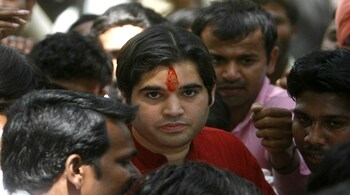
BJP MP Varun Gandhi on Monday cited a Centre’s note to criticise the decision of several states, including Uttar Pradesh, to impose night curfew to curb Covid, and said it should be decided if our priority is to contain the disease or to indulge in a show of strength during elections.
Policymakers should lead from the front so as inspire the common public to stay at home, he said.
Criticising the night curfew decision, he said, "Imposing curfew in night after assembling lakhs of people for rallies in the day defies the common man’s wisdom”.
Keeping in mind Uttar Pradesh’s limited health infrastructure, it has to be decided honestly if our priority is to contain the dangerous Omicron variant of coronavirus or to indulge in a show of power during polls, he said.
Gandhi noted that maximum transmission typically happens during the day, as there are lesser people on the road during the night, and called for strongly cutting down on social gatherings which could emerge as Covid clusters.
He cited a Centre’s note to the Maharashtra government in March 2021 which, he highlighted, had said that measures such as night curfews, weekend lockdowns have very limited impact on containing or suppressing the transmission.
"Hence the administration should focus on strict and effective containment strategy,” it had said.
Gandhi called for a holistic strategy.
Discover the latest Business News, Sensex, and Nifty updates. Obtain Personal Finance insights, tax queries, and expert opinions on Moneycontrol or download the Moneycontrol App to stay updated!





