

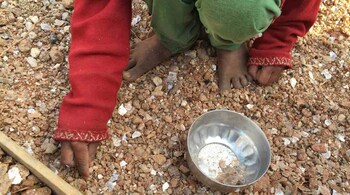
Every year on June 12, World Day against Child Labour is observed in nearly 100 countries across the globe. Awareness on the harmful mental and physiological effects of child labour is spread on this day. Countries across the world use this day to discuss and develop efficient measures to fight and eradicate issues that lead to child labour.
The International Labour Organization (ILO) launched the World Day against Child Labour in 2002; yet, at present, one in 10 children in the world are engaged in child labour. Though the number has declined by 94 million in the past 20 years, there has been a two-thirds slump in the rate of reduction in the past few years.
Right now, as many as 152 million children in the world work as labourers currently, with 72 million of them being employed in hazardous industries. A United Nations report points out that 71 percent child labourers work in the farming sector, 17 percent are employed in the service sector and another 12 percent in the industrial sector, which also includes dangerous mining activities.
Being engaged in labour exposes children to hazards, deprives them of a normal childhood, proper education and healthcare, and sometimes, even freedom. As per the latest Census data, India already has more than 10 million child labourers. Even among the migrant workers who were seen returning home in thousands after the coronavirus lockdown was induced, many were children.
The theme for this year’s World Day against Child Labour is “COVID-19 -Protect children from Child Labour Now, More than Ever”, aimed at exploring the impact of novel coronavirus pandemic on child labour. The global health crisis and its economic impact have ravaged the lives of many – the poor being the most vulnerable and worst affected category.
As such, the stress on the finances of several households may push millions of children into child labour in the coming months. And if that happens, the risks that await underprivileged children will be far worse than it already was – with more arduous work and longer working hours.
This year a virtual campaign will be held to observe the day. It was jointly organised with the International Partnership for Cooperation on Child Labour in Agriculture and the Global March Against Child Labour. Meanwhile, UNICEF and ILO are developing a simulation model that would help fathom the impact of COVID-19 crisis on child labour.
Discover the latest Business News, Sensex, and Nifty updates. Obtain Personal Finance insights, tax queries, and expert opinions on Moneycontrol or download the Moneycontrol App to stay updated!





