

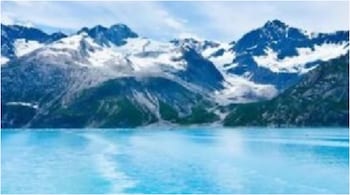
While the Bermuda Triangle is widely known for mysterious vanishings, fewer are aware of the "Alaska Triangle," an area associated with more unsolved missing person cases than anywhere else. Situated between Anchorage, Juneau, and Utqiagvik (formerly Barrow), the Alaska Triangle has perplexed investigators and fuelled conspiracy theories after more than 20,000 disappearances since the 1970s.
The region first drew widespread attention in October 1972, when a small plane carrying two prominent US politicians vanished. House Majority Leader Thomas Hale Boggs Sr and Alaska Congressman Nick Begich were on board a light aircraft travelling from Anchorage to Juneau. Accompanying them were Begich’s aide, Russell Brown, and pilot Don Jonz. Despite a large-scale search, neither the passengers nor the aircraft were ever found, deepening the mystery and sparking a range of conspiracy theories.
This incident was further intensified by the fact that Boggs had been a member of the Warren Commission, which was established to investigate the assassination of President John F. Kennedy. Reports suggested that Boggs was critical of the commission’s findings, leading to speculation that his disappearance might have had more sinister implications.
Another unsolved case associated with the Alaska Triangle is that of Gary Frank Sotherden, a 25-year-old hunter from New York who ventured into the Alaskan wilderness in the mid-1970s. He was never seen again. It wasn’t until 1997, when a human skull was discovered near the Porcupine River in northeastern Alaska, that some resolution was reached. In 2022, DNA analysis confirmed that the remains belonged to Sotherden, with evidence pointing to his death from a bear attack.
Explanations for the disappearances within the Alaska Triangle range from the plausible to the extraordinary. Some attribute the vanishings to unusual magnetic anomalies in the area, while others suggest extraterrestrial activity. More pragmatic interpretations highlight the region’s harsh wilderness, which features rugged mountain ranges, extreme cold, and dangerous wildlife, including bears.
The Alaska Triangle’s remote and unforgiving terrain, along with its turbulent weather conditions, could easily account for many of the disappearances. Yet, much like the Bermuda Triangle, the region remains steeped in mystery, leaving many to wonder if the truth will ever fully emerge.
Discover the latest Business News, Sensex, and Nifty updates. Obtain Personal Finance insights, tax queries, and expert opinions on Moneycontrol or download the Moneycontrol App to stay updated!





