

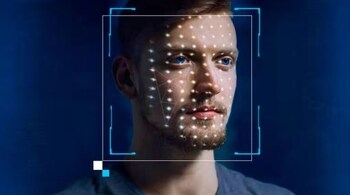
Social media intermediaries will be required to 'actively assist' the government in identitying and prosecuting against deepfakes, according to a presentation made by top officials to internet platforms earlier this week.
Moneycontrol has seen a copy of the presentation that lays out the accountability of internet intermediaries in the context of deepfake content.
In the meeting, attended by Minister of State for Electronics and Information Technology Rajeev Chandrasekhar, MeitY secretary S Krishnan and representatives of internet platforms such as Meta and Google, the government pointed out several action items to tackle the deepfake menace.
Highlighting the platforms’ legal obligations under the Information Technology (Intermediary Guidelines and Digital Media Ethics Code) Rules 2021, which help curb deepfakes, the government flagged at least six counts on which the intermediaries are yet to full comply – including the submission of status reports, communication about prohibited content to users, and alignment of their terms of service with the law.
According to the presentation, platforms are required to enable in-app reporting of content violating provisions of the IT law, and these violations have to be mapped out with other laws as well for users. Moreover, when a user reports such a violation, it has to be considered a grievance under the IT Act, which mandates a timeframe and adjudicatory mechanism to resolve the issue.
New regulations soon
The government has maintained that the amended IT Rules already provide enough wherewithal to deal with deepfakes through a provision that asks them to make reasonable efforts to curb 11 types of harmful content such as misinformation, impersonation, copyright infringement, etc.
However, it has also said that new regulation is in the works to have provisions of penalties on persons who upload or create such deepfakes. There are also likely to be provisions that lay down ways in which users can demarcate between deepfakes and original content.
It has repeatedly warned platforms that not removing deepfake content from their platforms could mean losing safe harbour, which gives them legal immunity against content shared by users on the platforms.
A few weeks back, actor Rashmika Mandanna’s deepfake video went viral. The video, originally of British influencer Zara Patel, was digitally altered to make her face look like Mandanna’s. There was a huge uproar about the video, with netizens calling for the government to regulate AI.
The government swung into action after several celebrities reported about their deepfake images and videos in circulation. Prime Minister Narendra Modi has also flagged issues around deepfakes.
Deepfake is a type of content that leverages AI to alter a person's appearance, voice, or actions in a realistic manner, making it difficult to distinguish this from authentic, unaltered content. It can be an image, video, or audio.
The technology was first spotted in 2017, when an anonymous user on the social media platform Reddit posted an algorithm that leveraged existing AI algorithms to create realistic fake videos.
Discover the latest Business News, Sensex, and Nifty updates. Obtain Personal Finance insights, tax queries, and expert opinions on Moneycontrol or download the Moneycontrol App to stay updated!





