

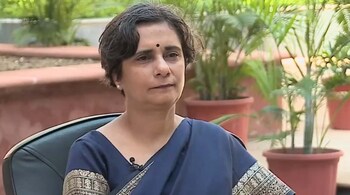
The resignation of Gagandeep Kang as Executive Director of Translational Health Sciences and Technology Institute (THSTI), the Faridabad-based public health research institute under the Ministry of Science and Technology’s Department of Biotechnology (DBT), has come as a surprise to many in the scientific community.
A professor in the Department of Gastrointestinal Sciences at the prestigious Christian Medical College (CMC) - Vellore, Tamil Nadu, she had been on lien to THSTI since 2016.
Kang’s tenure was supposed to end in August 2021, but Indian Express reported that she requested the Department of Biotechnology to relieve her by the end of August. She cited 'personal reasons' for her resignation and dismissed speculation linking her resignation with government disbanding a committee headed by her to look into indigenous COVID-19 drugs and vaccines.
“If I had to resign because of the disbanding of the committee, I would have done it in the same month. I continue to be on several other committees made by the government and I will give my suggestions as and when required,” she told The Print.
Kang said she will be returning to her home in Vellore.
A distinguished scientist, she is known for her work on viral infections in children, particularly on rotavirus infections that cause high mortality and morbidity in India. Her research over the years has led to a better understanding of rotavirus, and why the Indian population has a lower immunity against the disease that used to kill one lakh children every year. All this knowledge helped in developing an indigenous vaccine against rotavirus from scratch.
Kang's work on vaccines is recognised globally. Last year, she became first Indian woman scientist to be elected Fellow of the Royal Society (FRS), London. That's no mean achievement. The Royal Society is the oldest scientific academy in the world and its Fellows are some of the world’s most eminent scientists.
She is also the Vice Chair at the Coalition of Epidemic Preparedness Innovations (CEPI), which has been at forefront in backing the most promising vaccine candidates globally by providing funding support. India is a founding member of CEPI.
Why is it loss? A senior virologist who worked with Dr Kang on the rotavirus vaccine, said he was little surprised to hear that she resigned. "It's her personal choice to continue or not, but the government should have tried to retain her from leaving during the pandemic," the virologist, who did not wish to be named, said.
Citing an anecdote about Kang, he said, "She was principal investigator at CMC, Vellore overseeing clinical trials related to the rotavirus vaccine. Getting parents to agree to enrol their children for an experimental shot of rotavirus vaccine is a tough and sensitive matter, but given the kind of trust and respect that Dr Kang commanded at CMC, it became easy to convince parents. She is also loved by her staff."
Another person said that Kang is an outsider in the Indian bureaucratic scientific establishment, where big egos, sycophancy and politics run deep.
Typically, the heads of scientific establishments in India come from government institutions. Kang comes from a private medical institution like CMC, Vellore, he added.
Despite these shortcomings, the person above said Kang enabled DBT and DCGI (Drug Controller General of India) to cooperate on evaluating applications related to biotech products that used recombinant technology. "Earlier, biotech companies had to face delays due to both departments working in silos. There is a perceptible change since 2017 in terms of response," the person added.
Discover the latest Business News, Sensex, and Nifty updates. Obtain Personal Finance insights, tax queries, and expert opinions on Moneycontrol or download the Moneycontrol App to stay updated!





