

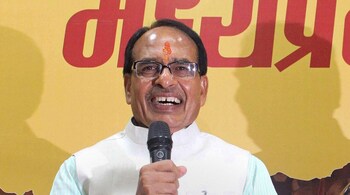
Madhya Pradesh Chief Minister Shivraj Singh Chouhan on Sunday accused Congress leader Rahul Gandhi of spreading "misconceptions, confusion and lies" about COVID-19 vaccines, which was leading to many people "putting their lives in danger" by refusing to take the doses.
He was reacting to a tweet by Gandhi in which the latter had taken a swipe at Prime Minister Narendra Modi''s radio programme Mann Ki Baat. "Bas Har Deshwasi Tak Vaccine Pahucha Do, Fir Chahe Mann Ki Baat Bhi Suna Do!" (Just deliver the vaccine to every citizen, and then put forth your Mann ki Baat if you want)," Gandhi had tweeted.
Hitting back, the MP CM said the PM was providing free vaccines to all while Gandhi was "only spreading confusion".
"Shame on you Rahul Baba, it is prime minister Narendra Modi who is getting people vaccinated and not you. The prime minister is providing free vaccines to all the citizens of the country and you are only spreading confusion! You spread confusion, lied due to which many people refused to get vaccines," Chouhan said on Twitter.
During the day, seeking to make people shed their reservations about vaccines against coronavirus, Modi spoke to residents of Dulariya village in MP''s Betul district, and the chat was aired on the PM''s monthly ''Mann Ki Baat'' broadcast on Sunday.
The MP CM further tweeted, "Prime Minister Narendra Modi ji today spoke to the villagers in Dulariya village of Betul district who were not getting vaccinated due to confusion. Explained it to them in simple words and the villagers started taking the vaccine." While the PM had removed the clouds of confusion about vaccination, the CM said Gandhi was "putting people''s lives in danger by lying, spreading misconceptions".
(With PTI inputs)
Discover the latest Business News, Sensex, and Nifty updates. Obtain Personal Finance insights, tax queries, and expert opinions on Moneycontrol or download the Moneycontrol App to stay updated!





