

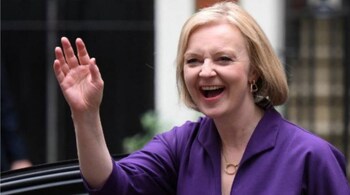
Liz Truss could hardly pick worse circumstances under which to become Britain’s new Prime Minister, even leaving aside the rain that delayed her inaugural speech. She won a smaller share of her party’s votes than her predecessors, enjoys little public enthusiasm, and inherits potentially the worst economic crisis in a generation. Whether Truss exceeds expectations will depend on her willingness to abandon campaign slogans for pragmatic solutions.
During the contest to replace outgoing Prime Minister Boris Johnson as Tory party leader, Truss burnished her credentials as a traditional conservative in the mould of Ronald Reagan and Margaret Thatcher. She ruled out ‘handouts’ to tackle the soaring cost of living (before ruling them back in), pledged sweeping tax cuts, and promised to unleash growth with supply-side reforms. She also vowed to increase defence spending, while skirting any serious discussion of how to reform the dangerously overextended National Health Service (NHS).
To govern is to choose, though, and as Prime Minister Truss will need to speak honestly about trade-offs and demonstrate an ability to compromise — especially on the two major issues where she’ll have to make early decisions.
One is the cost of living crisis. Truss is right to want to bring down the highest tax burden since the 1940s and to be sceptical of indiscriminate government intervention. But cutting taxes alone isn’t enough. Energy prices are set to rise 80 percent in October, with the prospect of more jumps in the first half of next year. Truss’ early statements have shown she’s alive to economic and social damage that would result in failing to respond to the widespread hardship. The question is how to go about it.
Simply freezing prices and hiding the inflation in long-dated loans to energy suppliers is the simplest and most politically appealing approach, but untargeted relief would be enormously costly, and the government needs to set out how it will be paid for. It also creates a disincentive for people to cut their energy use, further hampering the government’s decarbonisation goals (which Truss has largely avoided mentioning).
Truss’ second defining choice is whether to pursue the path of confrontation or co-operation with Europe. UK-EU relations are at a low point, which is saying a lot. But it’s Britain’s actions that have set up a collision course with worrying consequences.
Truss-supporting Conservatives want to rip up the Northern Ireland Protocol, the part of the Brexit divorce deal that governs trade in Northern Ireland. There is a piece of legislation aiming to do just that — unilaterally. The result, if no compromise is found, could be a serious deterioration in relations that threatens everything from science co-operation to wider UK-EU trade, and stability in Northern Ireland itself. The EU should help facilitate a compromise, but first the UK should remove the loaded gun from the table.
Considerably more headaches await the Prime Minister, including a series of public-sector strikes, faltering social care for the elderly and chronically ill, and sustaining military support for Ukraine. In her first act as head of government, Truss appointed a senior leadership team that’s already the most diverse in history. Truss’ task now is to restore confidence in the government’s ability to manage crises at home while providing steady, stable leadership on the world stage. Not just Britons should wish her success.
Discover the latest Business News, Sensex, and Nifty updates. Obtain Personal Finance insights, tax queries, and expert opinions on Moneycontrol or download the Moneycontrol App to stay updated!





