

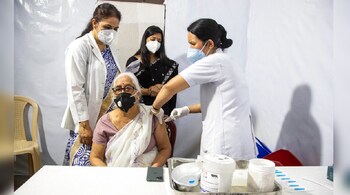
Why is the government not giving the private healthcare sector or even industry a free hand in the COVID-19 vaccination programme? In the latest phase it initially seemed like it had. Private healthcare companies have offered their facilities to ramp up vaccination numbers and industry bodies have asked for permission to vaccinate employees of their member organisations. The government announced that private healthcare providers will join in this phase.
But what has emerged is a public-private partnership that’s heavily tilted towards the public side. The government will be the sole buyer of vacccines and will supply vaccines to empanelled hospitals—currently those affiliated to the CGHS or the PMJAY—at a price of Rs 150. These hospitals will recover a maximum of Rs250 per dose from the patient, leaving Rs100 for them as a fee for storage, disposables and manpower. Thus, the private sector can participate but not freely procure or price the vaccine or its administration.
To know why the government may have done this, without getting into whether it’s justified or not, let’s look at the alternative—what if they had thrown the field open? There are two vaccine options at present—Serum Institute of India’s Covaxin and Bharat Biotech’s Covishield. But Covaxin has been granted approval under clinical trial mode. Its phase-3 trial results have not been disclosed as yet. Even in the newest round that started this week, it is being administered only in government hospitals, according to reports.
Serum has been licensed by AstraZeneca to make Covishield. AZ’s vaccine is also being supplied in developed markets such as the UK and EU. Serum itself is exporting it to a number of countries. Till Covaxin’s data sees it exit the clinical trial mode, it’s reasonable to expect that private players would make a beeline to Serum for Covishield.
They would have to negotiate with a sole seller, a monopolistic situation even if not by design, with a number of healthcare players and others (such as industry bodies and companies) bidding for supplies. Prices could go up sharply, much higher than the government’s cost of around Rs200 a dose. Recently, Serum’s CEO Adar Poonawala had said he plans to supply the vaccine for Rs 1000 to the private sector. Hospitals would have added a facilitation fee, taking the cost to the patient even higher.
How does one put a market price on a potentially life-saving vaccine that could help individuals and companies lead a more normal existence? Similarly, private healthcare players know their clientele may be willing to pay a higher price.
So what’s wrong if all these situations play out? After all, the government can take care of the financially vulnerable through its facilities and the private players can take care of those who can afford to pay. Even wastages of vaccines due to poor response could go down if the private sector is involved. The answers may lie in pricing of the vaccine, setting of price expectations, availability and the possible political fallout.
At present, the government has set a price of Rs200 a dose for Covishield to be paid to Serum in the first round, with more procurement to be done for subsequent rounds. The private sector’s entry would upset the government’s position as the sole domestic buyer at the table. The second domestic buyer is a fragmented group of buyers with weak bargaining power and willing to pay a much higher price. A higher price for private players may have compelled the government to increase its own purchase price, becoming the base for future procurement. It could also become the base for pricing other vaccines in the pipeline. A higher price can upset its budgetary calculations.
Availability too could become an issue, as a portion (which could be a large one) of the capacity is allocated to the private sector. Lastly, there’s the question of political opponents making an issue (whether true or not) of those with the means getting shots at relatively higher prices in private facilities, while the poor await their turn at government facilities.
These may be some of the reasons why the government, for now, has decided it will be the only buyer. Since it will procure and store the vaccines at its own facilities and supply as per requirement to private facilities they don’t need to invest in extensive storage. That’s why it may have decided on a maximum of Rs100 as a facilitation charge. While private companies will pay Rs150 to the government, it is likely to pay the difference to the vaccine companies from its own pocket.
Will this pattern continue for the entire vaccination programme? The short answer is nobody knows. The government has made a practice of keeping its cards close to its chest. But the most vulnerable section of healthcare workers, frontline (police, municipal and armed forces) workers, and the aged and the seriously ill are being given shots free or at a very reasonable cost.
The next stage will be for those who are in the less risky target groups. Here, the government may free up the room for a little more pricing flexibility. But if its conduct so far is any indication, it’s unlikely to give the private sector an entirely free hand and will remain the biggest buyer in the room to ensure it has a role in price setting.
When more vaccines enter the market, it could soften its stance. If Covaxin’s Phase-3 trial data gets it an all-clear, the ‘clinical trial mode’ tag will go, giving it the same status as Covishield. Recently, Dr Reddy’s Laboratories sought emergency approval for Sputnik V but the government has asked for more data. A few more vaccines are in the works and are expected to get approval some time in 2021. As the number of vaccines increase, the government will get an upper hand in negotiations. Even private players will have more sellers to negotiate with. The power between buyers and sellers will be more balanced then.
How these events play out will be known in the coming months. The learnings from this could guide future public health interventions as well. This is a classic feature of universal healthcare, one where the government shoulders the main responsibility of providing healthcare to its population.
Discover the latest Business News, Sensex, and Nifty updates. Obtain Personal Finance insights, tax queries, and expert opinions on Moneycontrol or download the Moneycontrol App to stay updated!





