

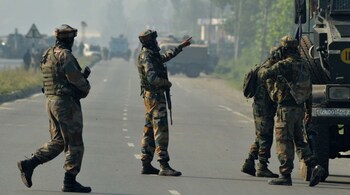
Seven attacks have been launched by Pakistani and local terrorists in the Kashmir Valley and its peripheral heights just after an elected government was sworn in on October 16, 2024. The latest, a grenade blast in the heart of Srinagar on November 3, 2024, that left 12 civilians wounded and suggesting a grim augury for vulnerable workers and tourists thronging the Valley. In contrast, terrorists carried out just one (failed) attack in Jammu division — in the Akhnoor LoC sector — in the same period.
Messaging is “strike at will”
The terrorist messaging was that they could “strike at will”, across the state, irrespective of the new narrative, massive force levels and a concerted operation to dismantle financing, support and radicalising networks.
The October attacks in Kashmir left the security establishment shocked, especially so as the outgoing 15 (Chinar) Corps Commander had as recently as October 4, 2024, publicly expressed satisfaction at the dominance of the security forces with respect to the listed parameters of terrorist violence.
They were interspersed with successful seek-and-destroy operations initiated by the security forces, which yielded three terrorists, including the Pakistani, Usman, the self-styled commander of the TRF / Lashkar-e-Toiba tanzeem responsible for a murderous attack on strategic infrastructure on October 20, 2024. The two main terrorist tanzeems operating in the Valley (Jaish-e-Mohammed and Lashkar through decoy fronts such as PAFF, Kashmir Tigers and TRF to mislead the international community and the FATF-sanctioning bodies) were able to shift from a defensive, under-cover mode. This switch to offensive operations was done virtually overnight, even as the democratically-elected government was yet to comfortably grasp the reins of office.
Terrorists conducted strikes in dormant and least-expected areas such as Gagangeer (Ganderbal) on the workers camp of the strategic Z-Morh tunnel infrastructure and at Botapathri (Gulmarg) on a truck of the 18 Rashtriya Rifles (Raj Rif). Non-local workers were also targeted, leading to one death and three wounded.
Locus shifts from Jammu to the Valley
This constitutes a shift in the focus of the terrorist planners and handlers across the LoC and the International Border. The brunt of the terrorist attacks had been borne by Jammu division since October 2021 while Kashmir had seen the dominance of a robust security forces grid ever since the reading down of the Constitution’s Articles 370 and 35 A in August 2019.
The attacks served to underscore the cyclical reality of Jammu Kashmir: that no security grid will ever be foolproof and that Pakistan’s vengeful 1,000-year war to wrest Kashmir will see no respite. Ebbs and surges of violence in Jammu and Kashmir have been endemic to the security situation since 1989, with the ebbs being mistaken repeatedly as “ushering in of a new dawn of peace”.
Terrorist handlers issued releases on social media linking the Z-Morh infrastructure attack to the threat posed to the China Pakistan Economic Corridor by the “foreign hand” behind the Balochi separatists and the military threat the all-weather Zojila tunnel would pose to the PLA ranged opposite the Indian armed forces in Eastern Ladakh. Handlers also exploited the deep insecurities within the Kashmiri population by attacking non-local workers irrespective of their religious identity and linking their influx to a covert design to change demography and culture. Attacks on civilians have nearly doubled in the state since last year.
Agenda is to undermine efficacy of democratic process
However, the surprise attacks in the Valley nurture a deeply insidious agenda, which terrorist handlers seek to camouflage under the garb of ‘freedom struggle’, CPEC, demography, land rights etc. Terrorist handlers have been unhappy at the triumphant narrative emerging in the State and at the successful conduct of the elections and the yatras. This is because an elected government is better placed to give a vent to the people’s grievances and redirect their energies to the mainstream than the long tenures of an insulated, bureaucrat-led machinery headed by a non-elected Lt. Governor. People alienated from the systems of democracy, governance and administration, ever since the last elected government fell in 2018, were vulnerable to lures by anti-national forces.
The spate of terrorist strikes in Kashmir after the successful elections can, thus, be assessed as stemming from a concerted effort by terrorist handlers to destabilise the new government and drive a wedge between the security establishment and the democratic set-up with a negative fallout for security, governance, administration and people contact.
In an unprecedented move, the new, elected government was kept out of the loop of the security establishment, with the Chief Minister not even invited to the Unified Headquarters meeting held under the Lt. Governor on October 24, 2024. During the tenures of earlier elected governments, it was the CM who would chair the critical security meeting.
Were the elected government to flounder in J&K under this focussed attack by terrorists to discredit it, and by a somewhat ignorant and insensitive narrative from a section of the nationalists, the people can end up disenchanted with the Indian democratic model. As Punjab showed, an elected government proved itself better at managing and neutralising the separatist and destabilising forces unleashed from across the frontiers than the long years of President’s Rule where the bureaucracy and the police brass ruled the roost with unaccountability.
Operational space determines terrorism planners’ focus
Contrary to assumed notions that Kashmir is the unchanging “centre of gravity” for terrorism planners, their focus actually shifts according to the degree of operational space available.
After 2019, sensing that Jammu had been declared a dormant sector with about 14 years of peace after 2007, terrorist planners had quietly worked to fill the vacuum and launch attacks, given that Kashmir was under intense pressure from the security establishment after August 2019.
The number of ambushes on Army convoys and patrols in Jammu division since October 2021 had led to a determined pushback by the higher command and better SOPs and drills for Army movements. The conduct of elections had seen security forces adopt a pro-active mode to take the fight to the terrorist camp and put them on the defensive in the districts south of the Pir Panjals.
With operational space getting constricted for the terrorists here after a virtually free run for three years, and the snows seeping into the hideouts in the higher Pir Panjal reaches, terrorism planners opened the front in Kashmir, though terrorist ranks are more prone to detection and swift neutralisation in the built-up, populated areas of the Valley as compared to the forested mountains of Jammu characterised by low-population densities.
Lessons From History
The to-and-fro of terrorism with respect to operationally-conducive areas has its roots in the strategy of violence in the State. In 1998, when the Army had brought terrorism to its lowest ebb in Kashmir, the Joint Intelligence Committee Report, November 1998, of the Government of India noted “Militancy thus reached the second phase of Operation TOPAC” and this phase envisaged the “exertion of pressure on sensitive spots like Siachen, Kargil and Rajouri / Poonch sectors to keep the security forces engaged outside the Valley and sending foreign terrorists to maintain a high level of violence in the Valley…Pakistan has broadly been following this plan.” The JIC’s November 1998 Report was quoted by the Kargil Review Committee Report set up in the aftermath of the surprise alpine conflict of summer 1999.
Thus, Pakistani planners occupied the dormant Kargil sector in the winter of 1998-’99 taking advantage of the vacuum created by the deinduction of the committed 28 Infantry Division in March 1991 from the Kargil LOC to Kupwara’s counter-infiltration grid.
As can be assessed from the above, terrorist planners were quick to exploit the opportunities afforded in different, supposedly dormant sectors by a complacent mindset and the consequent denudation of force levels.
Discover the latest Business News, Sensex, and Nifty updates. Obtain Personal Finance insights, tax queries, and expert opinions on Moneycontrol or download the Moneycontrol App to stay updated!





