

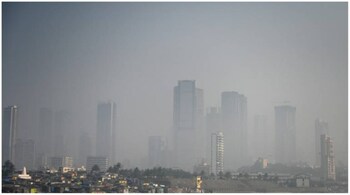
It’s old news now that Mumbai has been enveloped in a dirty haze or smog for more days this winter than in previous years, that the Air Quality Index (AQI) readings hovered between ‘poor’ and ‘very poor’ on most days from November to February, even that air pollution led to widespread health issues among Mumbaikars. The news is what the authorities did – or did not do – to combat air pollution; they did precious little, exposing most of Mumbai’s nearly 20 million people to hazardous air quality and resulting ailments.
When nine of the first 17 days in February recorded ‘very poor’ air quality (AQI 301 to 400) after 13 days of January with ‘poor’ (AQI 201 to 300) to ‘very poor’ air quality, an air pollution management protocol should have kicked in including capping dust-producing activities such as construction. Instead, the authorities, mainly the Maharashtra government and the Brihanmumbai Municipal Corporation, went about their business as usual. Only in the BMC budget in early February did the BMC unveil its proposal to combat air pollution but these were not clear immediate steps. Instead, the civic body outlined how it proposed to install measuring stations and air purification towers in the near future – hardly the recipe to improve the consistently high and hazardous AQI readings.
Recognise The Problem
Large cities around the world, including India’s national capital New Delhi, have tried to tackle the issue for years with varying degrees of success. Mumbai, blessed with abundant sea breeze which helped clear the toxic pollutants so far, cannot create miracles but the authorities can begin serious work which involves long-range planning for better air and short-term measures for immediate relief. This calls for recognising that road and construction dust, and vehicular emissions, are the three main sources of bad air contributing as much as 70 percent of the pollutants, according to a National Environmental Engineering Institute-led study in 2021; airport operations, garbage dumps, industrial emissions make up the rest.
This also calls for the realisation that the altered direction and speed of the sea breeze, as a result of climate change, has robbed Mumbai of its natural advantage and for strategising the next steps. The long-term plan must include a comprehensive Ecological Plan which should inform the city’s development. Mumbai can no longer bend its rivers, landfill water bodies, cut thousands of trees, denude the city’s forests, reduce its wetlands and open spaces to make space for more buildings and roads -- and not suffer the consequences. Ecological sustainability will have to be a factor in its future development plans. There was a massive 63 percent fall in only four decades till 2009 in the city’s forests and greens, reducing their share to barely 30 percent, and a similar 65 percent drop in natural water bodies, according to independent researchers. Air pollution, like flooding and high heat, is inter-connected to ecology. Drawing out an Ecological Plan is the start of the difficult journey to address air pollution. Will this come to pass?
Take Action
The short-term measures are more possible, even likely, considering that the authorities need symbolic actions for display. What the BMC can do – should have done – was to relay composite AQI readings or Particulate Matter readings with colour-coded warnings from different areas of the city on a dashboard that could be easily accessed by everyone, as it had done during Covid-19 management. Collating and sharing such vital information would have gone a long way to allow people to decide whether they should stay indoors (those who can) or definitely wear masks and so on.
However, the critical aspect is not merely information management but pollution management; two sources need urgent regulation. All building permissions should carry dust mitigation mandates in accordance with the rules laid down by the Central Pollution Control Board and penalties levied on defaulters. If this is diligently done, it will have an impact on the rising dust. Commercial vehicular movement should be regulated or disallowed between 7am and 7pm on days when the AQI shows ‘poor’ to immediately reduce vehicular emissions. Construction and transport are drivers of the city’s economy but not regulating them even on bad air days will hurt people – and eventually impair the economy too.
Mumbai paid the price this winter for the massive post-pandemic uptick in construction and demolition activities and unplanned expansion of road transport – all driven by fossil fuels. Of course, it cannot stop but it is time to pause and reflect if consistently hazardous air is not too high a price to pay.
Smruti Koppikar, journalist and urban chronicler, writes extensively on cities, development, gender, and media. She is the Founder Editor of ‘Question of Cities.’ Views are personal and do not represent the stand of this publication.
Discover the latest Business News, Sensex, and Nifty updates. Obtain Personal Finance insights, tax queries, and expert opinions on Moneycontrol or download the Moneycontrol App to stay updated!





