

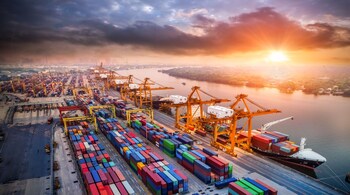
India’s logistics story over the last few years has been one of quiet but powerful transformation. Policies like the National Logistics Policy, PM Gati Shakti, and Bharatmala have helped reduce logistics costs to under 8% of GDP — a milestone that was once considered aspirational. But this is not the finish line; it’s the launchpad.
As India’s manufacturing base expands and supply chains decentralise, the next phase of growth will depend not just on creating assets, but on how efficiently and responsibly we use them. Budget 2026 presents a timely opportunity to move from infrastructure creation to ecosystem building — one that is faster, smarter, and more humane.
From my perspective, four priorities deserve urgent attention.
First, multimodal connectivity must move from concept to execution.
India continues to rely disproportionately on road transport, even for long-haul and bulk cargo where rail and coastal shipping are far more efficient and sustainable. While national corridors are now in place, seamless first- and last-mile connectivity and the faster rollout of multimodal logistics parks remain critical. The budget must accelerate this integration if we want to meaningfully reduce costs and congestion.
Second, technology adoption must reach the sector’s long tail.
Platforms like ULIP have demonstrated the power of digital coordination, yet a large part of the logistics ecosystem — particularly MSMEs and small fleet operators — still runs on minimal technology. Targeted incentives for Transport and Warehouse Management Systems, IoT-based tracking, and basic cybersecurity can help level the playing field. A digitally connected logistics sector is not just more efficient; it is more inclusive.
Third, sustainability needs clear economic signals.
Rail and coastal shipping emit significantly less carbon than road transport, yet all modes continue to be treated uniformly under GST. Differential taxation favouring greener modes could drive faster modal shifts than any standalone subsidy. Alongside this, focused investment in EV charging and alternative fuel infrastructure would help address real-world adoption challenges, especially in long-haul and urban delivery operations.
Finally, and most importantly, we must invest in the driver ecosystem.
Whether it is two-wheelers enabling quick commerce or long-haul trucking that keeps industries moving, drivers are the backbone of India’s logistics economy. Yet the sector is facing a growing shortage of skilled drivers, limited generational continuity, and rising instances of fatigue, harassment, and lack of dignity at work.
The upcoming budget must view driver development as national infrastructure. This includes standardised training and certification frameworks, stronger enforcement of working-hour and safety regulations, and large-scale investment in clean rest areas, parking facilities, and basic amenities along highways and urban logistics hubs. Equally important is fostering a harassment-free and respectful operating environment — across checkpoints, loading points, and customer interfaces.
A logistics ecosystem that values its drivers will naturally attract better talent, improve safety, and enhance reliability. Without this human focus, even the best infrastructure and technology will fall short.
India has laid a strong foundation for becoming a global logistics hub. Budget 2026 can take this momentum forward — by aligning infrastructure, technology, sustainability, and human capital into a single, cohesive vision. If we get this right, logistics will not just move goods faster; it will move India forward, responsibly and inclusively.
(Nikhil Agarwal, President, CJ Darcl Logistics Ltd.)
Views are personal, and do not represent the stance of this publication.
Discover the latest Business News, Sensex, and Nifty updates. Obtain Personal Finance insights, tax queries, and expert opinions on Moneycontrol or download the Moneycontrol App to stay updated!





