

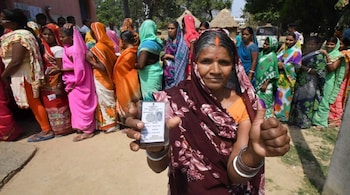
In the end, the 2025 Bihar election was not decided by caste arithmetic, liquor bans, or development promises. It was decided by gender budgeting - 1.25 crore direct bank transfers of ₹10,000 each to adult women under the Mukhyamantri Mahila Rojgar Yojana — a ₹12,500–14,000 crore pre-poll splash executed between September and October 2025. Female turnout soared to 71.6 %, the highest ever recorded in the state, and the NDA won its largest majority since 2005.
This was the most sophisticated exercise in the “calculus of consent” ever seen in Indian politics — and it was financed, at least in part, by hollowing out the very instrument created to structurally empower women: India’s pioneering gender-budgeting framework.
Aim of gender budgeting
Gender budgeting, introduced in 2005–06, was meant to be a long-term public-finance innovation. It required every department to identify expenditures that directly benefit women, track outcomes, and gradually close gender gaps in health, education, safety, and economic participation. Over the years, Bihar proudly reported a “gender budget” running into tens of thousands of crores — money otherwise spent for girls’ hostels, women’s police stations, pink toilets, skill centres, and entrepreneurship schemes.
In September 2025, large chunks of this social infrastructure related spending were quietly reprogrammed into unconditional cash transfers timed for maximum electoral impact. What was sold as “seed capital for entrepreneurship” required no business plan, no training, and no repayment. It was pure vote-buying wearing the moral cloak of gender justice.
Bihar’s crushing fiscal burden
The fiscal cost is now brutally clear from the analysis of the 2025–26 Bihar Budget:
Other indicators too give a sense of what’s in store.
# Interest payments in 2025–26: ₹23,014 crore (9 % of revenue receipts, ₹63 crore every single day)
# Committed expenditure (salaries 20 %, pensions 13 %, interest 9 %): 42 % of revenue receipts — the highest in recent memory
# Own-tax revenue: a pathetic 5.4 % of GSDP; 74 % of total revenue still comes as central transfers
# Capital outlay for 2025–26: slashed to ₹40,532 crore (barely 3.7 % of GSDP)
Hoping for a fiscal miracle this year
The 2025–26 budget claims a miraculous return to a 3 % fiscal deficit and a 0.8 % revenue surplus, achieved mainly by cutting total expenditure (excluding debt repayment) by 10 % from the bloated 2024–25 revised level and assuming an improbable 22 % nominal GSDP growth to ₹10.97 lakh crore.
Bond markets are not buying it — Bihar’s 10-year SDL still trades 48–55 bps wide of Maharashtra or Tamil Nadu paper.
Anatomy of the new political economy
This is the new political economy of consent in low-revenue, high-populist states:
1. Identify the largest undecided vote bank (in Bihar 2025: women).
2. Use the Public Financial Management (PFM) tool like gender budget to design clientele-spending.
3. Deliver cash directly via DBT (direct benefit transfer) infrastructure in the six weeks before polling.
4. Win election.
5. Present the next budget with heroic assumptions and brutal expenditure compression to stay within FRBM limits.
Women eventually will be the victims of short-term populism
The tragedy is that genuine gender empowerment — the kind that gender budgeting was designed for — has been the biggest casualty. The women of Bihar got ₹10,000 once. They did not get the structural change that would have given their daughters better schools, safer streets, and real jobs.
Bihar has just written the new playbook for Indian state elections. Opposition parties in at least six states going to polls between 2026 and 2028 are already drafting their versions — “Mahila Samman Yojana”, “Stree Sashaktikaran Rashi”, “Kanya Kalyan Nidhi”.
If this model spreads unchecked, India’s gender-budgeting framework — once hailed globally as a significant public-finance innovation — will be remembered as the moral cover for the largest organised vote-buying machine in democratic history.
The women of Bihar have proved they can decide who forms the government. The question now is whether anyone can stop governments from mortgaging their future to buy their consent, one bank alert at a time. Basic income transfers under gender budgeting can be a judicious tool for coping up livelihood crisis, not to ‘buy’ votes!
(Views are personal and do not represent the stand of this publication.)
Discover the latest Business News, Sensex, and Nifty updates. Obtain Personal Finance insights, tax queries, and expert opinions on Moneycontrol or download the Moneycontrol App to stay updated!





