

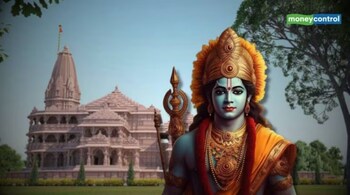
A small win over an impoverished part of India ensured British colonial rule in India. By re-establishing a temple in Ayodhya, the mythical birthplace of Ram or Rama – referred to as the ideal man, ideal king in Hinduism and all Indic religions – India re-established its civilisational status to the minds of the common people across South, South-East, and Far east Asia. The status was known but India stopped short of claiming ownership over it, to suit narrow political realities at home.
Where The Elites Went Wrong
The so-called realities were imposed by the elite. The first Prime Minister, Jawaharlal Nehru envisioned India as a secular, socialist republic – which was a dominant thought emerging from the West at that juncture of history. That was a time when Congress was a party of the princes and princesses. And, there were some conflicts within.
After severe debate, India adopted the Constitution in 1949, without the word “secular” in the Preamble and with religion-based civil rights. Some provisions in the Constitution (like Article 48 which acted as an indirect restriction over cow slaughter) also tried to give precedence to the values of the majority.
The decision was as dichotomous as the unprecedented Partition of a large nation based on religion. Independent India was right in not giving precedence to any religion in state functioning but, the fault lines within the Constitution were used and misused over time to deny the majority their rightful claim over the civilisation. With barely $83 per-capita income (1960), the common Indians barely had a voice and the family-driven politics that ruled India for decades went on neglecting the popular aspirations.
Indira Gandhi trampled democracy by introducing “secular” in the preamble, without due debate, during the Emergency. Rajiv Gandhi did the utmost harm to secularism by using his brutal majority in Parliament to reverse the verdict of the Supreme Court in the Shah Bano case for the maintenance of divorced Muslim women.
As an afterthought, to appease Hindus, he opened the gates of the Babri Masjid (mosque) with a Ram Lalla idol inside. Together they gave birth to a movement for the reestablishment of a temple that was believed to have been destroyed to make way for a mosque by emperor Babur in the early 16th century.
Catch all the live updates of Ayodhya Ram Mandir Inauguration here
What happened next till the Supreme Court verdict in 2019 in favour of the temple, replacing the mosque (which was vandalised in 1992), the mass consecration of the newly built temple on January 22, 2024, is known to all. The Indian and global Left sees it as the win of what they say ‘Hindu-fundamentalism’ or ‘Hindutva.’
A confused Congress – that came to power in India in 1947 based on the religion-based Partition but denied to see merit in the popular aspiration-backed ‘Ram Janmabhoomi’ movement spearheaded by Sangh Parivar (with its political arm BJP at the forefront) – joined the Left in giving the consecration ceremony a miss.
Behind the smokescreen of ideologies, a mere fact check at the support base of these parties will prove that all those who refused to attend the ceremony are afraid to lose the minority votes. Essentially, therefore, they are contesting for ownership over one small section of the population.
The thought is guided by a belief that was strengthened by the Leftist thought leaders that the majority did not own this civilisation. History textbooks left a huge gap between the Indus Valley civilisation and modern India. The North and South were divided by Aryans and Dravidians. North India was linked to Aryans to brand them as outsiders and so on.
Many of such thoughts are now challenged by modern genomics-based research. One such research for example found that roughly 98 percent of Indian genes are local. The bigger relics of the Indus Valley civilisation are now found in India. And, there is an emerging thought that claims that the civilisation was never lost, as was told by Leftist historians.
What Common People Knew All Along
The strong influence of the dominating politics in shaping historical narrative is a time-tested truth and it would be the job of the researchers to set the course correct. But the common people of this country never had any doubt that they own a rich civilisation.
Also Read | Euphoria of the Ram Mandir will continue till the Lok Sabha elections
They saw the world through the Ramayana and Mahabharata, the two most read, most published books. Unlike other gods and goddesses in Hindu mythology, people visualise Ram in blood and flesh. That’s a very strong visualisation for a god. And, that explains why there are 350 rail stations, thousands of towns, villages and neighbourhoods in the name of Ram.
The Opposition made themselves irrelevant in the national politics by denying the rightful space to this strong symbol of unity. Left and small regional parties live at the mercy of a small support base. But it is the Congress that’s the biggest loser.
They have virtually given the BJP the ownership of majority aspirations in the immediate future. The biggest winner is the Rashtriya Swayamsevak Sangh or RSS. The anticipated prosperity of Ayodhya as a prime religious tourism destination in tomorrow’s India will validate RSS’s demand for precedence to ‘Indianness’ has been validated.
The politics of India will never be the same again. The validation of the majority belief should strengthen democracy. And, it would be utterly wrong to predict dilution of secular values. The visualisation of ‘Ram Rajya’ does not subscribe to that.
Pratim Ranjan Bose is an independent columnist, researcher, and consultant. His X handle is @pratimbose. Views are personal and do not represent the stand of this publication.
Discover the latest Business News, Sensex, and Nifty updates. Obtain Personal Finance insights, tax queries, and expert opinions on Moneycontrol or download the Moneycontrol App to stay updated!





