

Q: As we open up, can you look in the rearview mirror and tell us how the business of hospitality has changed?
A: These are challenging times, completely unprecedented, and the situation is in a constant state of evolution and fluidity. This is the first time the impact has been felt with such force across the globe.
We are currently in a deep contingency, survival mode—we are in for a rough ride for 12 months and maybe even longer. While we expect the occupancy rate to return to around 50 percent across the country by year-end, things are volatile. For every few steps we take forward, there are a few we take back. It is a very tentative approach.
There is a transformation happening at several levels. The way we live, the way we work will go through a transformation. More people will work from home. Pretty much, how we run hotels will change.
I see the emergence of an entirely new category: shorter road travel and destinations you can reach on shorter flights.
Domestic travel has been picking up over the last few years and a lot of it has to do with more airports and better connectivity in the form of the road network. Over 90 percent of leisure travellers at our resorts across the country are domestic travellers and we only see that number increasing post the return to normalcy.
I see a lot more people travel for personal wellbeing and the environment. Cities such as Bangalore and Kochi had opened up and we got quite a few lessons on the ground. We expect the Tier-II market and resort locations to rebound first. Destinations that allow people to drive in will do well, such as resort destinations.
Q: There is a huge crisis of cash flow in the market. Do you see pent-up demand for travel in this situation?
A: Whilst we do expect some pent-up demand for our resorts, we should expect a gradual increase since this crisis has had an impact on cash flows. The business in the domestic market will depend on two crucial factors — the prevalent demand and economic conditions of that market. A full rebound will take time as assessing the impact is a challenging proposition, given the global scale of this crisis.
There will be an indirect impact on the amount of discretionary spend that the leisure customer will be willing to make, especially in the next six months. International travel will take longer to get back on track. Geographies have to first lift their restrictions and even when that happens, the willingness of people to travel recreationally will have certain psychological barriers.
Q: What are the innovative solutions you have implemented during the lockdowns and plan to continue even after the crisis is over?
A: This is a unique situation where everyone has to act with tremendous speed and agility. We have reviewed all our cost heads. Some measures and methods that we deem are relevant to our operations will now be a part of our standard operating processes with no compromise to execution. Self-hygiene has been important learning and we will continue to reiterate and reinforce the same.
I see a lot of transformation happening in the hotel space. Restaurants, for instance, will have less seating and extended timings.
The WeCare programme hygiene programme we launched has put elevated protocols and processes in place to maintain enhanced hygienic standards across our hotels in the region. The emphasis is on creating the right environment that will help guests to feel safe about coming back to the hotel. Most of the transactions have been digitized and technology has been used to minimise contact across all operations.
There will be transformative changes in the way we travel and holiday, which will reflect in the hotels. Hotels will also rationalise their supply chain and run far more efficiently. There will be a bigger deployment of technology and automation. It is an area we have focused attention on earlier too, but the process has got intensified now. Guests will be able to check into their room using their phone as a key. The touchpoints are all equipped with a QR code.
Q: Have you done any retrenchment yet? Or salary cuts?
A: We endeavour to ensure that we protect the jobs of our associates as an organisation and to ensure we take care of our associates. While certain measures are required to be taken to tide over these challenging times, we have to ensure that we mitigate any long-term effects of this by undertaking temporary measures to sustain the business.
Q: What is your strategy to garner business?
A: We have a robust hotel specific recovery plans in place that leverage our loyalty programme and our relationships with our partners and our customers. These plans resolutely focus on growing market share for our hotels by building back our occupancy levels at acceptable average rates.
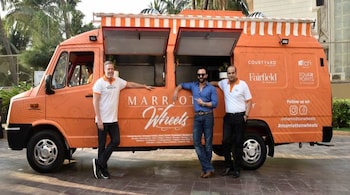
Increasing local F&B business is another key component of the recovery plans. We have focused quite a bit of attention on our Marriott on Wheels project, a service available in 40 cities across India via the Swiggy platform. We also have launched some corporate deliveries to offices around JW Marriott Aerocity.
We are leveraging our Marriott Bonvoy programme members, who comprise 60-70 percent of guests that stay at our hotels, by offering flexible booking policies to incentivise them to stay at our hotels. The reservations policy is flexible; the expiration of points has been paused till 2021.
Q: What are you expecting from the government?
A: We strongly believe that the government is doing everything it can to manage the crisis and control the situation from worsening. The safety of citizens is paramount and the response to a pandemic of this nature requires measures at both a national and regional level.
Tourism as an industry contributes about 9% of GDP and is a major job creator. From an industry standpoint, various hotel association bodies have made representations that include financial incentives that can offer respite to our business and ensure continuity, especially in the short term, easing of fiscal policies, facilitating the rebound of travel and collaborating to support destination marketing.
Q: Every crisis has its cons but also its pros, or learning for the industry. For a situation like this, what would the cons be and what are pros.
A: Several learning will emerge and collectively these will form the backbone of the “new” normal of travel and hospitality as we know it. For starters, hotel operators must seize the opportunity to rethink the core of our business operations and where the business comes from. Segment strategies will be relooked at, as will manning levels at our hotels. Fixed costs will be closely scrutinised and deliberated over. There will be a renewed vigour in embracing the use of technology to amplify operational efficiencies. As we collectively weather this storm, we must reemerge wiser for the wear.
Q: What sort of changes do you see yourself making in the way you live life?
A: I have not experienced a professional crisis of this magnitude at any point in the past. I believe every such event has its impact on an individual. The extraordinary events that we are witnessing around the globe as we deal with this crisis do throw the spotlight on how we currently go about our lives. On a personal and professional level, it’s a time to stop, take stock and reflect. For starters, I don’t see myself travelling as much as I used to before this. I suspect I will be adding a lot more to this list over the next few weeks.
Deepali Nandwani is a journalist who keeps a close watch on the world of luxury.
Discover the latest Business News, Sensex, and Nifty updates. Obtain Personal Finance insights, tax queries, and expert opinions on Moneycontrol or download the Moneycontrol App to stay updated!





