

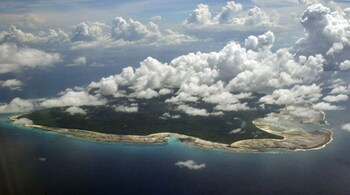
Aggressive policing ensured that lockdown norms were strictly followed in Andamans that has become COVID-free after all 33 coronavirus patients recovered, a top police officer said. Of the 572 islands in Andaman and Nicobar, 37 are inhabited.
Novel coronavirus had knocked on the door of the archipelago when nine persons, who returned from Delhi's Tablighi Jamaat event, were found to have contracted the disease in late March.
"It was after we questioned the returnees, the details of the Tablighi Jamaat mid-March meet came to light, and accordingly we informed Delhi about it," Director General of Police Dependra Pathak said.
Two of the nine, who tested positive, were taken to hospital from the airport, and rest were placed under institutional quarantine, Pathak, who had earlier served in the Delhi Police, told PTI.
"We managed well the first wave of infection with the arrival of Jamaatis, but unfortunately two others who had gone to Chennai tested positive for the virus on return. They, in turn, infected several others, raising the count in the Union Territory to 33," he told PTI.
The spurt in cases forced us to opt for a rigorous containment exercise, Pathak said.
Police began strictly enforcing the lockdown norms laid down by the Centre.
It resulted in the registration of 200 cases, arrest of 190 violators by May 15, and realisation of a sum of Rs 30 lakh by way of penalty, the DGP said.
"Shutdown norms were meticulously implemented in all inhabited islands. Strict vigil was maintained to prevent any infiltration bid from Indonesia, Thailand and Myanmar," he said, adding that the 33 patients were sent home from hospitals a week ago, following their recovery.
Andamans had shut its doors to tourists from March 16, and inter-island movements were subsequently stopped from March 21, he said.
With the situation having improved and the Centre relaxing lockdown curbs, the Union Territory is giving a "one-time and one-way" opportunity to the stranded natives to return to their homes in different islands, the DGP stated.
The administration is also making arrangements to send ships to Chennai and Kolkata in a day or two to ferry back residents stuck in other states amid the lockdown, he noted.
The Union Territory would take necessary measures to ensure that the islands remain coronavirus-free, Pathak added.
Discover the latest Business News, Sensex, and Nifty updates. Obtain Personal Finance insights, tax queries, and expert opinions on Moneycontrol or download the Moneycontrol App to stay updated!





