

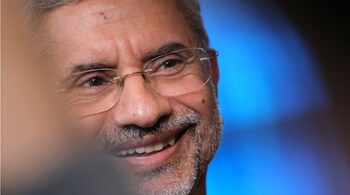
India and France have agreed to work towards the establishment of an Indo-Pacific trilateral development cooperation that would facilitate development projects, External Affairs Minister S Jaishankar said after talks with his French counterpart Catherine Colonna.
Addressing a joint press interaction alongside Colonna, Jaishankar said their discussions covered issues such as the Ukraine conflict, the tensions in the Indo-Pacific, consequences of the Covid pandemic, developments in Afghanistan and the prospects of the Joint Comprehensive Plan of Action.
"We agreed to work towards the establishment of an Indo-Pacific trilateral development cooperation that would facilitate development projects, especially in framework of International Solar Alliance," Jaishankar said.
The ISA now has firmed up projects in three countries which shows the impact India and France make together in Bhutan, Papua New Guinea and Senegal, he said.
The Indo-Pacific trilateral would also provide a platform for Indian innovators and startups to demonstrate their relevance to the requirements of other societies, Jaishankar said.
He said India sees France as a major power with a global outlook and an independent mindset.
France is central to emergence of multi-polarity and has also been extremely responsive to India's concerns and priorities, Jaishankar said.
In her remarks, Colonna said whatever is happening in Ukraine is not only an issue for Europe but it is a serious matter for the entire world.
Discover the latest Business News, Sensex, and Nifty updates. Obtain Personal Finance insights, tax queries, and expert opinions on Moneycontrol or download the Moneycontrol App to stay updated!





