Social media, a silver lining in times of distress
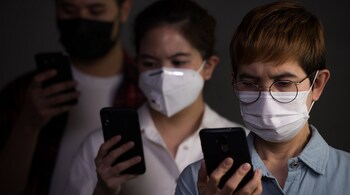
With curbs in place to control the virus' transmission, social media has proved to be one of the few mediums for people in distress to find help, as travel is not an option.
Story continues below Advertisement
From fetching oxygen to antiviral drugs and organizing virtually-impossible-to-get hospital beds, home cooked meals for frontline workers and those quarantining at home, social networking platforms are emerging as the answer to all needs.
The past few weeks are an evidence that the social media community has the potential to keep its communal, political and religious differences aside and offer help without discrimination.
Several platforms are also rolling out innovative features to help people, as India faces an unprecedented, massive surge in COVID-19 cases.
Story continues below Advertisement
Social media giants like Facebook, Twitter and Indian startups, including Koo and Chingari, have deployed new features by providing information on possible COVID-19 resources.
The Indian video sharing app Chingari has launched an alternative to Clubhouse called Fireside, which will allow users to communicate in an audio format with each other. The app will have 24x7 COVID-19 helpline rooms where users can drop in at any time with their requests or questions.
Sumit Ghosh, CEO and co-founder, Fireside and Chingari, told the Business Standard: "The pandemic has imbued uncertainty and isolation, leaving people craving for human interaction. Fireside enables users to listen to the voice of their loved ones by bridging emotional gaps, leaving them touched and connected. With a keen focus on building rich communities, Fireside aims to cater to the Indian market with clubs and groups that are tailored to suit local needs and sensibilities.”
A woman with a breathing problem waits to receive oxygen support for free at a Gurudwara, amid the second wave of COVID-19 cases in Ghaziabad, Uttar Pradesh on April 24, 2021. (Image: Reuters/Danish Siddiqui)
The good, the bad and the ugly
India’s health care system is overwhelmed, with over 4 lakh new COVID-19 cases and thousands of daily deaths caused by the infectious disease. Desperate relatives and friends of the infected have resorted to sending SOS messages on social media.
The country is currently witnessing a tough, uphill battle due to shortage of hospital beds, ICUs, ventilators, oxygen and essential medicines. Several people have turned to social media to seek help and support for patients.
These pleas are reaching tech-savvy engineers, lawyers, politicians, doctors and even auto-drivers, who have mobilised online to help the ill and those in need, some of them hundreds of miles away. Collectively, they have formed grassroot networks that are stepping in where the central and state governments have failed.
Sanjana Nayak, a Mumbai resident who works in finance, decided she needed to do more than retweet and share messages. She started searching for the terms 'verified', 'confirmed' and 'available' on Twitter and Instagram to track down specific leads on COVID-19 supplies.
Social media is flooded with users who have commended the solidarity and promptness shown by citizens. "I was able to provide important helpline numbers for Remdesivir to my father's colleagues based in Kolkata from Twitter. My biggest thanks to the people providing valuable information here," said a Twitter user.
Watch out for the flip side
However, there is always a flip side; for some people feeding off the dead and the dying, the infirm and the helpless, such devastation presents endless opportunities.
A group of racketeers have seen this as an appropriate time to make hay and to feed on the vulnerability of others. Cybercriminals are working overtime, as instances of fraud involving vaccines and donations, among others, is on the rise.
One of the many who took the initiative to provide support to the needy, Mahi Malvankar, 23, an Instagram user recounts her experience with cyber fraud. “My friend called and verified a lead who was selling Tocilizumab (a drug for COVID-19 treatment) in Mumbai and Delhi. She forwarded the contact of this person to me and other people who needed it. I then forwarded it further to my friend and soon the person's number reached quite a few people. He promised to deliver Tocilizumab the very next day for which he even took an advance of Rs 25,000 and Rs 60,000 from two different families in desperate need. The next day, he blocked them and stopped receiving calls. When contacted from a different number, he still claimed to be a genuine seller of the drug,” Malvankar narrates.
Experts warn against instances where cybercriminals fake initiatives, ask for contributions and then vamoose. Such incidents are on the rise.
“From the onset of the second COVID-19 wave, there’s a peak in cyber fraud cases where scammers pose as ‘verified’ contacts for COVID supplies, be it medical oxygen, plasma or antiviral drugs. Taking advantage of families in distress and in dire need of medical supplies for their suffering loved ones, these fraudsters ask for advance online payment and then disappear,” explains Ehraz Ahmed, a cybersecurity researcher and tech entrepreneur.
“As those in need and distress are not in the frame of mind to think clearly at that point, a little persuasion from these racketeers inveigles them in their trap and money is extorted,” Ahmed adds.
A resident doctor treating patients suffering from COVID-19, writes down notes during his 27-hour shift at Holy Family Hospital in New Delhi on May 1, 2021. (Image: Reuters/Danish Siddiqui)
Ideal time for cyber frauds
As everyone is online these days, from school children to working professionals, thanks to the lockdown restrictions and physical distancing norms, the time is ideal for cyber frauds to throw in the bait.
Swindlers online are coming up with novel ways to cheat. In 2020, the pandemic left many people unemployed, crippling the country’s hiring landscape. After months of unemployment and struggles to find employment, many gave away their important documents and parted with money to get a job, only to realise that they had been taken for a ride.
No surprises that complaints about scams for business and job-related opportunities spiked last year.
"This time around, it is the promise of medical supplies,” says Ahmed.
In such situations, cyber experts say that the first step a social media user needs to take is to alert followers about the online scam they have experienced through a post or upload stories.
“A way to reduce such instances or break the chain of scams could be to alert the online community about the particular scammer by sharing his profile and contact number on Twitter or Instagram, explaining the incident in detail,” Ahmed advises.
“The new websites that share real-time updates on the availability of medical supplies for COVID-19 treatment, can also revise their data with instances of cyber frauds and inform site visitors to beware of the crooks,” he adds.
Things turn virtual, so does sexual harassment
When people are being duped and scammed on the pretence of providing them with emergency supplies, sexual harassment is a step away. There have been a lot of cases of women being harassed on social media for offering or soliciting help in these trying times.
As everything becomes virtual, sexual harassment too has found its way online. There has been a global rise in online harassment of women and girls in the past year, usually by abusive partners or ex-partners who remain at home due to lockdowns.
A Twitter user recently recalled her experience of receiving lewd photographs, men commenting on her profile picture and even asking her if she was single when she shared her number on social media while looking for plasma donors.
In another instance, which Moneycontrol could not independently verify, Twitter user, Aanchal Agrawal narrates: “A guy updated his ex-girlfriend’s phone number on an editable COVID information list just for revenge. The girl, who was deluged with phone calls, broke down after a while, the patients got false hopes, and everyone ended up wasting time and energy. This is the sad state of venality in such upsetting times.”
Ahmed suggests that women should avoid sharing their personal contact details, particularly their mobile numbers on social media apps about stories that are viewed by countless people.
In case of emergencies where calling remains the only option, they should instead share an alternate number or the details of a male member of the family and have them speak to the verified contacts.
Given the risks involved in publishing personal details online, a level of caution must be exercised even during medical emergencies, the cybersecurity expert suggests.
In case of any sexual harassment or cyber fraud people should not hesitate in reporting it to cybercrime officials and seek official help.
Read more weekly in-depth articles from Moneycontrol here
Discover the latest Business News, Sensex, and Nifty updates. Obtain Personal Finance insights, tax queries, and expert opinions on Moneycontrol or download the Moneycontrol App to stay updated!