

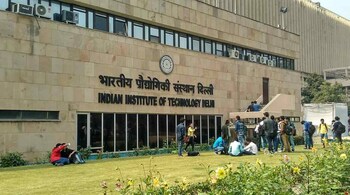
With major disruptions to board examinations due to the novel coronavirus, or COVID-19, pandemic, the country’s renowned engineering college, Indian Institute of Technology, may eliminate Class 12 performance from the admission criterion for academic year 2020-21.
However, there has been no official statement from the IITs or government officials.
To get enrollment in IITs pre-COVID-19, the students are assessed based on their Class 10, Class 12 and performance in Joint Entrance Examinations (JEE). A general category student need to score 75 percent or above in Class 12 or should be in the top 20 percentile. The criteria for the reserved category students, including scheduled castes and scheduled tribes should score atleast 65 percent marks.
The Supreme Court on June 26 cancelled the CBSE and ICSE exams and asked the board to access the students based on the average marks scored in appeared subjects. After which, many state boards are also adopting this method while others are assessing the results based on internal evaluation.
The cancellation of the exams was discussed at a meeting of the Joint Implementation Committee (JIC) this month. The JIC consist of JEE chairpersons of all IITs, as reported by Indian Express.
During the meeting, the JEE chairpersons proposed that the Class 12 marks should be waived for 2020. “There was a consensus that the IITs, instead, should insist on rank holders to have passed their Board exams this year,” said a JIC member who did not wish to be identified. “This would be a one-time exception,” the member said.
But the most important factor for admission to IITs is the performance in the JEE exams which are conducted in two phases JEE MAINS and JEE Advanced. The students who score above a particular percentage in JEE MAINS only get to appear for JEE Advanced. The JEE MAINS exams is held twice a year, once in January and the other in April.
This year due to the COVID-19 pandemic, the exam scheduled in April has been postponed to the first week of September.
For its international students from Dhaka, Dubai, Kathmandu and Singapore, exams will be conducted at foreign locations due to the COVID-19 related restrictions.
Follow our full coverage of the coronavirus pandemic here.
Discover the latest Business News, Sensex, and Nifty updates. Obtain Personal Finance insights, tax queries, and expert opinions on Moneycontrol or download the Moneycontrol App to stay updated!





