

The reforms in the goods and service tax (GST) -- brought in after eight years – took place after clear instructions from Prime Minister Narendra Modi, who sought relief for the middle class.
In his Independence Day address, the Prime Minister had announced, “The government will bring next-generation GST reforms, which will bring down tax burden on the common man. It will be a Diwali gift for you.”
The reforms, he said, would directly benefit the common man, farmers, MSMEs, women, youth, and middle-class families, while strengthening India’s long-term growth.
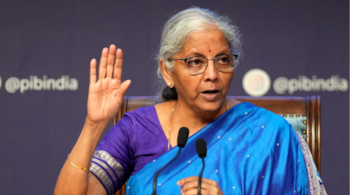
Cut to September, the 56th GST council meeting decided to rationalise GST rates to two slabs of 5 per cent and 18 per cent by merging the 12 per cent and 28 per cent rates. Union finance minister Nirmala Sitharaman announced the decision on September 3 after she chaired the GST council meeting.
The preparations had begun well in advance, with Sitharaman holding back-to-back meetings with different groups for more than last six months. Separately, home minister Amit Shah, too, reportedly held meetings to ensure no political row and to reassure states on revenue concerns, according to a report by India Today.
How Opposition-ruled states were convinced over GST rate cuts?
The main challenge lay in persuading Opposition-ruled states -- Mamata Banerjee’s Bengal, Left-governed Kerala, AAP’s Punjab, and Congress-led Karnataka. Yet, the task reportedly turned out to be easier than anticipated.
After the day-long GST Council meeting, Sitharaman said all decisions were taken unanimously, with no disagreement with any state.
According to sources cited by NDTV, opposition-ruled states were in the beginning apprehensive of a drop in their revenue – with many, including Bengal protesting strongly in the GST Council meeting.
Sitharaman, however, reassured states that none would be treated unfairly. She emphasised that GST collection belongs to the Centre and the states. Any loss to one is a loss to the other. However, with the focus on giving relief to the common people, it is essential for both to carry the process to completion, the NDTV report added.
As per sources cited in the report, West Bengal and Punjab softened their stance early on the marathon council meeting, while Kerala and Karnataka held firm till the last moment.
They even called for the discussion to be postponed to the next day, however, Chhattisgarh’s finance minister OP Choudhary suggested that the matter be settled through voting.
Decisions in the GST Council are generally taken by consensus and voting had to be done only on the issue of 28 per cent GST on lottery.
Following Choudhary’s repeated push, Sitharaman eventually conceded. Bengal then played a key role in convincing Karnataka and Kerala, leading to the announcement of the decision, the sources cited above revealed.
According to the reforms approved by the GST Council on Wednesday, common use items from roti/paratha to hair oil, ice creams and TVs will cost less, while tax incidence on personal health and life insurance will be brought down to nil.
Almost all personal-use items and aspirational goods for the middle class, like AC, washing machines, will see rate cuts as the government looks to boost domestic spending and cushion the economic blow of the US tariffs.
A special 40 per cent slab is also proposed for a select few items such as high-end cars, tobacco and cigarettes.
The new rates will be effective from September 22.
Discover the latest Business News, Sensex, and Nifty updates. Obtain Personal Finance insights, tax queries, and expert opinions on Moneycontrol or download the Moneycontrol App to stay updated!





