

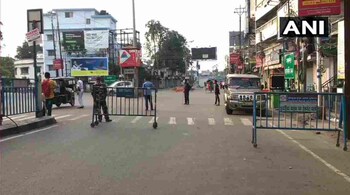
The Covid lockdown in Uttarakhand has been extended for another week till June 15 with some relaxations.
The period of current lockdown in the state was scheduled to come to an end at 6 am on Tuesday morning.
Extended for another week, the curfew would remain in force till 6 am on June 15, Chief Secretary Om Prakash had said in an order on Sunday.
The order authorises district magistrates to give relaxations in rural areas under their jurisdiction based on their assessment of the Covid situation. However, people will be allowed to go to vaccination centres to get vaccine jabs during the lockdown if they have the document to prove their purpose.
Only 20 people with negative RT-PCR test reports not older than 72 hours can attend weddings, the order said.
Similarly, not more than 20 people can attend funerals.
Shops dealing in essential commodities like milk, meat, fish, fruits and vegetables will open daily from 8 am to 12 pm during the extended curfew. PDS outlets will also open daily from 8 am to 12 pm whereas groceries and stationery shops will open from 8 am to 1 pm on June 9 and 14, the order said.
Liquor shops have also been allowed to open for five hours from 8 am to 1 pm on June 9, 11 and 14. However, bars will remain closed till further orders, it said.
All educational and coaching institutes, cinema halls, shopping malls, stadiums, gyms, and restaurants will remain closed during the period.
People coming from outside the state will have to register on the Smart City portal and produce a negative RT-PCR test report not older than 72 hours on arrival.
Migrants returning to their villages will have to remain in local quarantine facilities for seven days after which they can go home depending on their symptoms.
Medicine shops and testing labs will remain open for 24 hours, while banks will be open from 10 am to 2 pm.
Discover the latest Business News, Sensex, and Nifty updates. Obtain Personal Finance insights, tax queries, and expert opinions on Moneycontrol or download the Moneycontrol App to stay updated!





