

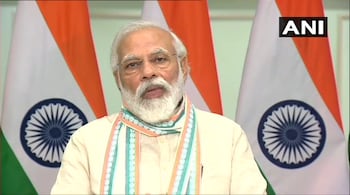
Prime Minister Narendra Modi, while addressing a high-level segment of the UN Economic and Social Council (ECOSOC) via video conferencing, said that the novel coronavirus, or COVID-19, pandemic has 'severely tested' resilience of all nations.
"COVID-19 pandemic has severely tested the resilience of all nations. In India, we have tried to make the fight against the pandemic a people's movement, by combining the efforts of the government and civil society," the prime minister said during his address, adding that India has ensured one of the best recovery rates in the world.
The Prime Minister said that India has provided medical and other assistance to over 150 countries.
"The United Nations (UN) was originally born from the furies of the Second World War. Today, the fury of the pandemic provides the context for its rebirth and reform. Let us not lose this chance," the prime minister said.
PM Modi said India's motto is 'Sabka saath, sabka vikas', which "resonates with the core Sustainable Development Goals principle of leaving no one behind."
"Today, through our domestic efforts, we are again playing a salient role in achieving Agenda 2030 and the Sustainable Development Goals. We are also supporting other developing countries in meeting their Sustainable Development Goals," PM Modi said.
"India is home to one-sixth of humanity. We are mindful of our weight and responsibility. We know that if India succeeds in achieving its development objectives, it will go a long way in achievement of global goals," PM Modi said, adding that India has supported the UN's development work since the 'very beginning'.
"The first president of ECOSOC was an Indian. India also contributed to shaping the ECOSOC agenda," PM Modi said.
Discover the latest Business News, Sensex, and Nifty updates. Obtain Personal Finance insights, tax queries, and expert opinions on Moneycontrol or download the Moneycontrol App to stay updated!





