

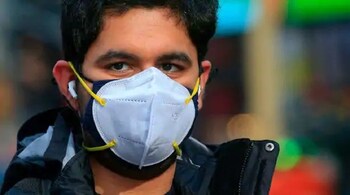
The World Health Organization (WHO) has said people who are fully vaccinated will have to continue wearing masks, follow social distancing and other safety measures to contain the spread of the more deadly and contagious Delta variant of the coronavirus, which is spreading rapidly across the globe.
Mariangela Simao, WHO's assistant director-general for access to medicines and health products, said people cannot feel safe just because they had the two doses and that they still need to protect themselves.
“Vaccine alone won’t stop community transmission. People need to continue to use masks consistently, be in ventilated spaces, hand hygiene ... the physical distance, avoid crowding,” Simao said during a news briefing from the agency’s Geneva headquarters, according to CNBC.
"This still continues to be extremely important, even if you’re vaccinated when you have a community transmission ongoing," she added.
According to CNBC, WHO officials said they are urging fully vaccinated people to continue to “play it safe” because highly contagious variants, like Delta, are spreading in many countries, triggering outbreaks and a large portion of the world are yet to be given the shots against the coronavirus disease or Covid-19.
“Yes, you can reduce some measures and different countries have different recommendations in that regard. But there’s still the need for caution. As we are seeing, there are new variants emerging,” Dr Bruce Aylward, a senior advisor to the WHO’s director-general, was quoted as saying by CNBC.
WHO's director general Tedros Adhanom Ghebreyesus said on Friday that the Delta variant, first seen in India, is “the most transmissible of the variants identified so far,” and warned it is now spreading in at least 85 countries. Tedros Adhanom Ghebreyesus said the lack of vaccines in poor countries was exacerbating the delta variant's transmission.
In India, Delta Plus, the more virulent version of the virus, has been reported from 12 states and there have been 51 cases and the maximum from Maharashtra.
The government, however, has said their numbers are "very localised" and it cannot be said that it is showing an upward trend. Officials have said that the Delta variant has nearly 15-17 mutations and was first reported in October last year, and it was responsible for more than 60 per cent of cases in Maharashtra in February.
Discover the latest Business News, Sensex, and Nifty updates. Obtain Personal Finance insights, tax queries, and expert opinions on Moneycontrol or download the Moneycontrol App to stay updated!





