

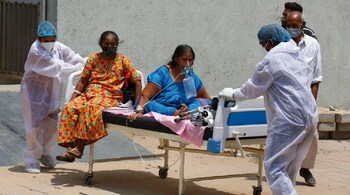
India's COVID-19 tally climbed to 4,28,02,505 on Saturday with 22,270 more people testing positive for the viral disease, while the number of active cases came down to 2,53,739, according to Union health ministry data.
The death toll reached 5,11,230 with 325 fresh fatalities, the data updated at 8 am stated. Daily COVID-19 cases in the country have remained below one lakh for 13 consecutive days now.
The 2,53,739 active cases comprise 0.59 per cent of the total infections. The national COVID-19 recovery rate has further improved to 98.21 per cent, the ministry said. A reduction of 38,353 cases has been recorded in the active COVID-19 caseload in a span of 24 hours.
The daily positivity rate was recorded at 1.80 per cent, while the weekly positivity rate was recorded at 2.50 per cent, the ministry said. The number of people who have recuperated from the disease surged to 4,20,37,536. The case fatality rate stood at 1.19 per cent, it said.
The cumulative number of doses administered in the country so far under the nationwide COVID-19 vaccination drive has exceeded 175.03 crore. India's COVID-19 tally had crossed the 20-lakh mark on August 7, 2020, 30 lakh on August 23, 40 lakh on September 5 and 50 lakh on September 16. It went past 60 lakh on September 28, 70 lakh on October 11, crossed 80 lakh on October 29, 90 lakh on November 20 and surpassed the one-crore mark on December 19.
India crossed the grim milestone of two crore on May 4, 2021, and three crore on June 23. The 325 new fatalities include 191 from Kerala and 19 from Karnataka. The 325 new fatalities include 191 from Kerala and 19 from Karnataka.
The 5,11,230 deaths reported so far in the country include 1,43,547 from Maharashtra, 63,529 from Kerala, 39,757 from Karnataka, 37,970 from Tamil Nadu, 26,095 from Delhi, 23,424 from Uttar Pradesh and 21,107 from West Bengal. The health ministry stressed that more than 70 per cent of the deaths occurred due to comorbidities. The health ministry stressed that more than 70 per cent of the deaths occurred due to comorbidities.
"Our figures are being reconciled with the Indian Council of Medical Research," the ministry said on its website, adding that state-wise distribution of figures is subject to further verification and reconciliation.
Discover the latest Business News, Sensex, and Nifty updates. Obtain Personal Finance insights, tax queries, and expert opinions on Moneycontrol or download the Moneycontrol App to stay updated!





