

Amid spike in COVID-19 cases in several countries, the Union Health Ministry on December 22 asked the Civil Aviation Ministry to ensure that samples of 2 percent of international passengers in every flight is tested for coronavirus.
Additionally, the Centre also stated that if found positive, these samples will be subjected to genomic sequencing. The passengers, from whom random samples would be collected, however can leave airports after submitting samples, it added.
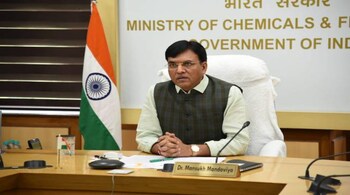
Meanwhile, earlier today, Union Health Minister Mansukh Mandaviya said that random sampling of travellers arriving at international airports has begun.
"We have also started the random RT-PCR sampling among passengers arriving at International airports in the country. We are committed to tackling the pandemic and are taking appropriate steps," Mandaviya said in his statement in the Lok Sabha while advising the states to make sure that people wear masks, use sanitisers and maintain social distancing even during the festive and the New Year season.
He also urged the states to increase awareness towards precautionary doses against coronavirus. "We are keeping an eye on the global Covid situation and are taking steps accordingly. The states are advised to increase genome sequencing to timely identify the new variant of COVID-19," Mandaviya added.
The surge in COVID-19 cases in the United States, China, Brazil and South Korea has prompted the ministry to review the pandemic situation in India. As a precautionary measure, the government has restarted random sampling of international passengers at airports across the country for COVID.
Notably, Mandaviya chaired a high-level meeting on Wednesday to review the COVID-19 situation in India and the preparedness of the public health system for surveillance, containment, and management of the virus. He had earlier too urged people to follow COVID-appropriate behaviour and get vaccinated against the virus. Emphasising that COVID-19 is not over yet, he asked the officials to be fully geared up and strengthen surveillance.
Mandaviya has already directed the officials to be fully geared up and strengthen the surveillance system for whole genome sequencing of positive case samples to track the variants through the Indian SARS-CoV-2 Genomics Consortium (INSACOG) network to ensure the timely detection of newer variants, if any, circulating in the country.
Meanwhile, India on December 22 reported 185 new coronavirus infections even as active cases declined to 3,402.
The country has recorded 4.46 crore (4,46,76,515) cases, so far. The death toll stands at 5,30,681, with one person dying of COVID in Delhi in the last 24 hours, the data released by the government in the morning showed.
Discover the latest Business News, Sensex, and Nifty updates. Obtain Personal Finance insights, tax queries, and expert opinions on Moneycontrol or download the Moneycontrol App to stay updated!





