

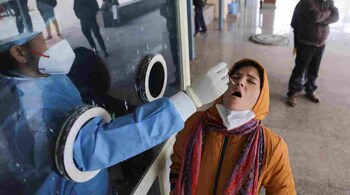
COVID-19 restrictions have now been eased in Maharashtra as the state has been witnessing a downfall in cases, post the Omicron wave. A government order has detailed the new guidelines for 14 districts of the state, including Mumbai. These guidelines will come into effect from March 4.
The 14 districts, which fall under Category 'A' are Mumbai city, Mumbai suburban, Pune, Bhandara, Sindhudurg, Nagpur, Raigad, Wardha, Ratnagiri, Satara, Sangli, Gondia, Chandrapur and Kolhapur.
They have been selected as these are districts where first vaccination dose is more than 90 per cent, second dose over 70 per cent, positivity rate less than 10% and bed occupancy of oxygen supported or ICU bed is less than 40%.
Here's a detailed list of what's allowed and what's not in these 14 districts:
Restaurants, shopping complexes, cinema halls and theatres function at 100 percent capacity.
Swimming pools, religious places, entertainment parks will also be allowed to function with 100 percent capacity.
All offices, including government and private, may function with full capacity.
All industrial and scientific institutions may function with full capacity.The staff must be fully vaccinated as well.
There shall be no restrictions for inter-state and intra-state movement for fully vaccinated persons. For persons who are not fully vaccinated, inter-state movement is subject to the production of a negative RT-PCR test valid for 72 hours.
Home delivery services are allowed for all administrative units.
Offline classes can resume for all academic institutions and All pre-schools as well as Aanganwadis can now be restarted physically as well, in adherence with Covid Appropriate Behaviour (CAB).
Gatherings for all Social/ Sports/ Entertainment/ Academic/ Cultural/ Religious/Political/ Festival Related events is caped at 50 percent of venue capacity.
The staff of all the establishments that cater to the public at large shall necessarily be fully vaccinated. Similarly, all home delivery staff must be fully vaccinated as well. The general public that uses public transport and visits malls, theatres, restaurants etc must be fully vaccinated as well.
Decline in Covid Cases
For those districts that are not included in Category 'A', shopping complexes, cinema halls, restaurants & bars, sports complexes, gyms, spas, swimming pools, religious places, natyagrihas, tourist places, entertainment parks will operate at 50 percent capacity.
Maharashtra recorded a continued fall in new coronavirus cases from the peak reported during the third wave. The state reported 675 fresh cases on yesterday including 104 Omicron infections and five pandemic-related deaths.
On March 1, Maharashtra had reported 407 new cases and four deaths. The number of active cases in the state stands at 6,106. Mumbai recorded 77 new coronavirus cases while Pune reported 128 cases. Both the cities did not report any deaths.
Discover the latest Business News, Sensex, and Nifty updates. Obtain Personal Finance insights, tax queries, and expert opinions on Moneycontrol or download the Moneycontrol App to stay updated!





