

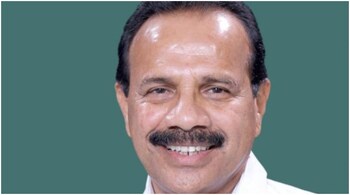
Union Minister for Chemicals and Fertilisers D V Sadananda Gowda on Thursday sought to know whether people in the government should hang themselves for their failure to produce vaccines as was directed by the government.
"The court has with good intention said everyone in the country should get vaccinated. I want to ask you, if the court says tomorrow that you have to give this much (of vaccine), if it has not been produced yet, should we hang ourselves?" Gowda told reporters here.
Replying to queries on the shortage of vaccine, the Union Minister stressed on the plan of action of the government and said its decisions are not guided by any political gain or by any other reason.
Gowda said the government has been doing its job sincerely and honestly during which time some shortcomings have surfaced. "Practically, certain things which are beyond our control, can we manage it?," the Union Minister sought to know.
He, however, clarified that the government has been doing its best to ensure that in a day or two, things improve and people get vaccinated. BJP national general secretary C T Ravi, who was present with Gowda, claimed that things would have been worse if arrangements had not been made well in time.
"If proper arrangements were not made well in advance then there would have been fatalities 10 times or 100 times more," Ravi said. He said oxygen supply has been increased from 300 metric tonnes to 1,500 tonnes due to systematic preparation. "But our preparations failed because of the unimaginable spread of coronavirus," Ravi told reporters.
Regarding courts pulling up the government on the issue of coronavirus, Ravi said, "Judges are not all-knowing (Sarvajna). Whatever is available with us, based on that the technical advisory committee will recommend how much (vaccine) has to be distributed. Based on their report, we will take a decision."
With the alarming rise in COVID cases in the State, which is reporting 40,000 to 50,000 cases daily, the demand for vaccines has grown manifold.
According to the Karnataka government officials, the State has placed an order of three crore vaccines and the money has already been paid to the two vaccine manufacturers.
However, only seven lakh doses have arrived in the State. The panicked citizens have been queuing up before the vaccination centres in the State for inoculation only to be turned down.
Discover the latest Business News, Sensex, and Nifty updates. Obtain Personal Finance insights, tax queries, and expert opinions on Moneycontrol or download the Moneycontrol App to stay updated!





