

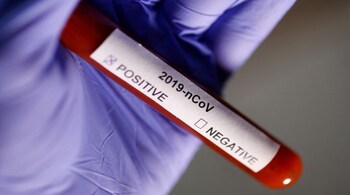
Amid a sudden spurt in COVID-19 cases in Japan, South Korea, Brazil, China and the US, the central government on Tuesday urged all states and Union territories to gear up the whole genome sequencing of positive samples to keep track of emerging variants.
In a letter to states and UTs, Union Health Secretary Rajesh Bhushan said such an exercise will enable timely detection of newer variants, if any, circulating in the country and will facilitate undertaking of requisite public health measures.
He highlighted that India with its focus on the five-fold strategy of test-track-treat-vaccination and adherence to Covid-appropriate behaviour has been able to restrict the transmission of the coronavirus and is having around 1,200 cases on a weekly basis.
Public health challenge of COVID-19 still persists around the world with around 35 lakh cases reported weekly, Bhushan said.
In his letter, he also referred to the operational guidelines for revised surveillance strategy in context of COVID- 19 issued by the ministry in June this year. It calls for early detection, isolation, testing, and timely management of suspected and confirmed cases to detect and contain outbreaks of new SARS-CoV-2 variants.
"Therefore, monitoring the trends of existing variants is of crucial importance," he said.
"In view of the sudden spurt of cases being witnessed in Japan, the United States of America, Republic of Korea, Brazil and China, it is essential to gear up the whole genome sequencing of positive case samples to track the variants through Indian SARS-CoV-2 Genomics Consortium (INSACOG) network," he said.
"In this context, all states are requested to ensure that as far as possible samples of all positive cases, on a daily basis, are sent to the designated INSACOG Genome Laboratories that are mapped to states and UTs," he added.
Discover the latest Business News, Sensex, and Nifty updates. Obtain Personal Finance insights, tax queries, and expert opinions on Moneycontrol or download the Moneycontrol App to stay updated!





