

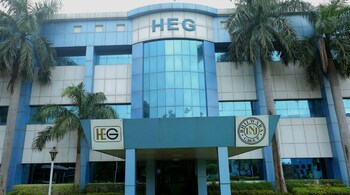
This is the verbatim transcript of HEG management call with analysts.
Moderator: Ladies and Gentlemen, Good Day and Welcome to the HEG Limited Q2FY‘19 Results Earnings Conference Call. Joining us on the call today are Mr. Ravi Jhunjhunwala, Chairman and Managing Director and CEO; Mr. Raju Rustogi, CFO and COO; and Mr. Manish Gulati, CMO, HEG Limited. As a reminder, all participant lines will be in the listen-only mode, and there will be an opportunity for you to ask questions at the end of the day’s presentation. Should you need assistance during the conference call, please signal an operator by pressing ‘*’ and then ‘0’ on your touchtone telephone. Please note that this conference is being recorded. At this time, I would now like to hand the conference over to Mr. Ravi Jhunjhunwala. Thank you and over to you, Sir.
Ravi Jhunjhunwala: Friends, Good Afternoon and Welcome to our Q2 Financial Year 2019 con call. In line with the first quarter results, HEG’s second quarter performance continues to be strong supported by robust global market conditions, global steel sector growth, pricing in demand of graphite electrodes. China’s efforts to reduce overcapacity and pollution in domestic pollutant industries continue with more rigid and strict restrictions. This year, China has extended the duration of production cuts for the steel industry during the winter season by two months starting October 1st and ending March 31st, a total of 180 days as compared to production cuts from November 15th to March 15th last winter, which was a total of 120 days. This year their major target is 28 main cities to implement this production cap because they are key steel making bases in the country accounting for over 40% of their total production. Production cuts in this region is likely to vary between 30-70%. The steel exports from China continue to come down and they have come down by about 11% in the first nine months of the current year, which is an annualized figure of about 70 million tons. We believe the electric arc furnace segment in the world excluding China continues to grow at a level of about 8-9% after remaining stagnant for past seven to eight years leading to additional steel production in the region outside China by about 30 to 40 million tons of steel through electric arc furnace, and corresponding increase in the demand for graphite electrodes at a time when 15-20% of electrode capacities were shutdown between 2013 and 2016.
Due to environmental reasons, China continues to focus on moving large part of their steel production to electric arc furnaces. In 2016, the electric arc furnace segment in China accounted for just 6% of their total steel. This went up to 9% in 2017 and this is likely to surge to around 12% in the current year, 2018. In real numbers, this means approximately 50 million tons in ‘16 increasing to 75 million in ‘17 and further 100 million tons in ‘18, doubling from 50 million tons to 100 million tons in less than 2 years. This obviously means a substantial increase in the demand for electrodes within China, which is what we are seeing in the electrodes production data there. Going forward, China seems to be on track to achieve their announced target of reaching about 20% steel production by 2020 through electric arc furnaces, a more than three-fold increase which would mean going up from 50 million tons in 2016 to more than 160 million tons by 2020, a whopping increase of approximately 110 million tons which to put it into perspective is as much as what we currently produce in India.
This augurs well for our industry with strong entry barriers and long lead times for any expansions.
Coming to our own country, Indian steel industry has fared very well. The first nine months this year, production has grown by about 6.1% year-on-year. Domestic steel as well as electrode demand remains healthy in this quarter. Friends, we are all seeing a very major consolidation happening in the steel industry with lots of financially stressed assets being acquired by some of the stronger steel companies. In the next couple of years, the Indian steel industry will be dominated by four to five large producers increasing the productivity and efficiencies. Ramp up of production either through underutilized steel plants after merger with these larger companies will obviously generate additional demand for graphite electrodes within the country. Needle coke continues to be a cause of concern as with demand of electrodes on the rise, we hope that some of the needle coke companies will also raise their capacity in the near future. HEG is now a debt-free company with both long-term and shortterm, and currently, we have a net cash of about 700 crore in our Treasury as on 30th September.
We continue to seriously evaluate debottlenecking of our plant from its current level of 80,000 tons to about 100,000 tons, and we are working with a very well-known consulting company. This issue is receiving our highest attention and I hope to give you some more specific information fairly soon. We have a history of maintaining a payout ratio of around 35% and we do expect to maintain the same in the current year as well. In line with that as you are aware, the company’s Board has already approved an interim dividend of 300%, which would be received by the shareholders by about 20th November. With this, I would like to take this opportunity to thank all of you, all other investors, bankers, our employees, our customers, and suppliers who have stood with us. With this, I would now hand over the floor to our COO cum CFO, Mr. Rustogi, to take you through all the financial numbers and then we will be very happy to answer all your questions. Thank you.
Raju Rustogi: Thank you, Sir. For the quarter ended September 2018, HEG recorded net operating income of 1794 crore as against 1587 crore in the previous quarter, a jump of nearly 13% quarter-on-quarter and nearly 337% year-on-year for the same period last year. EBITDA including other income which stood at 1197 crore in the previous quarter have increased to 1389 crore, an increase of nearly 16% quarter-on-quarter and 623% year-on-year for the same period. The company reported a net profit of 889 crore in Q2 as against profit of 770 crore in the previous quarter. The company has already crossed its annual turnover of Financial Year ‘18 as we
report today. Since turnover is the factor of both volume and prices, we are happy to inform that company has been able to achieve a healthy growth in both the aspects. The company’s capacity utilization is progressively going higher and that has been made possible with the availability of higher needle coke in the quarter under reference. Corresponding to the increasing trend of sale prices in the recent past, we are also witnessing a sharp increase in the prices of almost all primary raw material, but we have been able to not only maintain the previous level of margins, but improve them.
Net sales and also the segment results in power segment are lower in Q2 as we have been able to negotiate a mutually beneficial term with the Government utility company and replace part of the high cost self-generated power which is thermal with the power purchase from state electricity board. This step has not only reduced the volume of capital generation and transferred to graphite, but also reviewed the average realization in power segment as the revenue in power segment is booked based on corresponding rate of power as defined by the state-run utilities besides our hydro facilities which generally start operation towards end of Q2 has actually commenced operation in the later half of October 2018 primary due to shortfall of rain in the state of Madhya Pradesh this year and particularly in the catchment where our plant is located. While this step has reduced revenue and bottom line in the power segment, it has had a very favorable impact on the overall power cost of graphite electrodes making. The increase in annual employee benefit expense over financial ‘18 is primarily on account of provisioning of profit-related commission payable to the Chairman of the company at the rate of 2.5% under contractual terms of the appointment. Increase in absolute value of power and fuel over Q1 FY ‘19 is attributable to increased level of production and also substantial increase in international crude oil prices. Your company has been handling Treasury operations to the tune of nearly 700 to 800 crore and the average return has been around 8% per annum on the same. With this background, I would request questions which we can clarify more.
Moderator: Thank you very much, Sir. Ladies and Gentlemen, we will now begin the question and answer session. The first question is from the line of Abhisar Jain from Centrum Broking. Please go ahead.
Abhisar Jain: Sir, my question is we are seeing some increase in the inventory in your P&L almost 200 crore entry is there in this quarter, so is it related to more of the finished goods and if at all you can quantify the quantity please?
Raju Rustogi: Good Afternoon Abhisar, you are right, there is an increase in inventory and primarily it is on account of finished goods and the increase is on account of the last days PL which were not received by us for export sale, so in HEG the export sale is booked based on receipt of PL on the cut-off date, so this particular before the quarter were almost like 1000 metric tons of material was lying at Mumbai, but because of congestion we could not clear them under the bill of lading, so they were not booked a sale and added to inventories in the Quarter-2.
Abhisar Jain: Sir, for this quarter as you mentioned, the capacity utilization were around 85% and we can assume that the shipment would be slightly lower than that based on just the commentary that you just gave?
Raju Rustogi: You are right.
Abhisar Jain: The other question is on the needle coke visibility, so as you have indicated earlier that Phillips 66 is doing some debottlenecking wherein a total of 50 kt is supposedly going to be distributed among the industry, so if you could throw some light on the status of the same and at what stage that thing is?
Raju Rustogi: We believe this has happened and we have started getting a little more needle coke because of that.
Abhisar Jain: Based on that extra visibility of the supply, what kind of utilization can we expect in H2 and going into FY ‘20?
Raju Rustogi: As I had said in some of these interviews in the press, we expect this quarter and the next quarter to be close to 90%.
Abhisar Jain: Going forward into FY ‘20, with this increased supply the whole year can we think of something 90 plus?
Ravi Jhunjhunwala: I hope so, we are still under negotiations with all the suppliers for next year and my guess is in the next four to five weeks, we should be in a position to know the volume of coke that we can get from different sources.
Abhisar Jain: The other question is now on the electrode market itself, so I believe that in the needle coke contracts that the six-monthly contracts have already starting to seeing some increase in H2 and there might be some more increase going into CY ‘19, but has the electrode prices also still witnessing an equal or higher increase or are you seeing some signs of stabilization at least at the electrode level because the steel prices also seems to have stabilized more or less at a global level now?
Ravi Jhunjhunwala: Needle coke as I said we have no idea, in the next four to five weeks we will know what kind of pricing, what kind of quantities that we are talking about. As far as electrode is concerned, at least on the UHP side, we do not see anything softening and to the best of our information, the other international players are talking about a further increase based on the assumption that you just made that probably needle coke prices are going to go up, so it is too early. We will have to wait for another four to six weeks to see what is happening.
Abhisar Jain: Just for the H2 point of view, there would be a little bit of a higher needle cost which will come into the system per se versus H1 whereas the electrode there might not be that much increase is that understanding correct?
Ravi Jhunjhunwala: I am not sure about the second part, but the first part, yes, I mean we surely expect the needle coke prices to go up, I mean obviously there is a huge shortage. On the electrode side, as I said we are still not even started going into the market for the January month quarter, so we will have to wait and see.
Moderator: Thank you. The next question is from the line of Paul Dewberry from Bank of America. Please go ahead.
Paul Dewberry: The question is carry on, I want to talk a little bit on the graphite electrode pricing trends, if I look at the QOQ increase it was up over the prior quarterly numbers, but while relatively modest amount is the few hundred dollars per ton, could you comment on why we are seeing the rate decrease and potentially flat lining through the summer, is this a seasonal affect do you think or greater needle coke allowing more output, so if you could comment on the trend on electrode prices during the last quarter, and also we are now maybe half way through the current quarter, what are you seeing in terms of pricing right now versus where we were say two to three months ago?
Ravi Jhunjhunwala: As a policy, we do not prefer to go to the specifics on the pricing and the cost and as I just responded to our previous question, we do not see any let up on the demand. The demand continues to be very strong and at least in this quarter for which we know what the prices are, we know where we stand as of now in terms of values and in terms of quantities and the numbers, they look pretty strong and as I said in the next four to six weeks, we will know exactly where we stand with regard to the needle coke prices for January and March and as you know there is a time lag in this particular product where the production cycle is fairly long, so as far as the Q1 is concerned, January-March 2019 is concerned, you will not see any impact on the needle coke side because all the coke which is going to come between now and December will see us through until Q1, so whatever price increase takes place from January onwards will only be seen in the quarter of April, May, June and as I said we have still not opened our order books for that period, so we will see what happens in terms of needle coke price and if we are able to pass on everything or may be little more or maybe little less.
Moderator: Thank you. The next question is from the line of Rohan Shah from Harsh Capital. Please go ahead.
Rohan Shah: I would like to talk about our raw material required which is coal tar which I guess, so I wanted to understand about this raw material requirement of ours. I have read that about 40% of a graphite electrodes is may through coal tar pitch, so I just wanted to know that the pricing of coal tar pitch is also increased or what has been happening in the market?
Ravi Jhunjhunwala: Yes, what you are saying is right, we have two major raw materials in our mixing process, one is CPC and the other one is coal tar pitch and the ratio could be different between different companies, so 25, 30 whatever based on each company specs is what people use. Now, in terms of price trend of coal tar pitch, you are right there has been shortage of carbon material in the entire year of 2018-19 and we saw a jump in prices of coal tar pitch as well, so if we compare ‘17-18 with ‘18-19, coal tar pitch is at least 2.5 to 3 times of what it was in ‘17-18.
Rohan Shah: Will it affect our EBITDA margins going forward and by how much can it affect in that proportion?
Raju Rustagi: EBITDA margin is more governed by definitely the sale prices as well as the cost of raw material of major raw material, so if the sale price increase is more than the cost of raw material price increase, we are able to maintain or at least improve on the EBITDA margin.
Moderator: Thank you. The next question is from the line of Sanjay Jain from Motilal Oswal. Please go ahead.
Sanjay Jain: My question is regarding utilization of our cash flows, about some time ago we had met and you had said that you are working with consultant which is around the business plans, so it has been quite some time, so any update on that?
Ravi Jhunjhunwala: We are on track as I just said, our policy in the last 10 to 15 years has been fairly consistent in terms of payout, so we will maintain that ratio of about 35% and in that context the first step has been taken, we have just announced the interim dividend of 300%. Secondly, as I just mentioned, we are more or less at the last stages of finalizing our expansion from 80,000 to 100,000 tons, so it is a matter of couple of months probably before which we make a formal announcement, and thirdly, on something related to carbon, again anything new takes time and we do not want to rush into that decision, but things are happening as we speak and we are pursuing a couple of areas which are not very large compared to the cash flows that we are talking.
Moderator: Thank you. The next question is from the line of Raj Rishi, an Individual Investor. Please go ahead.
Raj Rishi: I wanted to ask you, you had talked about some needle coke capacity going off-stream some years ago, so what is the possibility of with this kind of industry dynamics very favorable of same coming back?
Ravi Jhunjhunwala: I do not think we ever spoke about needle coke capacities going off-stream.
Raj Rishi: Sorry, it is my mistake, the graphite product.
Ravi Jhunjhunwala: You are talking about the electrode plants which were shutdown in the last two to three years?
Raj Rishi: Yes.
Ravi Jhunjhunwala: Most of them are not in a position to restart and lot of these plants were razed to the ground and one particular plant got sold to a Chinese company about a year ago and they are really struggling to restart because it was probably plant was more than 100 years old and it is not very easy to restart, and basically that is it there is nothing more than that.
Raj Rishi: Sir, where do you see the threat coming from as far as supply is concerned?
Ravi Jhunjhunwala: We have discussed this particular point lot of times in the past. The only reason things have changed over the last year-and-a-half or two years is because China just closed down a lot of blast furnace and induction furnaces because of environment and they themselves are switching to electric arc furnace, so the biggest threat is only this that one day China decides to go back and start the blast furnaces which are three times more polluting than electric arc furnace, and basically that is the only risk and what has basically happened is because of these closures, China’s capacity to export steel has come down and as we spoke in our opening remark, the export of steel has come down like 40% to 45%, which has helped the other part of the world to produce more steel and in that other part of the world, practically 50% of the steel is produced through electric arc furnace, which pushed up the demand of electrodes.
Moderator: Thank you. The next question is from the line of Prahlad Jain, an Individual Investor. Please go ahead.
Prahlad Jain: I had a question in terms of the pricing of electrodes, as you said the pricing is good on the UHP front going forward, NC is kin of increase that is a given, however, how much is that is one thing in terms of the percentages and whether we have a plan to do surcharge pricing on the electrodes to our customer because of the NC price are different that was one question that I had?
Ravi Jhunjhunwala: One of the large players has done this about a year ago and I am sure some other players are also looking at it, but at least as far as we are concerned we have not looked at this as yet and if you go by what one of the large players has done in last year, obviously by selling about two thirds of the electrodes at a price which is much lower than what the current prices are. At this moment, it does not seem to be an interesting proposition. If the prices are going up which they did in the last 12 months, which we had also followed the same policy and sold two-thirds at a particular price, we would be making less money today.
Prahlad Jain: Sir, is there a way in terms of growing on our realization like having better realizations, are we looking at shifting completely to like currently we do 80% UHP, are we able to shift to 100% UHP and increase our bottom line?
Ravi Jhunjhunwala: Theoretically, yes, the plant is capable of doing whatever mix we want, but even today not realization, the most important thing is margin, our margins are not different between the two grades, so long as the margins are similar, there is no need for us to make any change and specially because most of the large customers who buy UHP also need to buy non-UHP, so we would not like to vacate that market because this is what the demand is.
Prahlad Jain: Sir, understood, so you probably may have the same customer asking for HP and UHP both and looking at the relationship, you would like to continue that relationship with the customer?
Ravi Jhunjhunwala: Exactly, and especially if you have been following this industry, we have spoken about it in the past that the other two larger players, the Japanese and American vacated this market about 10 years ago for the non-UHP because it takes a little bit of more labor to produce these small sizes which are non-UHP, so today currently there is very less competition in this particular segment because except the two Indian companies, none of the major international companies are in this market.
Prahlad Jain: Sir, I basically wanted to understand do you have any idea of the percentage increase in NC that could be affected once we start finalizing for next year and whether we have a clear roadmap, because we have got some capacity coming online, that is, 20,000 metric tons and currently we are running at 85%, so this 15% gap plus the 25% capacity addition which is coming and probably would start around 2020 or 2021, do we have a clear roadmap in terms of NC availability and whether we can actually look at higher ‘19 utilization going forward and whether we have the availability of NC for like project for the next two years or so?
Ravi Jhunjhunwala: No, you are absolutely right and that is the question which is very difficult to answer and we are struggling to find that answer, but if we really live in the real world, our expansion is going to take not less than 2.5 to 3 years, and it is very difficult to assume that any supplier is going to give us or anybody commitment after three years and obviously three years is a very long time, so one will have to take a very considered view while taking a decision on expansion, because I do not think anybody will be in a position to make a firm commitment three years down the road.
Prahlad Jain: In terms of running this business, now this first touted as a two-year cycle, but now when you look at BML reports and reports from International Research Houses, this is now seen as a 20-year cycle and we are going to keep on increasing when people start moving more towards the
year China in fact, so are we looking at with the cash reserves that we have and those are very humongous cash reserve, are we looking at a needle coke joint venture because that is where we can look at backward integration and we would have committed amount of needle coke for our main business?
Ravi Jhunjhunwala: I wish we could do that, I wish you are right, but the issue is it is a technology oriented industry and technology is in the hands of very few suppliers and I do not think anybody is willing to give this knowhow to any outsider now, just as we are not willing to give our knowhow to somebody, it is the same thing with our suppliers.
Moderator: Thank you. The next question is from the line of Karan Thakar from PM Securities. Please go ahead.
Karan Thakar: I want to understand how would the needle coke recognition of COGS works, I understand it is about five to six months cycle from the time that the needle coke is ordered for and is utilized on percentage, so if we want to account for COGS, is it fair to believe that needle coke which was bought at the start of previous quarter, if we are tracking the prices then there has been a price which will be accounted for the COGS in the next quarter?
Ravi Jhunjhunwala: Yes, you are absolutely right, the quickest cycle let us say for the easiest product is about six to seven weeks and for some of the most difficult ones it can be as much as about five months or so, so given this long cycle obviously and given that the entire needle coke is imported, so obviously there itself you need about two to two-and-a-half months to order and to ship and to get it and then there is the cycle of processing, so you are absolutely right what we are using currently was obviously shipped about three to four months ago and it will be the same thing going forward.
Karan Thakar: You mentioned about the power cost reduction because you shifted to state power instead of the internal power, so say per unit or say on overall basis, how much would be the saving this quarter onwards?
Ravi Jhunjhunwala: The saving is already reflected, the whole of last quarter or a large part of the last quarter if we followed what we just said, basically because Madhya Pradesh Electricity Board has surplus of power, so they negotiated this kind of a deal with some of the large companies who have their own captive power, so it made sense on both the sides to stop the captive power plants which are obviously much more expensive compared to what we could get from electricity board.
Karan Thakar: We do have some sort of linkage in terms of employee cost to the profitability, so with increasing profitability we tend to pay a little more in terms of salaries or bonuses, so could you explain to us how do we see this like in an ongoing profitability, is there any policy that how much employee cost would take a expansion in the quarters to come?
Ravi Jhunjhunwala: There is definitely a performance-based salary which the company works on, so if the performance of the employee is good as well as if the performance of the company is good, we definitely have a higher cost which is given as an incentive over a period of six months.
Karan Thakar: Okay and is there any percentage of profitability or on a company macro level we cannot look at it like that, right?
Ravi Jhunjhunwala: It cannot be defined as a percentage of the profitability, it is defined generally as a percentage of the employee cost.
Karan Thakar: So could we expect it to remain how it has been in this quarter or can you further see an expansion?
Ravi Jhunjhunwala: I do not think so, one thing that we have already shared is if we compare ‘17-18 with ‘18-19, the biggest increase in employee cost is on account of the contractual terms, salary payable to the Chairman of the company, and over and above that there is something called an employee
incentive scheme is payable to employees based on the performance of the company each year. Now, that incentive could be paid once in a year, could be paid twice in a year, there is no policy, but yes, we decide as and when the year progresses.
Karan Thakar: How much incentive in percentage also you would decide as and when the year progresses, right, there is no policy on that?
Ravi Jhunjhunwala: There is no policy on that.
Moderator: Thank you. The next question is from the line of Anubhav Sahu from MC Research. Please go ahead.
Anubhav Sahu: Sir, couple of questions I have, one is compared to six months back or one year back, it looks like the product cycle are stabilizing now, does it also means that the contract cycle which had earlier shrunk on analyzed basis to quarterly is now improving, is there any change in that the nature of contract right now?
Ravi Jhunjhunwala: There is no major change, as we had discussed in the past call, it is quarterly to half yearly.
Anubhav Sahu: When you say that next four to five weeks you will get visibility about January quarter, it is mainly that the quarterly contract cycle will get far more visibility by the end of this month?
Ravi Jhunjhunwala: Yes, exactly.
Anubhav Sahu: Sir, given your capacity utilization guidance, it looks like the needle coke availability has improved for the company, do you see industry wide also bit of improvement even if we take out the debottlenecking stuff as well as in general also, is there a bit of improvement in needle coke availability for the industry?
Ravi Jhunjhunwala: I am sure, obviously whatever is the tonnage which has been debottlenecked, it is all being distributed between all the five to six players, so I guess everybody is getting a little more coke and subsequently a little better capacity utilization.
Anubhav Sahu: Sir, for the needle coke also, I am assuming that the same contract cycle in tandem is happening the way it is happening for the graphite electrode in the quarterly and half yearly nature?
Ravi Jhunjhunwala: Yes, exactly.
Moderator: Thank you. The next question is from the line of Ketan Surana, an Individual Analyst. Please go ahead.
Ketan Surana: Sir, I had couple of questions one was like the problem of graphite regarding the position, do we face the same problem regarding our HEG plant as well?
Ravi Jhunjhunwala: We do not see it as problem in our plant. This problem of Graphite India is unique to the city of Bangalore and I can only say that graphite industries working in countries like United States of America as well as Germany, so this industry knows very well how to meet the requirement of the pollution etc., but if it was dedicated to a specific incident in Bangalore, we are not in Bangalore, so we are not the same thing as the Graphite India’s Bangalore plant is.
Ketan Surana: Sir, my other question was what is the order pipeline as of now?
Ravi Jhunjhunwala: I had answered this in one of the previous question, just like needle coke we are operating on a
quarterly to a maximum of six monthly contracts.
Ketan Surana: Sir, my other question was what was the debt which HEG has cleared, right now, it has completed all its debt, I just wanted to have the figures?
Ravi Jhunjhunwala: We have zero debt in our books.
Moderator: Thank you. The next question is from the line of Arvind Sharma, an Individual Investor. Please go ahead.
Arvind Sharma: Sir, for the plans I would just like to question one small business area, for example, there were some rumors that you might be also planning to move into the anode manufacturing space or maybe contribute something there in the lithium ion battery manufacturer, because graphite is one of the raw materials which obviously has an application there and I do not know whether the residue which is thereafter creating that UHP that can be used or supplied to those who are manufacturing anodes?
Ravi Jhunjhunwala: You are right, we are looking at this very seriously.
Arvind Sharma: That is on the plans, right, I know it is very difficult to reveal right now those kind of plans because they need quite a lot of planning, but is it on the management radar, I just wanted to
know?
Ravi Jhunjhunwala: Absolutely, it is exactly on the radar and it is on the table.
Moderator: Thank you. The next question is from the line of L. P. Soni, an Individual Investor. Please go ahead.
L. P. Soni: Sir, during this half-year one, the EPS has been Rs. 415 against which you have declared the dividend of Rs. 30, so in various statements you are saying you are maintaining the dividend payout ratio of 35%, so what is so sacrosanct about this 35% dividend payout ratio, reason is that in the current half year as well as earlier period, now you are earning huge abnormal profit which is contributed mainly by the huge price rise of graphite electrodes, which were not there earlier. Even in the earlier years if you go through in Financial Year ‘14-15 dividend payout ratio including dividend distribution tax was 50%, which now you are reducing to 35%, I want to know what is the sacrosanct of this dividend payout of 35%?
Ravi Jhunjhunwala: There is no sacrosanct on that, but our finance guy is just looking at the figures as you speak and I do not think it was 50% in ‘14-15, our ratio has always been in the region of 33%, 34%, 35% and to take up your question for the second part, as I said there is no sacrosanct but the percentage is a percentage and obviously when the going is good and you are making larger profits than in the past, you also have CAPEX, you also have expansions, you also have diversifications, which we are now able to look at which we were not able to look at three years ago, so given all these things, I think one-third or 35% of the payout ratio is amongst the best in the industry, one would like to preserve cash for every other thing which is expansion of the existing plant, going into diversification which is as I said we are looking at something very seriously on the batteries, so basically that is it I mean we are trying to conserve cash for all our future requirements.
L. P. Soni: Sir, what you are saying is right but you see the present bank balance is about 700 crore, this will go up to maybe 2500 or 3000 crore, what you will do with this cash because expansion plan which you are selling out, you have indicated in earlier con call it will cost almost 100
million dollars, almost Rs. 700 crore spread over two to three years and another thing is that this huge amount of profit is the gift of the God, it is a sudden rise in the profit, this is not contributed by the management or by anything like I would say in Hindi “Bhagwan ne chappar phad ke diya hai”, so you are still giving small amount to the shareholders and retaining bulk part of it, which I could not understand, so this gift of the God should be
distributed amongst all the shareholders and this should be higher, dividend payout ratio of 35% was all right when your financial ‘14-15 EPS was 6.76. In Financial Year ‘13-14, EPS was 21.68, so in Financial Year ‘14-15 when the EPS was 6.76, you have given a dividend of three by including the dividend distribution tax, the payout ratio comes out to be 50%, so in the
lean period you have given 50% and when the time is good, you are giving only 35% payout?
Ravi Jhunjhunwala: On the specific percentage that you are talking about ‘14-15, I will pass this to our finance person and he is looking at the ‘14-15 data and it is about 35% to 36%, it is not 50.
L. P. Soni: Sir, these are balance sheet data, if I state or you state it will remain the same?
Ravi Jhunjhunwala: Probably, there is some confusion in calculation, what I will suggest is that if you can give us your number or something, so he can call you and clarify how he has calculated. Secondly you said “Bhagwan ne chappar phad ke diya hai”, but percentage of 100 or percentage of 1000,
the bottom line is very different, so we as a shareholder are all hitting today is 35% of 1000 compared to 35% of 100, so I mean that is why the Board is for, our Board I believe is a very financially sound Board, they understand everything and that we think that preserving this money for any future acquisition, for any expansion of the graphite plant is much more important than giving more than 35% to 40% now, maybe it just continues for couple of more years if we are lucky and we can maintain these kind of profits for the next three years, then yes, what your question is very, very valid. At that stage, one will have to solve this problem which is a very good problem to solve.
Moderator: Thank you. The next question is from the line of Manoj Kulchandani, an Individual Investor. Please go ahead.
Manoj Kulchandani: I am actually here on behalf of 1400 investors in HEG, we have a big group and we actually had a whole list of questions to ask you, but I think so majority of them have been asked by all the analysts, I still have a few queries, I mean it is basically if you look at the international GE
manufacturers, all of them have introduced a needle coke surcharge in their sales contract, so basically when the needle coke goes over a certain price and the sale contract has increased by certain amount, so is HEG also looking to implement a similar thing or do you have that in place already?
Ravi Jhunjhunwala: I do not think your information is correct, as far as the international players are concerned, there is one international player in America who has done a five-year take or pay contract for about two-thirds of their production for five years and there is no connection with the needle coke in this particular case and it is simply because this is the only graphite producer who has a backup of the needle coke. They have their own captive needle coke facility, so for them to be able to do this five-year kind of a contract is very simple because, they have their own coke as I said and the raw material for that coke happens to be oil which in America can be hedged for the next three, four, five years, so our understanding is that they have hedged their oil for the next five years, which means their cost of needle coke is to a very large extent frozen, so they are in a very good situation because they have their own raw material, they have hedged it for
five years, so they could have gone in the market and sold about two-third as I said, but for the rest of the others which includes all the three, Japanese and the two Indian companies who are buying needle coke from the market, it is not easy to go and do this five-year kind of contract and I do not think your information that all others have linked to the electrode prices to the needle coke price.
Manoj Kulchandani: We were reading about Showa Denko actually implementing this in their next sale contract, so I will actually research some more on it and I will get back to you, and besides this there is another query about the extent and nature of concentration of the major customers. For instance, it is learnt that Iranian clients account for a large space, so will this be affected by the US sanctions, and if yes, in case of full exemption is not granted from the sanctions how does that pose a problem to HEG?
Ravi Jhunjhunwala: First of all it is not very large, it is large, of course Iran is a very large country with a very large steel production and luckily Iran produces 100% of their steel through electric arc furnaces where electrodes are used, so it is a large customer and over the last let us say three to four years, five years for whatever reason the American and the Japanese have refrained from selling electrodes to Iran and India has taken a very major chunk, so you are right it is a large contributor to the Indian exports, but it is not extremely large so as to affect that, affect the bottom line or to find an alternate market for this because the market is strong, but luckily we have also suggested and we are all aware whatever is happening and whatever has appeared in the press in the last two to three days. Luckily it seems that India is not being included in that list anymore, so we are still waiting for a formal notification from America, so if that is coming and in the next day or two we get this formal notification where India is excluded out of the sanction, so it is a positive for us. We will be back on track and we will continue to have whatever sale we were doing till now.
Manoj Kulchandani: Also, do you have a Forex hedging policy in place, basically the needle coke contracts which are coming in, I mean I believe the sale is actually hedging the NC coming in, but besides that is there any other fixed policy in place to handle the volatility, I mean right now it has gone in
favor of the company, we have actually made a good amount of money, but in the future is there any policy in place?
Raju Rustagi: There is definitely a policy on hedging of foreign currency in the company, so before giving a brief on the policy, two basic fundamentals that you have to understand is HEG exports account two-third of its total turnover to countries outside India, there is a dollar earning on that front and on the import front, the price of raw material and the total value of raw material that we see, one-fifth of the total sale value of export, so again if we consider both the facts, we are a net exporting company, so we always have dollars which are available for sale, so in this context, the hedging policy of the company is to keep 30% open and 70% net of the import is to be covered, that is what we follow as a policy as well as practice on ground.
Moderator: Thank you. The next question is from the line of Vivek Chirag, an Individual Investor. Please go ahead.
Vivek Chirag: I am saying would you now say the balance of year as far as the prices of electrode is concerned is on the downside or is it fairly stable, I mean though we had spent a while $ 3000- $ 4000 per ton, I mean what are the factors that can take the prices up or down from the current level and the margin seems to have stabilized right now?
Ravi Jhunjhunwala: Currently, I would say the market is very well stabilized, I mean we have not seen any change in the last three to four quarters and talking about what could lead to the pricing going back to $3000 to $ 4000 is simple, the only reason why we are seeing what is happening in the market is because China has closed about 120 million to 150 million tons of blast furnaces which are highly polluting and with that China’s ability to export steel has come down substantially and
to that extent about 40 to 50 million tons of additional steel is now being manufactured by rest of the world because Chinese exports have come down to that extent and that is where about 50% of the steel is being produced through electric arc furnace, so that has led to demand supply mismatch and as I said in my opening remarks about 15% to 20% of the electrode
capacity was shut down between 2013 and 2015, so the risk if you are talking about the market going back to where there were two years ago is only that if China disregards the pollution and again restart their 50 million tons of close capacity, which does not seem practical because the plant that they have closed over the last 18 to 20 months, in lots of these places these plants
have been actually razed to the grounds and the land is being used for something else.
Vivek Chirag: Sir, I was suggesting as you said that China the UHP the market is about 800,000 tons per year and that is about 7% to 8%, is there a scenario in which the next two years the market becomes tight again, I mean there is not much supply from it and even if the utilization levels go up, would you say there is any chance of the market which are very short again which might lead to a bump up in the prices or is that like a very large order?
Ravi Jhunjhunwala: First of all, we never mentioned this figure of 800, this is not the right number, it is lower than that. Secondly, yes, we talked about sharp increase in the electric arc furnace to the extent of 8-9%, but this happened over the last 18 to 20 months because of this sudden increase in steel production in the world outside of China and even if we assume a more reasonable kind of a 3-4% growth and not 8-9% even then you need about 25,000 to 30,000 tons of more electrodes per annum if the world growth was happening at the rate of 3-4% and the steel growth follows the GDP of 3-4%, then you will need somewhere between 20,000 to 30,000 tons of additional electrode, and as I responded to one of the questions it is a highly concentrated industry, the technology is very scarce and the time taken for a Brownfield expansion is also somewhere close to two-and-a-half to three years, so we do not see much happening in the graphite industry so to speak in spite of the last 18 to 20 months of shortages, we have not seen any
major plans of either Greenfield or Brownfield expansion for anybody because simply it takes too long.
Moderator: Thank you. The next question is from the line of Suraj Singh Thakur, an Individual Investor. Please go ahead.
Suraj Singh Thakur: Sir, I wanted to ask about the needle coke requirement, is it required only for UHP or HP also?
Ravi Jhunjhunwala: Only UHP.
Suraj Singh Thakur: Sir, what are the chances that some Chinese player may increase the HP grade quantity and by that amount our UHP requirement will be decreased?
Ravi Jhunjhunwala: The HP electrodes cannot be used by people who need UHP, these are two very different products for two different purposes with two different kind of furnaces, so China by producing more of HP cannot make any impact on the demand of UHP.
Moderator: Thank you. Ladies and Gentlemen, this was the last question. With this, I now hand the conference over to the management for their closing comments. Over to you, Sir.
Ravi Jhunjhunwala: Thank you Friends and thank you for taking so much of interest in our industry, and thank you for investing your time and money in this company and I look forward to speaking to you once again in three months’ time. Thank you.
Moderator: Thank you very much, Sir. Ladies and Gentlemen, on behalf of HEG Limited, that concludes this conference call. Thank you for joining us and you may now disconnect your lines.
Discover the latest Business News, Sensex, and Nifty updates. Obtain Personal Finance insights, tax queries, and expert opinions on Moneycontrol or download the Moneycontrol App to stay updated!





