

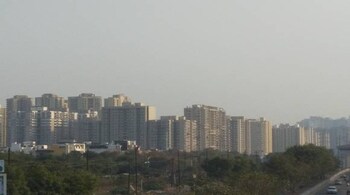
Housing prices have shown an increase of just 1.4% in the first three quarters of the financial year 2021 after growing by CAGR of 5.6% in the specified period of five years compared to GDP growth of 6.7%, an analysis by CARE Ratings has said.
On the demand side, consumer response contracted owing to Covid-19 restrictions and on the supply side, developers began offering promotional discounts in order to offload the excess unsold inventory, which together led to a 1.4% rise only, the analysis said.
Due to COVID-19 and high rate of migration, the non-metro cities witnessed relatively higher increases in prices with Ahmedabad, Lucknow, Kanpur and Kochi witnessing an increase of above 8%.
Prices have grown at a lower rate than GDP during this period. In fact, adjusting for population, the growth in per capita income would be similar to that in housing prices.
With respect to inflation, CPI for housing component moved from 116.1 in FY15 to 152.2 in FY20, a CAGR of 5.6% which is in line with the compounded growth rate of HPI. However, CAGR in headline CPI was 4.2% for this period indicating thereby that housing prices far exceeded general inflation which was more or less within the RBI target range of 4%, the report said.
Why have house prices increased despite the pandemic?
The fall in interest rates and the focus of banks on retail lending with emphasis on home-loans supported the uptick in consumer demand as affordability of owing a house increased.
However, growth in HPI moderated from FY18 which could be attributed to moderation in demand and the build-up of inventory in the market.
Also, affordable housing measures announced by the government that caps the prices of housing properties could have indirectly influenced this moderation in the Housing Price Index.
It should be pointed out here that this was also the time when several retail borrowers which includes homes loans had gone in for a moratorium on debt service (41% in August for the entire system including banks and NBFCs) due to the challenging conditions.
Prices in metros versus non-metro cities
Mumbai Metropolitan Region (MMR) is believed to be one of the most expensive regions in India in terms of property prices. However, in terms of increase in prices it came second to Chennai (8.4%) and was almost on par with Bengaluru (6.2%). Delhi registered the lowest growth rate in prices of 2.3%. This was for the CAGR for HPI for metro cities in FY15 to FY20 (Q4).
Growth rates for city wise HPI in Q3FY21 over Q4FY20 for cities such as Bengaluru was at 9.9% as the city continued to attract home buying as it remained relatively more open during the lockdown and the IT related companies continued to do well in terms of job creation even with the work from home norm setting in. This was one of the reasons for an increase in prices. Other cities that recorded positive growth included Delhi (1.1%),Ahmedabad (1.9%) and Lucknow (0.7%).
Amongst non-metro cities, except Jaipur (4.2%), all other non-metro cities recorded growth rate between 8.1% to 8.7%. This growth of more than 8% could possibly be due to the increase in consumer demand in Tier 2 and 3 markets on the back of infrastructural improvements, growth of local businesses and affordable housing initiatives by the government among other factors, the analysis said.
The non-metro cities witnessed relatively higher increases in prices with Ahmedabad, Lucknow, Kanpur and Kochi witnessing an increase of above 8%.
There has hence been an increase in demand for housing in these centres which have also become major business centres given the high cost in metro cities.
Also, the migration of people from the rural hinterland to these cities has led to higher demand for housing which also gets reflected in these prices, the analysis said.
Indian real estate market prices versus global prices
The Indian market has been doing better than the global counterparts up to FY20, the report noted.
Globally, the residential property prices grew at a CAGR of 4.6% and emerging economies recorded a growth of 4.8% while advanced economies registered an increase of 4.4%.
Amongst individual country, the highest growth rate was registered by Germany at 6.4% followed by India at 5.6% while China and USA recorded growth rates of 5.3% and 5% respectively.
The way forward
In FY21, house prices more or less remained range bound due to contraction in demand on account of the widespread outbreak of Covid-19.
In Q3FY21, HPI registered de-growth in the range of -2.3% to -1% in 6 out of the 10 major cities in comparison with the index in Q4FY20. The fall in consumer demand led to excess unsold inventory in the market.
Further, in order to revive demand developers began offering heavy promotional discounts. This coupled with slew of government measures such as stamp duty rate cuts contributed to the decline in prices.
Under the second wave of the virus, this sector which was already facing headwinds will now be pushed back further as uncertainty looms. While work from home habit will lead to greater demand for homes and the push given to affordable housing should also help, overhang of supply will pose challenges. Also, there can be change in preferences to tier-2 cities and away from metros, the analysis added.
Discover the latest Business News, Sensex, and Nifty updates. Obtain Personal Finance insights, tax queries, and expert opinions on Moneycontrol or download the Moneycontrol App to stay updated!





