

Moneycontrol News
India’s mining industry is an increasingly important part of the economy – it employs hundreds of thousands of people and provides the material necessary for the country’s economic growth and expansion. Exploitation of a country’s natural resources is par for the course, but must it also come with a price too steep to pay? Mining is a difficult, harmful, and often destructive enterprise. Add to it poor policies, weak institutions, weaker implementation, and rampant corruption, and what you get is India’s mining industry, an industry where government oversight and regulation, as described by Human Rights Watch, are “largely ineffectual.” In the wake of the recent Thoothukudi episode, this is what we propose to dig deep into today on Moneycontrol – India’s recent mining history. What happened in Thoothukudi? Why were there protests in the first place? How big a problem is illegal mining in India? How much do mining companies adhere to the standards? What are the human rights violations and public health hazards that come with mining? And are there solutions for responsible mining? These are some of the questions we hope to answer on today’s instalment of Digging Deeper with Moneycontrol. My name is Rakesh, and this is Digging Deeper into India’s recent mining history.
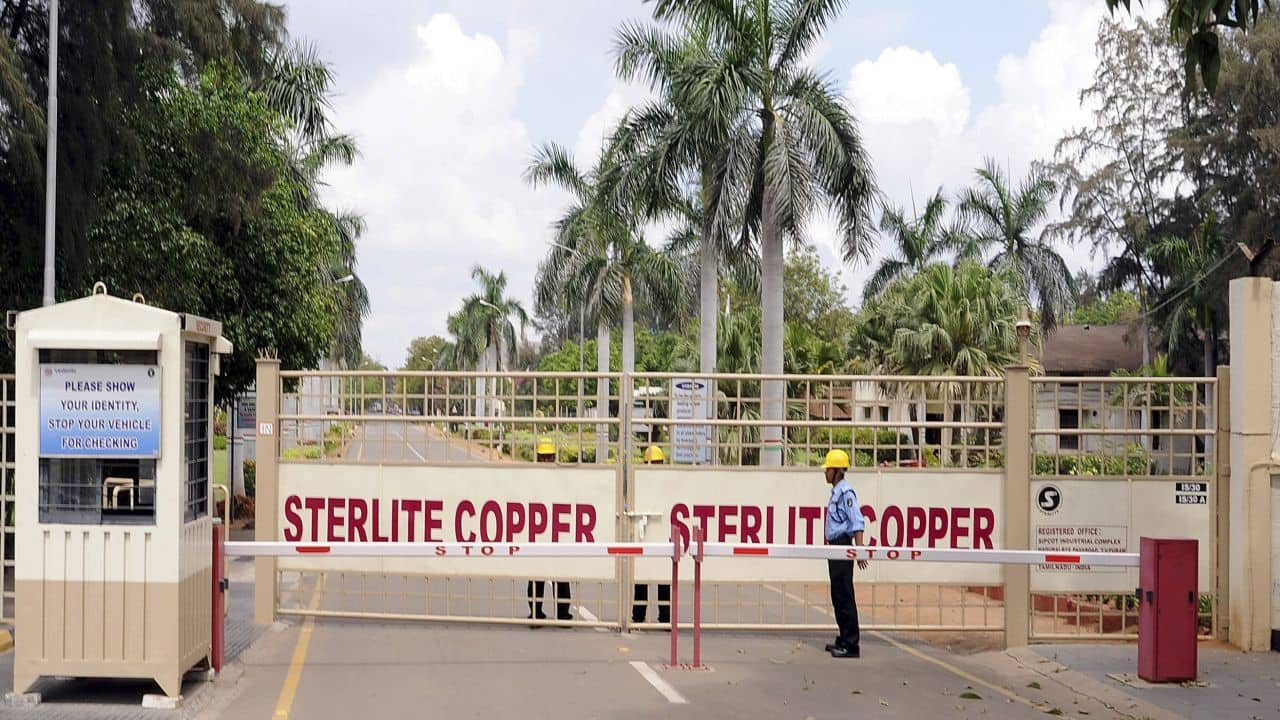
What is this Sterlite issue in Thoothukudi that has been in the limelight for the past few months? The entire issue revolves around the copper smelter of Sterlite Copper, a unit of Vedanta, one of the world’s largest mining and metals conglomerates, that was set up in 1996 in Thoothukudi. It all started more than two decades ago when activists in Thoothukudi accused Sterlite of contaminating the region’s air and water resources, causing breathing disorders, skin diseases, heart conditions and cancer among the residents. Copper smelters are classified as “red” by the environment ministry, indicating that they release the highest level of hazardous industrial waste. Since February, there have been large-scale protests in Thoothukudi, where Sterlite’s copper smelter functioned with the capacity to produce 4.38 lakh tonnes of anodes per annum, or 1,200 tonnes per day. Thoothukudi also happens to be a town where over 4.6 lakh people live within a 10-km radius of the plant.
The protests were initially centred around Kumarredyapuram village, which is a short drive from the plant. For about two months, the villagers and activists supporting them gathered together holding large banners calling for the government to shut down the plant. On February 12, they took their demonstration to Thoothukudi. There, it grew into a massive protest as around two lakh people, according to the activists, turned out in their support on March 24. Since then, several celebrities, media persons and politicians have visited Kumarredyapuram in a show of support. The sudden increase in the intensity of protests from February was caused after the news of Sterlite’s plans for expansion to be the world’s largest smelter located in a densely populated urban area was revealed. Several people were arrested for rioting, burning of vehicles on the Thoothukudi collectorate campus, stone pelting and damaging public property. The News Minute also reported that six members of the Makkal Adhigaram group were detained on May 22 under the National Security Act on the orders of Home Secretary Niranjan Mardi based on recommendations made by the district superintendent of police and the district collector. They were lodged in Palayamkottai Central Prison in Tirunelveli district. Under the NSA, a person can be detained for up to 12 months to prevent him from acting in any manner prejudicial to national security. Makkal Adhigaram, however, said that the police have no proof to make such a charge. The spokesperson for the party was reported to have said “So if protesting against Sterlite jeopardises national security, does it mean that the company is now the nation?”
According to the Environment Impact Assessment report of 2015, the smelter’s main pollutants are sulphur dioxide and particulate matter. Scroll wrote in detail about various individual stories of resident experiences in the highly contaminated land. One of the residents spoken to regarding the issue was S Pasupathi, who starts her day giving four different medicines to her two-year-old son Harish, who suffers from incessant wheezing and chest congestion, when they can’t afford this kind of a medical expense. Pasupati’s husband, Selva Raj also talks about how every household in the area has at least a couple of people suffering from some kind of an illness, out of which children are most vulnerable.
The alleged illegality in the activities of the company are mentioned in the plural in multiple reports. For example, The Water Act of 1974 mandates that hazardous industry should be located at least 25 kilometres away from any eco-sensitive area, but Sterlite’s plant is within 14 kilometres of the marine national park of the Gulf of Mannar. Another violation is that the plant does not have a greenbelt of 25 metres around it, as required by its licence from the Tamil Nadu Pollution Control Board. A study in 2008 also found that iron content in the water sources of two villages near the plant was up to 20 times more than is prescribed by the Bureau of Indian Standards. Chronic exposure to iron through drinking water could result in chronic fatigue, joint pain, and abdominal pain. Other common health hazards found in the area surrounding the company are respiratory diseases which are at 13.9%, Asthmatic Bronchitis, Myalgia, Ear Nose Throat (ENT) diseases and also a hint of a link towards an increase in menstrual disorders. In 2012 and 2013, there were several other instances of the factory releasing excessive amounts of sulphur dioxide. Residents of Thoothukudi particularly remember a gas leak in March 2013 after which many townspeople complained of eye irritation, suffocation and even miscarriage. To add to the already growing list of accusations, Scroll has reported that new evidence renders the project’s environmental clearance illegal as environmentalists allege the company had misled the Union environment ministry and the Madras High Court about the location of the proposed project, and officials of the State Industries Promotion Corporation of Tamil Nadu had backed the misrepresentation.
There have been several times when the company was on the verge of being accountable for its actions. But every such time they have managed to fizz out the protests and has insisted that its operations in Thoothukudi have little impact on the environment. In its Environment Impact Assessment report for the expansion too, the company said that “no waste water will be discharged outside the plant due to complete recycling into the plant operations. Hence, there is no impact on the water regime due to the wastewaters generated from the plant complex.” Its emissions too were claimed to conform to the National Ambient Air Quality Standards. The company also went ahead to say that it would spend approximately Rs 585 crore on environmental protection. But the residents and activists do not trust these promises and claims anymore. Activists, in fact, have accused the district administration of being complicit in the company’s violations.
The protest had gone to a violent extreme when thirteen people agitating against the expansion in the coastal city were killed in police firing on May 22 and May 23. The exact reason behind the police firing and whether it was an action of self defence by the police officers or whether it was an action to scare the protestors and teach them a lesson is still being debated. But this turn of events has certainly given DMK and the other oppositional parties an opportunity to show their sympathy towards the residents of Thoothukudi. During the course of showing support, MK Stalin, DMK working president, was detained by the police as he staged a protest outside the Tamil Nadu secretariat and the party also called for a state-wide bandh against the firing. As the attention shifted from the health hazards of the copper smelter to the firing and the growing talks about how the government would go to any extent to shut voices against it, Tamil Nadu government transferred the district's collector, N.Venkatesh, and superintendent of police P.Mahendran and now the Thoothukudi police firing case has been transferred to the Crime Branch Special Wing.
Vedanta Resources and its subsidiaries have repeatedly been pulled up by authorities in India and elsewhere for disregarding environmental safeguards and violating human rights. In 2004, it failed to get environmental clearance for a planned bauxite mine in Odisha’s Niyamgiri hills, considered sacred by the local tribals. In 2014, the Supreme Court quashed all mining licences in Goa to put an end to illegal mining, impacting, among others, Sesa Goa (now Vedanta Ltd), which mined about a quarter of the state’s annual iron-ore production. The company’s other subsidiaries, Hindustan Zinc and BALCO, also have cases against them for workers’ deaths at a power plant in Chhattisgarh and for illegal mining of rock phosphate, respectively.
Every story has various perspectives and if one took a different-lensed look from the country’s economic point of view, there may be some explanations they may come up with. Economic Times has reported that Vedanta accounts for a third of the country’s copper supplies and so if they shutdown it will drive up copper prices at a time when domestic copper demand is showing a firm uptick. India’s copper consumption has been growing at an average annual rate of 5.9% in the last 10 years led by electrical and transport sector needs. The government’s thrust on electric vehicles is also slated to boost copper demand in the next 5-10 years. In the medium term, the shutdown will affect over 800 small and medium enterprises (SMEs) in the downstream electrical industry sector that the Vedanta smelter catered to. But the negatives in this case, many would argue, largely outweigh the positive by a large extent and thus, whether justice will favour the profit making corporate or the victims of their actions is yet to be known.
In Indian society, our perception of mining is shaped by the movies, especially Hindi movies of the 1970s that romanticized coal mine workers and trade unions that fought for those workers’ rights and dignity. The world Koyla is a firm part of pop culture now. In reality, mining is a major industry, as a part of infrastructure and as a provider of employment. In 2012, this sector employed 3 million people directly and 8 million indirectly. It also earns a good amount of money for the exchequer. For instance, Goa alone used to earn around USD8 billon every year from iron ore exports.
Mining companies add great value to India’s economy, producing essential inputs for products that improve the lives of millions of people. The sector’s health is integral to the development of a resource-rich society. A report by the India Brand Equity Foundation observed that “India holds a fair advantage in cost of production and conversion costs in steel and alumina. Its strategic location enables convenient exports to develop as well as the fast-developing Asian markets.”
Mining, as an industry in India, is worth between two and 2.5% of India’s GDP in the current fiscal. Estimates show that in 2016, mining contributed 3% of the country’s GDP, or over USD 60 billion. Around 2010, mining accounted for 0.6% of all employment in India. While India is not what one would term a resource rich land, it has steadily grown to be a major source of materials. For instance, this country was the fourth largest producer of minerals in the world, by volume, according to a 2011 report by the Ministry of Statistics and Programme Implementation. Yes, we have a ministry of statistics. It is currently headed by Sadananda Gowda, minister for, obviously, statistics, and an ex-CM of Karnataka.
Mining in India is controlled overwhelmingly by the public sector. Most of the mining in India happens in eight states – Karnataka, Telangana, Andhra, Chattisgarh, Odisha, MP, Jharkand and Rajasthan. These states account for approx. 50% of all mining. Another 25% comes from offshore oil and gas. A 2010 report stated that there are between 3000 and 3200 mines in India. Nearly half of them mined coal, limestone or iron ore. And India racks up some pretty impressive numbers, based on output-value. India was one of the five largest producers of mica, chromite, coal, lignite, iron ore, bauxite, barites, zinc and manganese. It is also among the ten largest global producers of many other minerals, third-largest producer of raw steel by 2015 estimates behind Australia and Brazil, and the seventh largest in aluminium. India exports 87 minerals, and the overall metal and mining industry in India was worth around USD 107 billion in 2010.
Forbes noted that with an increase in mining investment, given the new rule allowing 100% FDI in mining in India, the country can add between USD210 billon and USD250 billion to the GDP. Much of India’s mining potential lies in interior tribal areas, where development has been slowest to reach. Think Bastar district or the backward regions of Jharkhand and Odisha. If the govt introduces helpful policies, the sector can create inclusive growth, adding as many as 2-2.5 million direct jobs and supporting the development of more prosperous and sustainable communities.
Unfortunately, in India and, indeed, around the world, mining operations usually do not benefit the communities in which they drop roots. The business model often focusses on maximising short-term profits, employing the local population for low-wage jobs simultaneously turning to outside businesses for high-value services, and, pertinent to our discussion, ignoring environmental costs and the attendant social disruption.
For instance, the influx of money and large-scale industrial operations strain local economic and political institutions to an extent where entire populations are left worse-off. Currently, mining states like Chattisgarh, Odisha and Jharkhand have high levels of poverty. Their mineral wealth has not translated into prosperity, as of 2018.
The industry itself has faced, repeatedly, grave charges ranging from corruption and criminality to environmental degradation and human rights violations. Moreover, mining companies in India have generally chosen to operate away from the spotlight. For more than a few years now, mining has also become a political hot button in states like Karnataka, Odisha, Goa and, of course, Tamil Nadu. When we think mining, the phrase ‘Reddy brothers’ leaps to our minds, perhaps a good summation of the quagmire of corruption that the mining sector finds itself unable to break free of.
Mining companies have tried to resolve such issues and secure a 'license to operate' through community investment programmes. However, these programmes tend to be token gestures. As Forbes noted, they do not try to affect meaningful social change on a large scale. Thus, they neither improve relationships with local communities nor address larger systemic issues such as continued poverty, environmental problems or transparency.
The opportunity to address social needs in the value chain presents itself in the project planning phase. Indian mining firms would do well to learn from some successes in other parts of the world. Take Ghana. Newmont Ghana improved its land negotiations for its Afaho gold mine in north-western Ghana by adding stakeholder engagement and community specialists to its land negotiation teams. Estimates suggest the company saved four months and roughly USD350,000 in costs for each subsequent round of negotiations as a result of increased efficiency. Newmont spends $1.6 million less on annual security costs in Ghana than its competitors due to its strong relationship with local communities.
Ironically, Vedanta, which finds itself in the eye of a storm in Thoothukudi, was reported to have made similar progress. After protests in 2010 that its bauxite mine in Odisha would negatively impact the culturally significant Niyamgiri Hills, the company opened a grievance process at the site. The open door policy allows community members to file complaints and discuss issues such as land acquisition, community development, employment, and environmental concerns with the company. While this effort started as a reactive response to threats, Vedanta extended it as a proactive model across the company in 2013.
Other analysts point out that a second shared value opportunity lies in developing a reliable local workforce and supplier network. This addresses a couple of challenges that mining companies face: shortage of skilled workers and suppliers and high expectations from communities for new jobs and economic benefits.
The mining sector expects sustained growth for the next few years following government action to address a slowdown that was a result of issues in the coal sector. With many mine leases set to expire in 2020, CII members pointed out that there is need for quick auctions.
Discover the latest Business News, Sensex, and Nifty updates. Obtain Personal Finance insights, tax queries, and expert opinions on Moneycontrol or download the Moneycontrol App to stay updated!





