

Bankers to Essar Oil will get Rs 4,000 crore from the Rosneft deal of Rs 82,740 crore (USD 12.9 billion), which will reduce Essar Group's debt by Rs 70,000 crore.
However, lenders hoping to receive part of the proceeds of the Essar Oil deal toward servicing of Essar Steel’s loans, have gone for a toss.
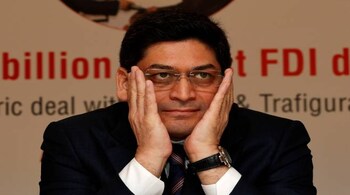
Debt-laden Essar group on Monday announced the sale conclusion of its crown jewel Essar Oil, including the captive port, power and retail assets, to Moscow-controlled oil giant Rosneft and a consortium of investors (Trafigura Group and United Capital Partners) for USD 12.9 billion, making it India’s "largest FDI" deal.
However, both Essar Oil and Rosneft refused to declare what part of the proceeds would come through equity and debt. Essar Oil was about 25 percent of the group’s portfolio.
Signed on October 15, 2016, in the presence of Prime Minister Narendra Modi and Russian President Vladimir Putin at Goa on the sidelines of the BRICS summit, the deal was held backed by domestic lenders, including State Bank of India, ICICI Bank, IDBI Bank, Axis Bank and Yes Bank, which have a cumulative exposure pegged at about Rs 1.4 lakh crore to the Group.
This means, Rs 4,000 crore is tantamount to 2.85 percent of the total debt owed by the Group to lenders.
Of the Rs 4,000 crore, Life Insurance Corporation of India (LIC) will get around Rs 800 crore as it was a key player in delaying the deal. LIC has some exposure to Essar Power and Port and not to Essar Oil but its conditioned on the deal that it must repay its dues.
It is said that bankers have had to close the deal on largely the original terms and conditions, and that they could not force Essar to use the sale proceeds to pay off Essar Steel’s debts, which stands at about Rs 44,000 crore, of which Rs 31,671 crore has turned non-performing assets (NPAs).
Essar Steel case is one of the 12 larger defaulting firms referred by the Reserve Bank of India (RBI)to be admitted at the National Company Law Tribunal under the Insolvency and Bankruptcy proceedings.
Calling it the single-largest deleveraging ever in Indian corporate history, Essar Group director Prashant Ruia said, "The proceeds from the deal would be used to reduce the group’s debt by half of Rs 70,000 crore at an operating level and at the holding company - Essar Global - level, the best of the debt is coming down…Majority of the debt exposure would be transferred to the new owner now that the deal is closed."
Chanda Kochhar, MD & CEO, ICICI Bank said, “I am delighted to note that the entire ecosystem including the government, regulators, banks and various authorities worked together to complete the deal which is also the largest ever foreign acquisition of an Indian company. The deal also underscores the keenness of foreign investors to enter India, the fastest growing large economy in the world. This transaction reduces ICICI Bank’s exposure to the Essar Group by about 50 percent.”
According to Ruia, "While around USD 5 billion (Rs 32,000 crore, of which Rs 6500 crore / USD 1 billion is working capital loans) worth of Essar Oil’s debt will be taken over by Rosneft the new owner as domestic lenders led by SBI, ICICI Bank, Axis Bank and IDBI Bank have elected to stay with the Russian company.” He added that the Group will also clear the nearly USD 3 billion (Rs 19,200 crore) dues to Iran for past crude purchase.
Both Ruia and the lenders did not reveal the conditions on which the deal was cleared by the bankers.
New Essar Oil
The new Board would include Tony Fountain as Chairman of Essar Oil and non-executive chairman as UCP nominee, and also include an LIC nominee till its interests are repaid.
B Anand has been appointed as the new CEO of Essar Oil.
As per the deal, Essar Oil’s 98.26 percent is held by its controlling shareholders Essar Energy Holdings and Oil Bidco Mauritius. While Rosneft, through its arm Petrol Complex acquires 49.13 percent, Trafigura-UCP consortium (via Kesani Enterprises Co) takes an equal stake.
Rosneft’s stake in Essar Oil includes 20-million tonne Vadinar refinery in Gujarat (India’s second largest private refinery), a captive port (58 mt) and a power plant (1,010 mw multi-fuel unit) and over 3,500 petrol pumps.
Essar’s promoters Ruias maintain 2 percent holding in the consortium of Trafigure and UCP, which cumulatively hold Rs 49.13 percent.
“That is what the consortium wanted and no immediate plans to change the structure,” Ruia said.
The remaining 1.74 percent will be held by minority shareholders who refused to tender their shares in the delisting of Essar Oil last February.
Quoting business magnate John D. Rockefeller, CEO of Standard Oil Company, on perseverance, Ruia said, "Over last six years, the group has done a capital expenditure of over Rs 1.2 lakh crore across entire core sector businesses. With that over, we are poised to embark on the next phase of our journey. All our companies have significant growth prospects...We are refocusing our energy across our portfolio of businesses."
Rosneft has also signed a non-compete agreement with Essar Oil, which for an undisclosed period would not be able to open any refinery, petro station or any such business with similar interest.
The new Essar Oil has plans to be on the retail side and asked its management to bring forth an asset management plan soon.
Discover the latest Business News, Sensex, and Nifty updates. Obtain Personal Finance insights, tax queries, and expert opinions on Moneycontrol or download the Moneycontrol App to stay updated!





