

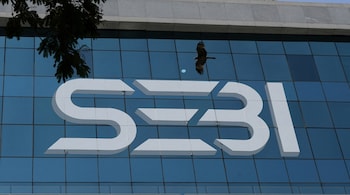
Securities and Exchange Board of India (SEBI) chairman Tuhin Kanta Pandey on Wednesday said the regulator had consciously moderated its proposals on brokerage and mutual fund costs after extensive consultations, describing the final framework cleared by the board as “a balanced version” rather than a radical overhaul. He made these comments during the press conference post the SEBI board meet.
“We have heard all sides subsequent to the proposal, and our present decision is a balanced version. It is not as radical as was initially proposed, because several facts and data were brought to our notice,” Pandey said.
Pandey explained that feedback from market participants made it clear that sell-side research continues to be a bundled component of brokerage in India, and attempts to unbundle the two have not worked well globally. He pointed to experiences in Europe and in the UK, where unbundling led to a decline in sell-side research coverage, that the regulator was made aware of. “That is not in the interest of investors,” he said, adding that reduced coverage would also hurt retail investors who rely on widely disseminated research and commentary on stocks.
SEBI has approved reductions in brokerage limits while finalising the comprehensive overhaul of mutual fund regulations that was proposed in its October 28, 2025 consultation paper. In the cash market, the existing brokerage cap of 12 basis points, which included statutory levies (effectively worked out to 8.59 basis points net of levies) has now been reduced to 6 basis points, exclusive of statutory charges. For derivative transactions, the earlier 5 basis point cap, equivalent to 3.89 basis points net of levies, has been cut to 2 basis points, exclusive of statutory levies.
Under the new framework, equity-oriented schemes will see a reduction in expense ratios across all AUM slabs, with the BER ranging from 2.10% for funds up to Rs 500 crore to 0.95% for funds above Rs 50,000 crore, compared with the earlier TER of 2.25% and 1.05%, respectively. Non-equity schemes will similarly benefit, with BERs lowered from 1.85% to 0.70% against the previous TER range of 2.00% to 0.80%.
The board also approved changes to the total expense ratio framework by excluding statutory and regulatory levies such as securities transaction tax, GST, stamp duty, SEBI fees and exchange charges from the base expense ratio. For index funds and exchange-traded funds, the base expense ratio has been fixed at 0.9%, compared with the earlier 1% cap that included levies. For fund of funds investing more than 65% of assets in equity-oriented schemes, the cap has been lowered to 2.10% from 2.25%, while other fund of funds will now carry a cap of 1.85%, compared with 2% earlier.
For open-ended equity-oriented schemes, SEBI approved a graded structure with expense ratios tapering as assets rise, reducing to 0.95% for schemes with assets exceeding Rs 50,000 crore, compared with 1.05% earlier. For non-equity schemes in the highest asset slab, the cap has been reduced to 0.70% from 0.80%. The regulator also removed the additional 5 basis points expense allowance that was earlier permitted for schemes charging exit loads.
Disclaimer: The views and investment tips expressed by investment experts on Moneycontrol.com are their own and not those of the website or its management. Moneycontrol.com advises users to check with certified experts before taking any investment decisions.
Discover the latest Business News, Sensex, and Nifty updates. Obtain Personal Finance insights, tax queries, and expert opinions on Moneycontrol or download the Moneycontrol App to stay updated!





