

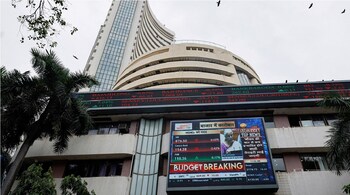
The Finance Minister appears to have shifted strategies, reminiscent of the coalition-era budgets. There were four clear messages from the finance minister: first, equity investments can’t be prioritised over all else; second, government-driven capex can no longer be the primary driver of growth; third, the rural economy and job creation is a problem area which has to take priority forth, that the FM is dead serious about the fiscal consolidation path.
What does this mean for stock market investors?
The first message is a bit disturbing, stemming from the proposal to increase both long term and short term capital gains tax. While the 2.5% long-term capital gains tax may not drastically alter the return equation to move money away from equity markets, the hike in short-term capital gains tax could certainly take some sheen off equities, especially at a time when markets are already at elevated valuations, and it becomes clear that returns from here will only be modest.
Some market participants are reading the capital gains tax hike as a signal that, directionally, the government would want to do away with any preferential tax treatment for equity markets. More importantly, it is arguably a signal from the finance minister that equity market investments should not be prioritised over private capex.
Saurabh Mukherjea of Marcellus interprets the increase in capital gains tax as a message to the country’s businessmen to invest in the real economy, not stock markets.
Indeed, family offices are a big constituency in the secondary markets today. Promoters selling stakes in their companies and redeploying the proceeds into stock markets are evident from the discretionary flows into mutual funds and the rising assets in AIFs. Direct participation from this segment has also been increasing.
This rising participation of family offices also creates a perception that the easy money made in the stock markets post-pandemic is making them shy away from taking bold calls on businesses, slowing private investments. That may or may not be true because traditional industries currently operate at capacity utilisation levels of 70 percent thereabouts, not a level where capex needs to be stepped up immediately. Growth in consumption has not been fast enough to create a sense of urgency to spur private investments either.
Not everyone believes in reading too much into the status quo on capex spending; the fact that the interim budget showed a 17 percent capex growth, and we have less than eight months remaining until the next budget, any additional spending would have been challenging to effectively work through the system.
Either way, stocks in certain sectors, such as defence and railways, are bound to take a breather without any big triggers. Power, renewables, manufacturing, also seem to be fairly priced or overpriced. But stocks may not be ripe for any significant correction unless there is visible slippage on growth.
On the contrary pockets that have not done too well so far, namely consumer stocks, do not make for a compelling case on account of valuations, although growth may be a shade better for these stocks in the coming quarters.
Net-net, the narrowing gap between consumer businesses, which deliver slower growth but offer better quality steady earnings, and stocks rising purely on the promise of higher future growth leaves investors with no easy choices.
The steep jump in rural spending and schemes for employment generation are unlikely to yield significant gains from a stock market perspective in the immediate term.
The only segments that look somewhat reasonably valued are banks. Pharma may be a defensive play. Small-ticket consumer durables and autos might see some traction, as they do not seem excessively valued and have the potential for earnings surprises on the positive side.
With the overall market at elevated levels, the best investment strategy may be to remain diversified across sectors and focus on stocks trading at reasonable valuations on a relative basis. High-quality names like Reliance Industries, HDFC Bank, Kotak Bank, and ITC could deliver steady returns from hereon. Slowly and steadily, the new money coming into stock markets could be deployed in these stocks, lifting them up from their relatively low valuations. So, a good strategy will be to not look for the next big stock, but the existing big tried and tested stocks.
Discover the latest Business News, Sensex, and Nifty updates. Obtain Personal Finance insights, tax queries, and expert opinions on Moneycontrol or download the Moneycontrol App to stay updated!





