

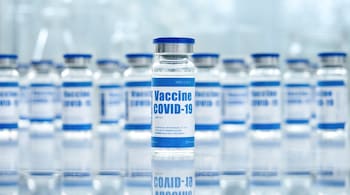
A UK study that mixed schedules of the Oxford-AstraZeneca and Pfizer-BioNTech COVID-19 vaccines has found that alternating doses of the Oxford-AstraZeneca and Pfizer-BioNTech vaccines generate robust immune responses against the SARS-CoV2 spike IgG protein.
The data is based on doses that were administered four weeks apart. Data for the 12-week dose interval is due soon.
Mix & Match
The Com-COV study by Oxford University researchers has evaluated combinations of AstraZeneca (viral vector) and Pfizer (mRNA) jabs four weeks apart in 850 volunteers, aged 50 years and above, to see what is the best possible interchange that can be used.
In the study, some volunteers got two doses of either Pfizer or AstraZeneca, both of which have been shown to be effective against COVID-19. Others got a dose of AstraZeneca, followed by one of Pfizer, or vice versa. The results show that both the mixed schedules of AstraZeneca and Pfizer jabs, when given at a four-week interval, induced an immune response that is above the AstraZeneca vaccine.
The ones who got AstraZeneca, followed by the Pfizer jab, were found to have higher antibodies and T-cell responses.
Volunteers with a mixed schedule reported that side-effects, such as chills, headaches and muscle pain, were short-lived than people who got two doses of the same vaccine.
Benefits of Mix & Match
The use of heterologous vaccines or two different types of vaccines as prime boost (first dose) and booster (second dose) is said to induce higher efficacy than two homologous vaccines or same doses. This is especially true for viral vector vaccines like AstraZeneca, where an anti-vector response can be seen with the second dose, possibly reducing its efficacy.
AstraZeneca uses a homologous approach.
What is good for India?
The mix-and-match strategy could be beneficial for countries like India which have used the AstraZeneca (Covishield) vaccine for inoculating 90 percent population.
Those who have received the first dose of Covishield may receive mRNA vaccines like Moderna or Pfizer jabs or Sputnik Light or Johnson & Johnson single dose or Novavax vaccine. This is subject to approval by the Indian drug regulator.
Can Covishield, Covaxin be mixed?
“In principle, yes, and as demonstrated by UK and Spanish studies, it may have some benefits,” said Gagandeep Kang, one of India's eminent virologists. “But we need such studies for all kinds of vaccines,” she said. At the moment, there are no studies on mixing Covishield and Covaxin.
Any further studies happening?
Outside India, yes. Especially in the UK. In April, Oxford researchers extended the scope of the programme to include Moderna and Novavax, in a new study run across nine National Institute for Health Research-supported sites by NISEC and backed through funding from the Vaccines Taskforce and the Coalition for Epidemic Preparedness Innovations (CEPI).
Each of the six new ‘arms’ of the trial recruited approximately 175 candidates, adding a further 1,070 recruits into this programme. Both studies are designed as so-called ‘non-inferiority’ studies. The intent is to demonstrate that mixing is not substantially worse than not mixing, and it will compare the immune system responses to the gold-standard responses reported in previous clinical trials of each vaccine.
If the studies show promising results, the Medicines and Healthcare products Regulatory Agency (MHRA) and the Joint Committee on Vaccination and Immunisation (JCVI) would formally assess the safety and efficacy of any new vaccination regimen.
Discover the latest Business News, Sensex, and Nifty updates. Obtain Personal Finance insights, tax queries, and expert opinions on Moneycontrol or download the Moneycontrol App to stay updated!





