

On the eve of the 1998 Lok Sabha elections, tragedy struck in South Mumbai's Nagpada area when Salim Badgujar fell victim to a fatal shooting orchestrated by the henchmen of underworld figure Chhota Shakeel. Badgujar's only "crime" was daring to open a Shiv Sena shakha in the predominantly Muslim Nagpada, and advocating for Mohan Rawle, the saffron party's candidate. His alignment with a party viewed as anti-Muslim led to his untimely demise. This incident, just five years after the tumultuous 1992-1993 riots, highlighted the deep-seated tensions and the violent repercussions of political affiliations.
Notably, Nagpada was once considered the stronghold of the gang, and the incursion of a radical Hindu party like Shiv Sena was intolerable to the D Company. However, over three decades later, a significant transformation has occurred. Today, a Shiv Sena office stands in Nagpada, and animosity toward the party appears to have dwindled among its residents.
The narrative of Shiv Sena's evolution traces back to its inception in the mid-1960s under the leadership of Bal Thackeray. Initially championing the cause of the Marathi-speaking populace, the party targeted South Indians and Gujaratis, earning a reputation for militancy through violent encounters with these communities. However, realizing the limitations of the 'sons of the soil' rhetoric, Thackeray sought a broader ideology to expand Shiv Sena's influence beyond Mumbai and Thane.
The party underwent a significant transformation in the early 1980s, transitioning from a regional champion to a saffron organization by aligning with the BJP on the platform of Hindutva. Shiv Sena's involvement in events like the Bhiwandi riots of 1984 and its support for the Ram Janmabhoomi movement solidified its image as a militant Hindu outfit.
Bal Thackeray's provocative statements in support of the demolition of the Babri mosque in 1992 further fueled tensions, leading to accusations of targeting Muslims during the 1992-1993 riots. The Srikrishna Commission set up to investigate riots noted that Bal Thackeray was giving orders like a military General to his Shiv Sainiks to attack Muslims. However, a shift began in 2003 when Uddhav Thackeray succeeded his father as party leader, adopting a more moderate stance.
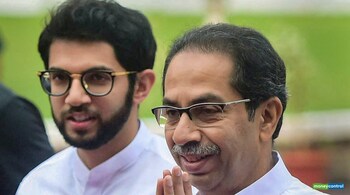
Unlike his father, Uddhav eschewed inflammatory rhetoric and embraced a tolerant, inclusive approach in his public addresses. His tenure as Chief Minister from 2019 onwards saw further steps toward moderation, as evidenced by the formation of the Maha Vikas Aghadi alliance with secular parties like the Congress and the NCP. Uddhav surprised everybody when he signed the preamble of the MVA which had word “secular” mentioned in it twice. It led to a discussion that among the political pundits that the erstwhile Hindutvawadi Shiv Sena was now a secular party in “letter and spirit.”
He even inducted a Muslim leader Abdul Sattar in the party and later in his cabinet. However, Sattar defected and joined the Eknath Shinde camp after rebellion of June 2022.
Under Uddhav's leadership, the Shiv Sena has undertaken relief efforts for all communities during crises like the Covid-19 pandemic, earning praise even from non-Maharashtrians and Muslim localities. The palpable hostility toward the party in Muslim areas has markedly diminished over the years. During recent years, Uddhav has emerged as the fiercest nemesis of BJP in Maharashtra and this too has brought his party closer to the community.
Raj Thackeray, Uddhav's nephew and leader of the Maharashtra Navnirman Sena (MNS), swiftly seized the opportunity to fill the void left by the Shiv Sena's departure from aggressive Hindutva politics. In 2020, Raj Thackeray, previously focused on Marathi-centric issues, made a significant shift by declaring Hindutva as an integral part of his political identity. This transformation was symbolized by the adoption of a saffron flag for his party, accompanied by his supporters affectionately referring to him as the "Hindu Jan Nayak."
Nevertheless, the ultimate test lies in whether the transformed Shiv Sena can garner acceptance from Muslim voters, particularly in constituencies like South Mumbai, where the party has replaced Congress candidates in the MVA alliance.
Discover the latest Business News, Sensex, and Nifty updates. Obtain Personal Finance insights, tax queries, and expert opinions on Moneycontrol or download the Moneycontrol App to stay updated!





