

For decades, lakhs of people worked in Delhi, but lived in the National Capital Region (NCR) because of affordable housing in neighbouring cities like Noida, Gurugram, Ghaziabad and Faridabad. But a new move by the Delhi government has raised fresh questions about whether the NCR still functions as a single region.
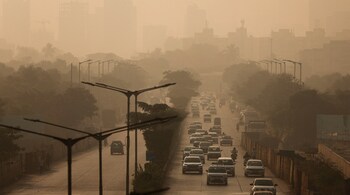
Delhi Environment Minister Manjinder Singh Sirsa on Tuesday announced that private vehicles not registered in Delhi will be barred from entering the capital unless they meet BS-VI emission norms. While the decision is aimed at reducing pollution, experts say it goes against the very idea on which the NCR was created.
Delhi’s pollution push redraws NCR lines
The NCR was conceived to decongest Delhi and distribute population and jobs across surrounding areas. The NCR Planning Board (NCRPB) was set up in 1985 to ensure coordinated development across state borders. However, several former officials say the vision has failed to translate into action.
Omesh Saigal, former Delhi chief secretary and ex-member secretary of NCRPB, called the latest order a blow to the NCR concept. “This decision blocks people from going to work, school, and even hospitals. It defeats the purpose of having a National Capital Region,” he was quoted by TOI as saying.
Saigal also recalled that former Prime Minister Indira Gandhi had once ordered that no new government offices should come up in Delhi, a rule that is no longer followed.
According to him, the NCRPB lacks real authority. “The board exists, but it has no executive powers. Without a common authority, NCR cannot function as one unit,” he added.
Lack of coordination and governance concerns
Another former Delhi chief secretary echoed similar concerns, saying Delhi has been stretched beyond its limits for years. “Decisions are taken in the name of pollution because there are no long-term solutions in place. Delhi, in its current form, is ungovernable,” the bureaucrat was quoted by TOI as saying.
He that the region needs an independent, empowered body like the Delhi Metro Rail Corporation.
NCRPB’s own draft Regional Plan 2041 highlights the need for seamless movement across NCR borders. The document states that vehicles contribute nearly 40 to 50 per cent of pollution in the region and calls for keeping interstate borders open except during emergencies.
It also notes that nine major entry points account for 75 per cent of traffic entering Delhi and should remain congestion-free throughout the year.
Practical challenges and fears of chaos
Officials had raised concerns about implementing the vehicle restriction when the idea was first discussed months ago. Delhi has nearly 60 entry points, and stopping vehicles at these locations could cause massive traffic jams, worsening pollution rather than reducing it. There were also fears that discretionary checks could lead to corruption.
Former NCRPB member secretary Noor Mohammed termed the move a “crude” way of tackling pollution. “The rise in private vehicles is because public transport has not expanded fast enough. Many government vehicles still run on older norms, but private vehicles from NCR are targeted,” he said. He added that NCR expanded only because Delhi had no space left to grow.
Discover the latest Business News, Sensex, and Nifty updates. Obtain Personal Finance insights, tax queries, and expert opinions on Moneycontrol or download the Moneycontrol App to stay updated!





