

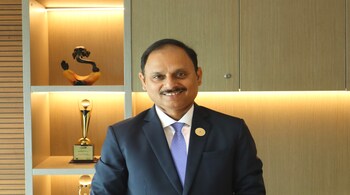
SBI General Insurance is targeting at a 6-8 percentage point improvement in its combined ratio over the next two financial years through sharper underwriting, stronger analytics and continued investment in distribution, managing director and chief executive officer Naveen Chandra Jha has said in an interview to Moneycontrol.
The insurer’s combined ratio stands at 109 percent. Jha said efforts to enhance risk selection, strengthen claims processes and improve portfolio quality will begin to reflect in performance.
Jha also talked about the effect of no GST on individual and health insurance premiums and how growing competition and regulation is shaping the industry. Edited excerpts of the interview:
SBI General has maintained a relatively strong profitable profile, with a majority of revenue coming in from health segment. Where will the next phase of growth come from? Retail health, motor, commercial lines, or newer segments?
As we are coming closer to end the Q3 of the financial year, our priority will be to carry forward the strong momentum we’ve built in the first half while continuing to expand our presence across both retail and commercial portfolios. We expect growth to come from high-potential areas such as retail health and the SME segment.
In H1 FY26, we achieved a growth that has been broad-based across key business lines with health growing by 41 percent, personal accident by 48 percent and motor by 17 percent.
Our distribution strategy will also play a pivotal role in shaping this next phase of our journey.
Could you quantify the impact of GST cut on your premium growth/degrowth since September? How has it been? How are you offsetting ITC loss?
The GST changes have definitely made a difference, both for industry and for us. After GST implementation, we have got a hit of around 2-3 percent in bottom-line due to input credit disallowance.
What we are clearly seeing is that the GST reform reduction has made health insurance more affordable and that’s translating into stronger interest and better conversions, especially in individual health. With the out-of-pocket premium coming down, customers are more comfortable making the purchase. We have passed on the GST benefit fully to customers.
On the ITC side, by year-end we expect it to be negligible. Since GST is a central decision, insurers are implementing it as directed. There is a short-term effect but it’s manageable and doesn’t change our financial position in any significant way.
With the motor vehicle sales quite muted this year and GST cut kicking in, how do you expect the product mix to evolve between motor and health?
Motor growth has picked up post GST changes and we expect our current market share of 4.82 percent to grow further. Within the motor category, the two-wheeler category is a key part of this evolving mix. Although our presence was earlier modest, we have strengthened our strategy over the past year to grow this segment selectively and profitably. Also, we are targeting renewals as business growth avenue. With the five-year third-party requirement and a longer profitability cycle, two-wheelers offer strong long-term potential.
On the health side, the momentum is even stronger. Health continues to be a strong growth driver. In H1 FY26, health insurance grew by 41 percent and motor insurance by 17 percent.
Over time, however, we aim to move towards a more balanced mix.
Motor and health continue to be key core growth drivers and we expect the same to continue. Motor insurance contributes 32 percent and health 23 percent to our entire product business mix.
Your combined ratio remains elevated at 109 percent. What is a sustainable target over the next two to three years and how do you plan to improve this?
It is certainly improving. While this reflects the impact of evolving market dynamics and claims trends, we continue to focus on strengthening our underwriting practices, enhancing risk selection, and improving portfolio quality.
Looking ahead, we expect our combined ratio to improve by 6-8 percent over the next two years. The focus remains on disciplined growth, stronger analytics, operational efficiency and continued investments in technology and distribution. These efforts are aimed at improving long-term portfolio resilience and ensuring we consistently deliver value to our customers and stakeholders.
Given the increasing competitive intensity and evolving regulations, do you expect consolidation to pick up in the industry?
General insurance is a growing industry with a strong correlation with the growth in economy. Given this strong trajectory, there is ample room for growth for all players. Consolidation depends on multiple factors. So, it may or may not happen.
Discover the latest Business News, Sensex, and Nifty updates. Obtain Personal Finance insights, tax queries, and expert opinions on Moneycontrol or download the Moneycontrol App to stay updated!





