

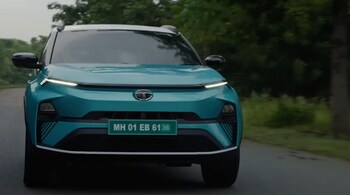


Tata Motors has crossed a major milestone in India’s electric mobility journey, with its electric vehicle arm, TATA.ev, surpassing 2.5 lakh cumulative EV sales, the company said in an official release. Tata Motors now commands 66 per cent of India’s total electric passenger vehicle market, underlining the shift of EVs from a niche segment to mainstream adoption.
Leading this transition is the Nexon.ev, which has become the first electric car in India to record 1 lakh individual sales. Tata Motors currently offers a broad EV portfolio comprising the Tiago.ev, Punch.ev, Nexon.ev, Curvv.ev and Harrier.ev, with these vehicles now in use across more than 1,000 towns and cities. Company data indicate that 84 per cent of EV owners use their vehicles as their primary mode of transport, clocking an average of around 20,000 kilometres annually.
Shailesh Chandra, MD & CEO, Tata Motors Passenger Vehicles Ltd., said, "Crossing 250,000 EV sales reflects how electric mobility is fast becoming part of everyday Indian life. Our customers are driving more, travelling farther, and increasingly trusting EVs as their only cars. This progress is the result of the government's forward-thinking policies, the steadfast support of our supplier partners and charging infrastructure providers, and, above all, the trust and enthusiasm of TATA.ev customers. As EV adoption accelerates, our commitment remains clear: to mainstream electric mobility by making it accessible across segments, strengthening the ecosystem, and investing in India-first technology and localisation."
To support its growing EV base, Tata Motors has set up over 2 lakh charging points nationwide, including 100 MegaCharging Hubs offering fast-charging facilities. The company has also created 1,500 EV-dedicated service bays, staffed by 5,000 trained technicians. More than 50 per cent of the components used in Tata’s EVs are locally sourced, helping reduce dependence on imports.
Looking ahead, Tata Motors plans to expand its electric lineup with upcoming models such as the Sierra.ev and the Avinya range by 2026. The automaker aims to introduce five new EV nameplates by 2030 and scale its charging network to one million charging points by the end of the decade.
Discover the latest Business News, Sensex, and Nifty updates. Obtain Personal Finance insights, tax queries, and expert opinions on Moneycontrol or download the Moneycontrol App to stay updated!





